Heave Ho: Three Thousand Years of Throwing Heavy Things as Far as Humanly Possible

There is something deeply, almost embarrassingly human about the throwing events. Before there were rules, before there were circles and sectors and judges with measuring tapes, there was just a person, an object, and the question that apparently every civilization in recorded history has felt compelled to answer: how far can you throw it?
The ancient Greeks asked that question formally, competitively, and with considerable seriousness starting around 708 BC, when the discus throw was incorporated into the pentathlon at the Olympic Games in Olympia. They weren't the first people to throw things, obviously. But they were among the first to turn throwing into ceremony — into sport — and to care deeply about who could do it best.
Nearly three thousand years later, American throwers are still asking the same question. And the answers keep getting bigger.
The Discus and the Ideal
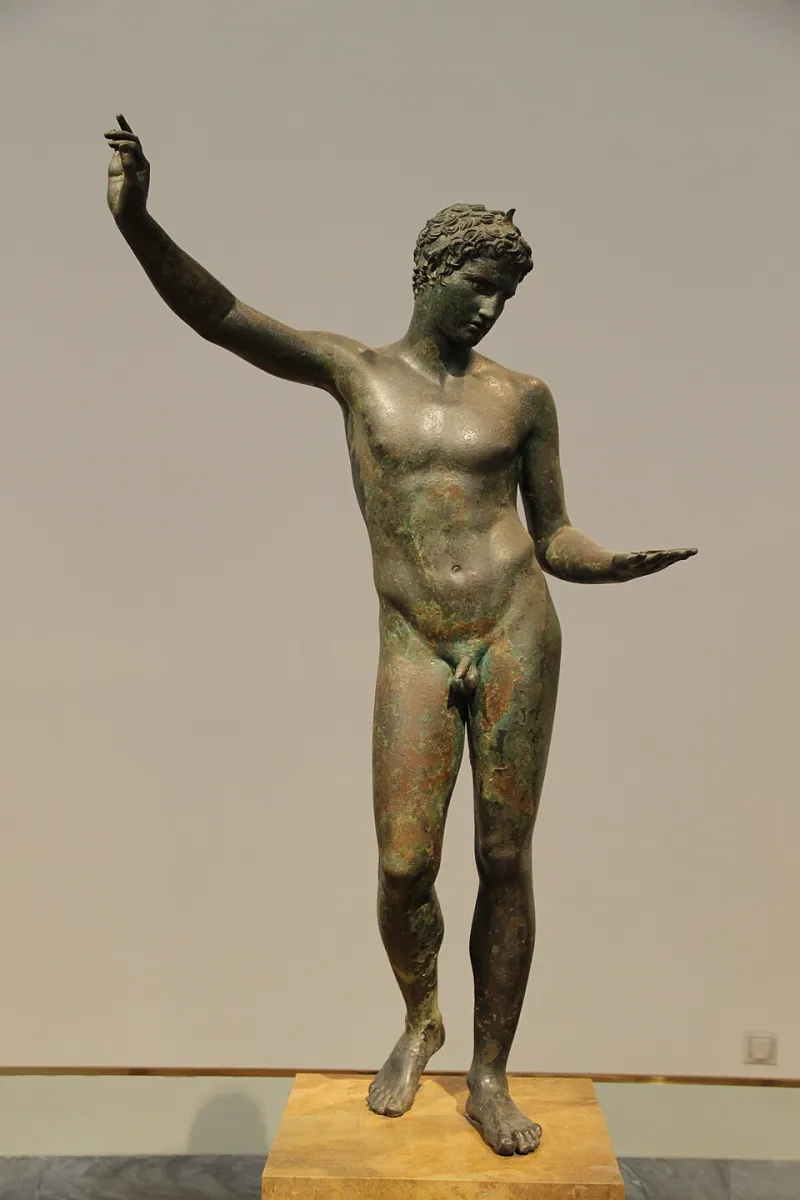
For the ancient Greeks, the discus throw wasn't just an athletic event. It was an aesthetic one. The act of throwing — the coiled tension of the wind-up, the explosive release, the follow-through — was considered beautiful in a way that connected the athletic body to ideals of proportion and power. The most famous sculpture in Western art history, the Discobolus — the discus thrower — was created around 450 BC and has been reproduced so many times it's essentially become the universal symbol of sport itself.
The ancient discus was made of stone, iron, or bronze, and varied considerably in size and weight depending on the age category of the competitor. Athletes didn't throw from a circle — they used a raised platform called a bater — and the technique was almost certainly different from the spinning rotational style used today. But the competitive structure was recognizable: throw it, measure it, see who went farthest.
What the ancient Greeks understood intuitively, and what modern sports science has spent decades confirming, is that throwing a heavy object tests a uniquely complex combination of physical qualities. Raw strength matters, but so does coordination, timing, flexibility, and the ability to transfer force through a kinetic chain from the ground up through the fingers. It's not just about being big. It's about being big and fast and precise — simultaneously.
The Events That Almost Didn't Make It Back
When Pierre de Coubertin revived the Olympic Games in Athens in 1896, the throwing events were among the competitions included — a nod to the ancient program that gave the modern Games their legitimacy. The discus throw appeared on the program, and an American named Robert Garrett won it, despite having practiced with a homemade replica discus that was far heavier than the actual implement. When he picked up the real thing in Athens, it felt light. He threw it farther than anyone else. The United States had its first Olympic throwing champion.
 Photo: Robert Garrett, via c8.alamy.com
It was a foreshadowing of things to come.
The shot put — hurling a heavy metal ball as far as possible — has roots that predate the modern Olympics, with Scottish Highland Games competitions and military training exercises both claiming some form of parentage. The hammer throw, which involves spinning and releasing a heavy metal ball attached to a wire, has similarly murky origins in Celtic and Scottish tradition. By the early twentieth century, all three events were established Olympic disciplines, and all three had found a particularly enthusiastic home in the United States.
America and the Throwing Circle
The relationship between American athletics and the throwing events is long, complicated, and occasionally controversial. American men dominated Olympic shot put competition for much of the twentieth century, with athletes like Parry O'Brien — who revolutionized technique in the 1950s by introducing the glide, a sliding approach that added momentum to the throw — and Randy Matson, who became the first man to put the shot past 70 feet, setting standards that stood for years.
The reasons for American success in these disciplines are partly cultural and partly structural. Big American universities recruited large, powerful athletes and provided coaching infrastructure that smaller national programs couldn't match. Football culture produced athletes with the size and explosive power that translated naturally to the throwing circle. And American sports science investment — in nutrition, strength training, and technique analysis — gave US throwers consistent advantages through the mid-to-late twentieth century.
Then came the Eastern Bloc, and things got complicated. Soviet and East German throwers began shattering records in the 1970s and 1980s, and the subsequent revelation of systematic doping programs cast a shadow over an entire era of world records that still hasn't fully lifted. Several throws from that period — distances that stood as world records for years — are now viewed with deep skepticism by historians and athletes alike.
Modern throwing events have emerged from that shadow with renewed credibility, driven by advances in drug testing and a generation of athletes who have achieved remarkable distances through documented, legitimate training methods.
The Science of the Throw
What separates a world-class throw from an impressive one is almost entirely about sequencing. The rotational technique used in the discus and hammer — spinning rapidly inside the circle before releasing — is an exercise in controlled chaos. The athlete generates angular momentum, transfers it through their body, and releases the implement at precisely the right moment and angle to maximize distance. Get the timing wrong by a fraction of a second and the throw falls short. Get it right and the discus seems to float.
Modern biomechanics coaching has turned this into something approaching an exact science. High-speed cameras, force plates embedded in throwing circles, and motion capture technology allow coaches to analyze a throw in extraordinary detail — measuring the angle of release, the speed of rotation, the precise moment of energy transfer. Athletes today don't just train harder than their predecessors. They train with a level of technical feedback that would have seemed like science fiction to the men who competed at Athens in 1896.
And yet, for all the technology, the best throws still have something that defies easy quantification. There's a reason the Discobolus has endured as an image for twenty-five centuries. The human body at full extension, coiled and releasing, is genuinely extraordinary to watch — and that hasn't changed regardless of how many sensors you attach to the throwing circle.
Why It Still Matters
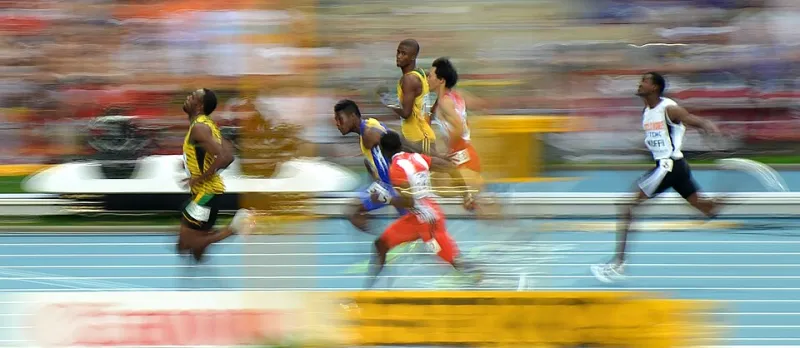
At the US Track and Field Championships each summer, the throwing events rarely get the prime-time television slots. The sprints and the middle-distance races pull the biggest audiences, and the field events — including the throws — tend to happen at the margins of the broadcast schedule. That's a shame, because the throwing circles contain some of the most physically remarkable athletes in the world doing things that connect directly back to the sacred grounds of Olympia.
The discus thrower winding up in Eugene, Oregon, is asking the same question as the athlete who stood on the bater in ancient Greece: how far can I send this thing? The equipment is different. The technique is different. The distance is much, much farther. But the question — and the primal satisfaction of watching it answered — is exactly the same.
Some competitive obsessions are just too deeply wired into us to ever really go away.