The Changing Face of a Champion: How the Ideal Olympic Body Has Been Rebuilt Every Generation
Imagine lining up the gold medalists from every Olympic Games in history and taking a long look at the group. You'd see a genuinely strange collection of human beings — different heights, different builds, different ages. Some would look like the chiseled athletes you see on magazine covers today. Others would look like your neighbor who plays recreational softball on Thursday nights.
That's not an insult to the historical record. It's a reflection of something profound: what the human body needs to be in order to win an Olympic gold medal has changed almost beyond recognition across the past 2,800 years. And the story of how that happened is really the story of how sport itself grew up.
The Ancient Ideal: Balanced, Versatile, and Probably Shorter Than You'd Expect
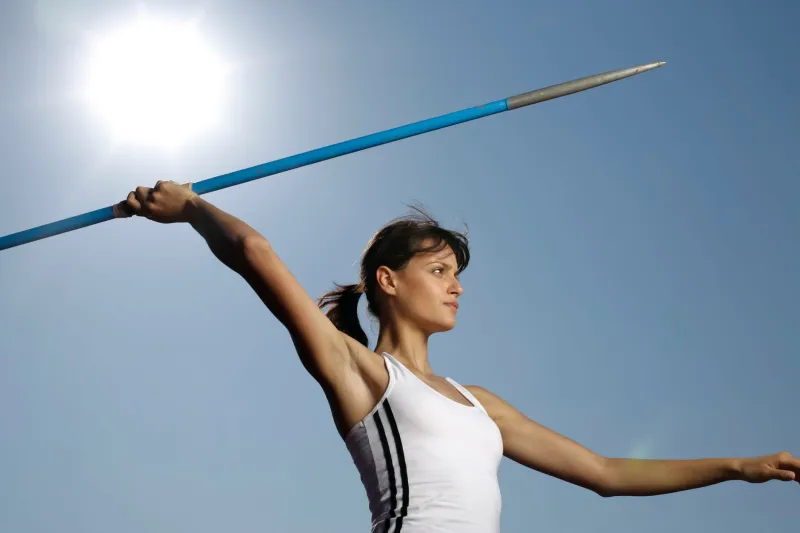
The ancient Greeks didn't think about athletic bodies the way we do. They weren't looking for a 6'4" swimmer with a 6'7" wingspan or a 300-pound offensive lineman. Their highest athletic ideal was the pentathlete — the competitor who excelled in running, jumping, discus, javelin, and wrestling. Not the best at any single thing, but the most complete human specimen across all of them.
The Greek concept of kalokagathia — loosely translated as the unity of physical beauty and moral virtue — meant that the ideal athlete was meant to look proportional, harmonious, and strong without excess. Sculptures from the period depict athletes with muscular but not hypertrophied physiques, lean but not emaciated. The body was a statement about character as much as a performance instrument.
We don't have precise anthropometric data on ancient Olympic champions, obviously. But based on skeletal remains from the period and the physical demands of the events, historians estimate that elite Greek male athletes were probably between 5'6" and 5'10", well-muscled, and competed primarily in their mid-to-late twenties. Specialization barely existed. The athlete who won the stadion sprint might also compete in wrestling the same day.
1896: The Gentleman Amateur and His Unremarkable Body
When the modern Olympics launched in Athens, the athletes who competed were a motley crew by contemporary standards. Many were upper-class amateurs — American college students, European gentlemen athletes, Greek locals — who trained in their spare time and arrived without anything resembling a scientific preparation program.
The physiques reflected this reality. James Connolly of the United States, who won the triple jump to become the first modern Olympic champion, was a 27-year-old Harvard student who had left school without permission to compete in Athens. He was not physically remarkable by any standard. Robert Garrett, who won the discus despite having never thrown one before arriving in Greece, was a Princeton student who had trained for weeks, not years.
Peak age in this era skewed older than today, largely because experience and access to competition mattered more than peak physical conditioning. Athletes in their late twenties and thirties regularly competed at the highest level. The body hadn't yet been optimized — it was simply whatever showed up.
The Mid-20th Century Shift: Size Starts to Matter
By the 1950s and 1960s, something had changed. The Olympics had grown into a genuinely global competition, and the Cold War turned athletic performance into geopolitical currency. The Soviet Union and East Germany invested heavily in sports science, systematically identifying young athletes with ideal physical profiles for specific events and developing them through state-sponsored programs.
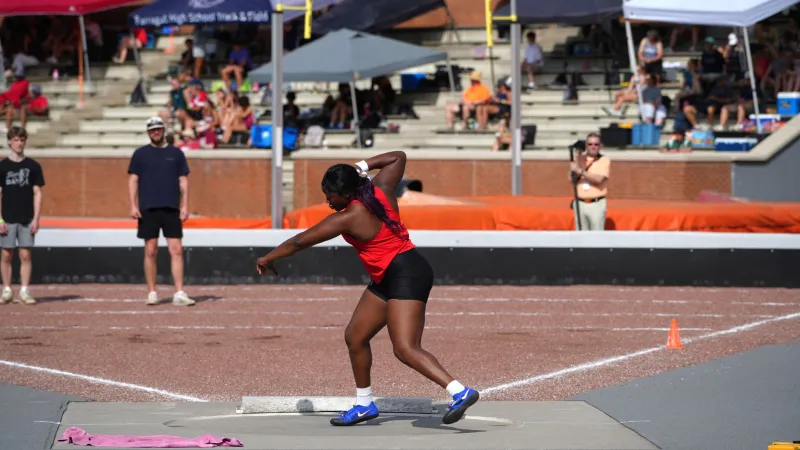
The result was the beginning of event-specific body type optimization. Sprinters got shorter and more muscular. Throwers got dramatically bigger. Distance runners got leaner. High jumpers got taller. The era of the generalist Olympian — the guy who could do a bit of everything — was ending.
High jumper Valery Brumel of the Soviet Union, who set six world records between 1960 and 1963, stood 6'1" with a physique built for elastic power. Discus thrower Al Oerter of the United States, who won four consecutive Olympic gold medals from 1956 to 1968, was 6'4" and built like a linebacker. These weren't accidents of nature — they were early products of deliberate physical selection.
Peak age also began to drop in explosive events. Sprinters and jumpers were hitting their competitive peaks in their early-to-mid twenties. Endurance athletes were still peaking later, but the gap between event types was becoming visible.
The 1970s–1990s: Specialization Becomes Total
By the 1970s, the divergence between body types across Olympic events had become dramatic enough to be visually obvious. Watch footage from the Montreal 1976 or Los Angeles 1984 Olympics and you can immediately identify what event an athlete competes in just by looking at them.
Swimmers, following the template set by Mark Spitz and later amplified by research into hydrodynamics, were getting taller with longer torsos and broader shoulders. The average height of Olympic male swimmers crept upward decade by decade. Female gymnasts, by contrast, were getting smaller and younger — a troubling trend that would eventually prompt rule changes requiring a minimum age of 16 to compete.
Nutrition science entered the picture seriously during this period. Athletes began working with dietitians to optimize body composition with a precision that earlier generations couldn't have imagined. The difference between 8% and 12% body fat for a sprinter became a quantifiable performance variable. Carbohydrate loading before endurance events went from folk wisdom to scientific protocol.
Strength and conditioning as a distinct discipline emerged and matured. Athletes were no longer just training their event — they were systematically developing the specific physical attributes their event required, guided by coaches who understood biomechanics and physiology.
Today's Athlete: Engineered for a Single Purpose
The modern elite Olympic athlete is, in many ways, a purpose-built machine. Michael Phelps, who won 23 Olympic gold medals across four Games, had a wingspan of 6'7" on a 6'4" frame, size-14 feet that functioned like flippers, and a torso proportionally longer than his legs. His body was, by measurable metrics, extraordinarily well-suited to swimming fast. He also trained with an obsessiveness that earlier generations couldn't have sustained.
Usain Bolt, at 6'5", was considered by many sports scientists to be too tall to sprint effectively — conventional wisdom said the optimal 100-meter sprinter was shorter, with a faster stride rate. Bolt rewrote that assumption with a combination of unprecedented stride length and exceptional stride frequency. But he was an outlier. The average elite male sprinter today is still closer to 5'10" to 6'0", lean, and muscular in very specific ways.
Peak performance age has shifted in fascinating directions. Gymnasts and swimmers often peak in their late teens and early twenties. Sprinters peak around 23–26. Distance runners frequently peak in their late twenties and can remain competitive into their mid-thirties. Weightlifters and throwers often peak later still. The concept of a single "peak age" for an Olympic athlete has essentially become meaningless — it depends entirely on the event.
What the Timeline Tells Us
Zoom out across 2,800 years of Olympic competition, and the trajectory is clear. The ancient ideal was balance and completeness. The early modern ideal was simply showing up with a willing body. The mid-20th century ideal was physical gifts plus hard work. Today's ideal is physical gifts plus hard work plus nutrition science plus sports psychology plus biomechanical analysis plus recovery protocols plus genetic luck.
Every generation of athletes has been the best generation of athletes — because every generation had access to tools and knowledge that the previous one didn't. The ancient Greek pentathlete was the complete human specimen of his era. Michael Phelps was the complete human specimen of his.
The next complete human specimen is probably already in a pool somewhere, or on a track, or in a weight room — being measured, analyzed, and optimized in ways we don't yet have words for. The face of the champion keeps changing. It always has.