Play Through It: The Ancient Athlete's Relationship With Pain Would Get a Modern Coach Fired
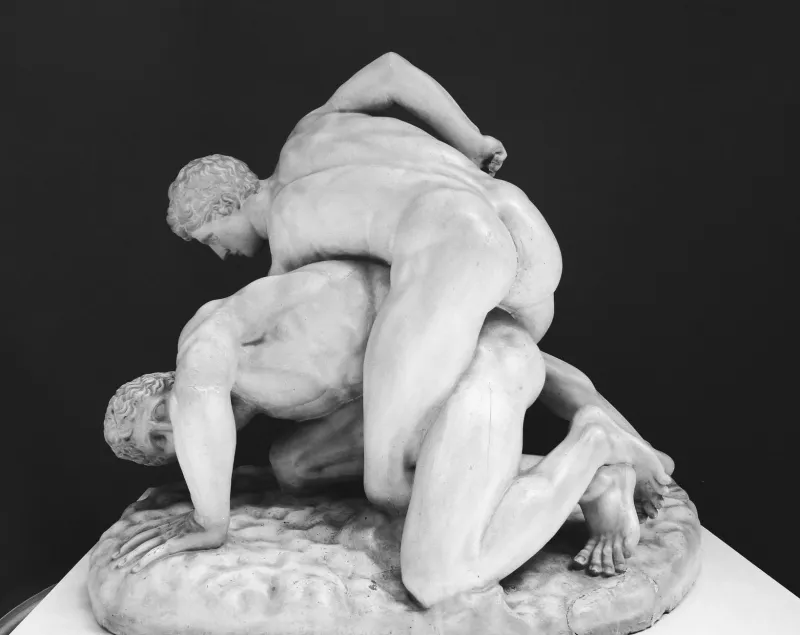
In the ancient Greek record books — such as they were — one of the most celebrated stories involves a wrestler named Eurydamas of Cyrene. During competition at Delphi, his opponent knocked out several of his teeth. Rather than stop, rather than spit them onto the ground and give his rival the psychological satisfaction, Eurydamas swallowed them. He won the match. The crowd loved him for it.
This wasn't an extreme outlier. It was a cultural ideal. The ancient Greek athletic world didn't just tolerate competing through pain — it mythologized it. The athlete who quit because something hurt was a figure of contempt. The athlete who absorbed damage and kept moving was the athlete worth singing about.
Modern sports medicine looks at that story and sees a traumatic brain injury risk, a choking hazard, and a failure of duty of care. Both reactions are completely correct. And the distance between them tells us something important about how fundamentally our relationship with athletic suffering has changed — and why the change is more complicated than it looks.
What Ancient Athletes Actually Endured
The ancient Olympics included events that made injury not just likely but essentially guaranteed. The pankration — a combat sport combining wrestling and striking with almost no restrictions — regularly produced broken fingers, dislocated joints, and occasionally death. Competitors entered knowing this. Families accepted it. Judges didn't stop a match because someone was bleeding.
Boxing was similarly brutal. Ancient Greek boxing had no weight classes, no round structure, and no points system. Fights continued until one competitor was unconscious, submitted, or dead. The himantes — leather straps wrapped around the hands — were designed to protect the knuckles of the person throwing punches, not the face receiving them. Later Roman versions added metal studs. Cauliflower ears, broken noses, and permanent facial disfigurement were standard career outcomes for successful boxers, not exceptional ones.
Philostratus documented athletes competing on fractured limbs. Pausanias recorded a boxer named Creugas who died during competition and was posthumously awarded the victory because his opponent had broken the rules in the final exchange. The death itself wasn't the disqualifying factor — the rule violation was. That distinction matters. It tells you exactly where the ancient Greek moral framework placed the value of a competitor's life relative to the integrity of the contest.
The Economics of Pain
Understanding why ancient athletes competed through injuries that would sideline modern Olympians requires understanding what was actually at stake — and it wasn't just glory.
An Olympic victory in ancient Greece was life-changing in material terms. Champions received cash prizes at other Panhellenic games, were guaranteed free meals for life in their home city, had statues erected in their honor, and often received tax exemptions and other civic privileges. Pausanias described the return of an Olympic champion to his hometown as a triumphal procession through a breach made in the city wall — because a city that had produced an Olympic champion didn't need its walls for defense. The gods favored it.
For an athlete from a modest background, a single major victory could transform his family's economic position for generations. Walking away from a competition because of a torn muscle wasn't just personally painful — it could mean walking away from the only significant wealth-generating opportunity of your life. The risk calculation was entirely different from what a modern American athlete faces.
This economic pressure wasn't unique to antiquity. It persisted in American sports well into the 20th century. Before guaranteed contracts, before union protections, before the kind of money that makes financial security achievable without playing through pain, American athletes faced similar calculations. The cultural mythology of playing hurt — the quarterback who finishes the game on a broken ankle, the point guard who comes back too early from surgery — has roots in genuine economic desperation that the mythology tends to sanitize.
The Philosophical Dimension
Beyond economics, ancient Greek athletic culture was shaped by a philosophical framework that treated the body as an instrument of the will rather than a possession to be protected. The Stoic tradition, which deeply influenced Roman athletic culture, held that pain was a matter of perception — that the disciplined mind could choose not to be controlled by physical suffering. Competing through injury wasn't just economically rational; it was philosophically virtuous.
This framework produced genuinely extraordinary performances. It also produced deaths that were entirely preventable and careers ended years before they needed to be. The same philosophy that made Eurydamas swallow his teeth made other athletes continue competing on injuries that became permanently disabling.
The modern counterphilosophy — that the athlete's long-term health is more important than any single competition — is actually quite recent. It took hold slowly, unevenly, and against significant cultural resistance. American football culture was still celebrating players who "played through it" well into the 21st century, right up until CTE research made the cost of that mythology impossible to ignore.
What Modern Medicine Changed — And What It Didn't
The obvious explanation for why modern athletes sit out injuries that ancient competitors played through is that modern sports medicine is better. This is true, but it's only part of the story.
Better imaging means we now know exactly what's torn, fractured, or inflamed in ways ancient physicians couldn't. Better surgical techniques mean that sitting out and repairing an injury properly often produces a better long-term outcome than competing through it. Better understanding of cumulative damage — particularly to joints, tendons, and the brain — means we can calculate the long-term cost of short-term toughness in ways that weren't possible before.
But modern athletes also sit out injuries more readily because the economic and cultural calculus has shifted. Guaranteed contracts mean a modern NFL player doesn't lose income by missing a game with a high ankle sprain. Career longevity is now understood as a financial asset — an athlete who manages their body well can earn for fifteen years instead of seven. The sports science that supports this isn't just medical; it's actuarial.
What hasn't changed is the social pressure. American sports culture still rewards toughness, still tells stories about athletes who played hurt, still treats the decision to rest as requiring justification in a way the decision to compete doesn't. The mythology persists even as the practice changes.
The Paradox That Isn't
At first glance, there's something paradoxical about the fact that ancient athletes with no pain management, no surgical options, and no sports medicine competed through injuries that modern athletes with all of those advantages would sit out. But the paradox dissolves when you look at incentive structures rather than just medical technology.
Ancient athletes competed through injuries because the cost of not competing was catastrophic and the concept of protecting future athletic longevity barely existed. Modern athletes sit out comparable injuries because the cost of not competing is manageable and the value of long-term health is understood in both medical and financial terms.
The ancient Greek athlete who swallowed his teeth and kept wrestling wasn't tougher than a modern Olympian. He was operating in a system that gave him no good alternative. Recognizing that distinction is how we stop mythologizing suffering and start asking better questions about what we actually want athletic culture to demand of the people who compete in it.