Chaos in St. Louis: The Olympic Disaster That Nearly Ended America's Love Affair With the Games
Chaos in St. Louis: The Olympic Disaster That Nearly Ended America's Love Affair With the Games
In the summer of 1904, the city of St. Louis, Missouri, was already throwing the party of a lifetime. The Louisiana Purchase Exposition — better known as the World's Fair — had drawn millions of visitors to a sprawling fairground on the edge of the city. Organizers figured, why not add the Olympics to the mix?
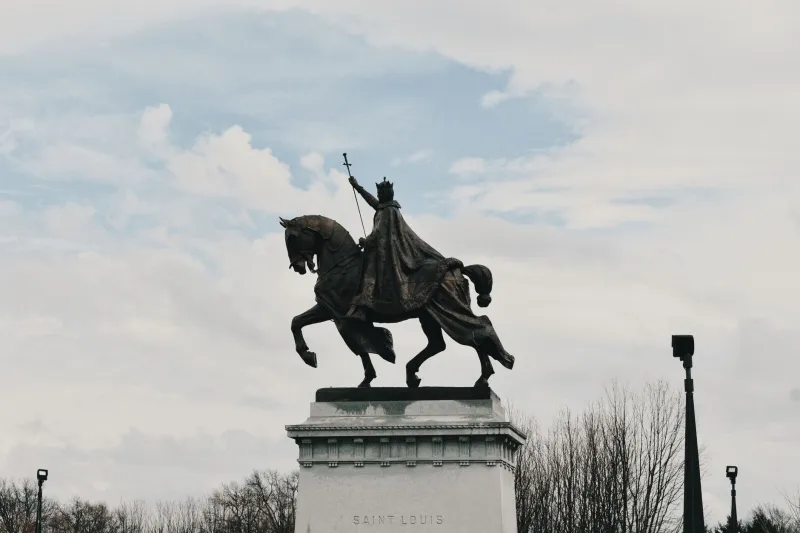
 Photo: St. Louis, via www.delo.si
It seemed like a reasonable idea at the time. It turned out to be one of the worst decisions in the history of international sport.
What unfolded over those sweltering summer months was less a celebration of athletic excellence and more a cautionary tale about what happens when ambition, poor planning, and outright prejudice collide on the world's biggest stage. The 1904 St. Louis Games remain, to this day, the strangest, most embarrassing, and — in a perverse way — most instructive chapter in American Olympic history.
A Sideshow Swallows the Games
To understand just how far things went wrong, you have to understand how the Olympics got to St. Louis in the first place. The Games had originally been awarded to Chicago. But the organizers of the World's Fair lobbied hard — and successfully — to have them moved south along the Mississippi. The argument was simple: the fair would draw a massive crowd, and the Olympics could ride that wave.
What actually happened was the opposite. The Olympics got swallowed whole.
For most of the summer, it was nearly impossible to tell where the World's Fair ended and the Olympic competition began. Events were scattered across weeks and months, buried in a sprawling schedule alongside livestock shows and cultural exhibitions. Many events had almost no spectators. Some had almost no competitors.
Of the 651 athletes who participated, 580 were American. Let that sink in. A competition billed as a global showcase of international athletic achievement was, in practice, a domestic track meet with a fancy name. Most European nations simply didn't bother making the journey. The travel costs were prohibitive, the organization was a mess, and frankly, nobody was sure the whole thing was worth the trip.
Pierre de Coubertin, the French baron who had revived the modern Olympics just eight years earlier in Athens, was so disgusted that he didn't even attend.
 Photo: Pierre de Coubertin, via www.lithotherapie.guide
The Marathon That Rewrote the Definition of Cheating
If any single event captures the spirit of the 1904 Games, it's the marathon — a race so chaotic it reads more like a Marx Brothers sketch than an athletic competition.
The course itself was a nightmare: a 24.85-mile route through the Missouri countryside in mid-August heat, on unpaved roads that kicked up thick clouds of dust every time a support vehicle passed. Organizers provided only a single water station along the entire route, apparently as a deliberate test of endurance under dehydration. Athletes collapsed. Several runners were rushed to medical tents. One competitor from Cuba, Felix Carvajal, stopped mid-race to eat apples from an orchard — which turned out to be rotten — and still finished fourth.
The man who crossed the finish line first was an American named Fred Lorz. The crowd went wild. Officials prepared to award him the gold medal. Then someone noticed that Lorz had hitched a ride in a car for roughly eleven miles of the course. He was disqualified immediately.
The actual winner, Thomas Hicks, had been dosed with strychnine and brandy by his handlers during the race — a combination that was technically legal at the time and was considered a performance stimulant. He crossed the finish line hallucinating, barely conscious, and had to be held upright by two men. He was declared the champion.
It was, by any modern standard, a complete farce. And yet it happened, officially, at the Olympic Games.
The Part Nobody Wants to Talk About
As bad as the marathon was, the most troubling chapter of the 1904 Games was something called the "Anthropology Days" — a two-day exhibition organized alongside the official program in which Indigenous people, Africans, Filipinos, and other groups brought to the World's Fair as part of ethnographic displays were made to compete in athletic events.
The stated purpose, according to organizers, was to test whether so-called "primitive" peoples could match Western athletes in competition. The results were predictably used to reinforce racist pseudoscience of the era. De Coubertin, upon hearing about it, reportedly called it an "outrage" — one of the few things about the 1904 Games that drew his strong public reaction.
It was a low point not just for the Olympics but for American sport, a reminder that the ideals of fair competition and universal human dignity that the ancient Greeks had embedded in their Games — however imperfectly — were being actively betrayed on American soil.
What Ancient Olympia Would Have Made of All This
The original Olympic Games, held at Olympia in Greece beginning in 776 BC, were built on a framework of sacred seriousness. Athletes traveled months to compete. A truce between warring city-states was declared to allow safe passage. Competitors swore oaths before the statue of Zeus. The Games were embedded in ceremony, tradition, and genuine reverence.
The contrast with St. Louis couldn't be sharper. Where Olympia had ritual and structure, St. Louis had chaos and improvisation. Where ancient athletes competed before tens of thousands of engaged spectators, many 1904 events took place before nearly empty stands. Where the ancient Games represented the best of what Greek civilization valued, the 1904 edition reflected some of the worst impulses of early 20th-century America.
The Lesson That Saved the Olympics
And yet — here's the thing — the disaster mattered. It mattered enormously.
The 1904 Games were such an obvious failure that they forced the Olympic movement to reckon seriously with what it actually wanted to be. The 1906 Intercalated Games in Athens (technically unofficial but widely credited with restoring momentum) and the triumphant 1908 London Games that followed helped reset the tone. Organizers learned that you cannot bolt the Olympics onto something else and expect it to thrive. The Games needed their own identity, their own infrastructure, their own reason for existing.
In a strange way, St. Louis taught the Olympic movement the same lesson that ancient Olympia had built into its DNA from the very beginning: the Games only work when they're treated as something genuinely special. When the spectacle is taken seriously. When the athletes are respected. When the competition is the point.
America eventually learned that lesson. It took a while. But the chaotic summer of 1904 on the banks of the Mississippi was, in its own disastrous way, part of the education.