More Than a Medal: The Long, Strange Journey from Olive Branches to Olympic Gold

Imagine winning the most prestigious athletic competition in the world and walking away with nothing but a crown made of leaves. No trophy. No cash prize. No gold medal to hang around your neck. Just a branch, carefully cut from a sacred olive tree, pressed into a wreath and placed on your head in front of thousands of cheering spectators.
To a modern sports fan, that might sound like a raw deal. To an ancient Greek athlete, it was everything.
The story of how sports prizes evolved from that simple olive wreath to the three-tiered medal ceremony we watch every four years is a lot stranger — and more recent — than most people realize. And it reveals something fascinating about how different societies have decided to answer the same basic question: what is athletic achievement actually worth?
The Wreath That Was Worth More Than Gold
The ancient Olympic Games, which began in 776 BC at Olympia in western Greece, handed out exactly one prize: the kotinos, a wreath woven from wild olive branches cut from a sacred tree near the Temple of Zeus. There was no second place. No silver. No consolation prize for the runner-up. You either won or you didn't, and the winner got leaves.
But here's the thing — those leaves meant everything. In ancient Greek culture, the wreath wasn't a consolation prize dressed up in symbolism. It was the prize, full stop. Winning at Olympia carried divine weight. Athletes who returned home with a kotinos were treated like heroes in the literal, mythological sense. Cities would tear down sections of their walls to welcome champions back, because a city that produced an Olympic winner, the thinking went, didn't need defensive walls — the gods were clearly on their side.
Poets like Pindar wrote elaborate odes celebrating victors. Statues were erected in their honor. Some city-states paid their champions handsomely in local benefits — free meals for life, front-row seats at public events, tax exemptions. The wreath itself might have been modest, but the social currency it unlocked was enormous.
Offering gold instead, some ancient writers suggested, would have cheapened the whole thing. The point was that you couldn't buy what the wreath represented. It was sacred, not transactional.
When Prizes Got Complicated
Not every ancient competition stuck to the wreath-only model. The Panhellenic circuit — the four major games of ancient Greece — each used different prizes. The Pythian Games at Delphi awarded laurel wreaths. The Isthmian Games used pine. The Nemean Games, like Olympia, used wild celery or olive.
Other, less prestigious local competitions were far more willing to offer tangible rewards. Amphorae filled with olive oil, bronze tripods, and even cash payments showed up at regional games. The ancient sports world wasn't uniformly idealistic about prizes — it was a spectrum, and the Olympic model of symbolic reward sat at one extreme end of it.
When the ancient Games were abolished in 393 AD under the Roman Emperor Theodosius I, the entire tradition of Greek athletic ceremony went with them. For over a millennium, there was no unified framework for how to honor athletic achievement on a large scale.
The Modern Medal: A Newer Invention Than You'd Think
When Pierre de Coubertin revived the Olympics in Athens in 1896, the medal system we know today didn't arrive fully formed. At those first modern Games, the winner received a silver medal and an olive branch — a nod to antiquity. Runners-up got a copper medal and a laurel branch. Third place got nothing official at all.
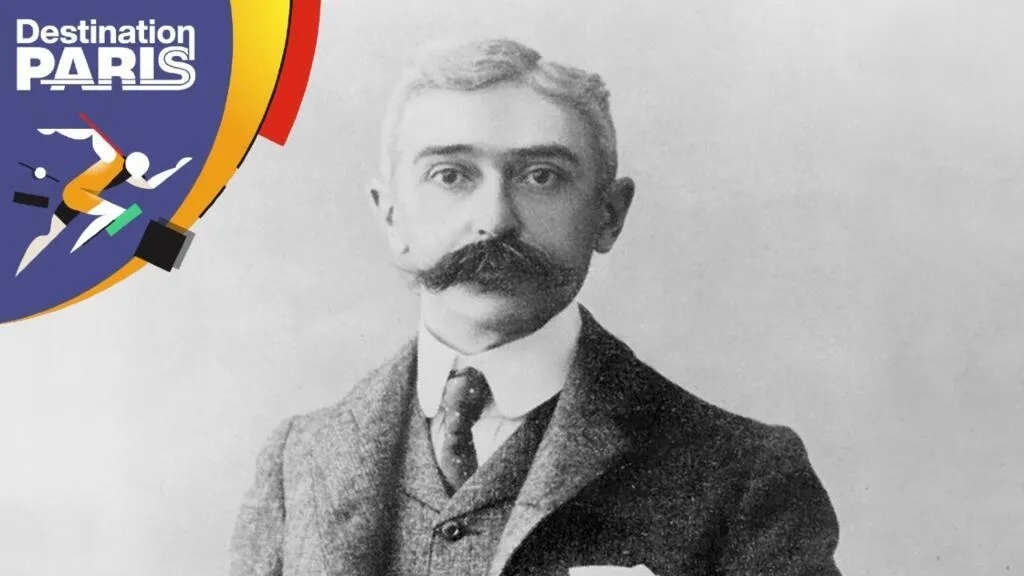 Photo: Pierre de Coubertin, via s.france24.com
The gold-silver-bronze hierarchy that feels so natural to us now wasn't standardized until the 1904 St. Louis Olympics, and even then it took decades for the three-athlete podium ceremony to become a consistent, formalized ritual. The iconic image of three athletes standing on a tiered platform, national anthem playing, flags rising — that didn't become a regular fixture of the Games until the 1932 Los Angeles Olympics.
That's right. The podium ceremony, one of the most recognizable images in all of sports, was essentially invented in Southern California.
America and the Medal Ceremony
It's no coincidence that the standardized podium ceremony took shape on American soil. By the 1930s, the US had developed a sports media culture that craved clear, visual narratives. Radio broadcasts needed moments. Newsreels needed images. The three-step podium gave both — a clean, hierarchical picture that told the whole story of a competition in a single frame.
American athletes and American audiences helped turn the medal ceremony into a global ritual. As US television coverage of the Olympics grew through the mid-20th century, the ceremony became appointment viewing. When Bob Beamon shattered the long jump world record in Mexico City in 1968, or when the 1980 US hockey team stood on the ice after the Miracle on Ice, the medal ceremony was the emotional punctuation mark that made those moments complete.
 Photo: 1980 US hockey team, via d2rbybg5ibx87t.cloudfront.net
The ceremony also became a stage for protest and statement. Tommie Smith and John Carlos raising gloved fists on the 1968 podium turned the medal platform into one of the most politically charged moments in sports history — proof that the ceremony had become far more than a prize-giving.
What the Prize Says About the Era
Look at how athletic prizes have changed and you're really looking at how each era valued sport itself. Ancient Greece tied victory to divine favor and civic identity — so the prize was sacred and symbolic. The early modern Olympics, shaped by aristocratic ideals of amateurism, kept prizes modest and symbolic to distinguish sport from commerce. Twentieth-century America, with its media infrastructure and national pride, turned the ceremony into spectacle.
Today, Olympic medals are technically gold-plated silver (actual solid gold medals haven't been awarded since 1912), but nobody seems to mind. The value isn't in the metal. It's in what the moment represents — the years of training, the national identity, the global stage.
In that sense, the ancient Greeks would probably understand it just fine. They knew all along that the wreath was never really about the leaves.