Crossing the Line: The Obsessive American Quest to Define Exactly Where a Race Ends
Photo: Wikideas1, CC0, via Wikimedia Commons
Every sprint ends the same way now. The runners hit a thin strip of light, a camera fires at blinding speed, and within seconds officials are studying an image so precise it can separate two athletes by a hundredth of a second. We take all of that for granted. But for most of sports history, the finish line was a much messier concept — and the story of how it became the hyper-precise boundary we know today runs straight through American track and field.
Where It Started: A Line in the Sand
The ancient Greeks didn't have a finish line in any modern sense. At Olympia, the stadion race — a roughly 200-meter sprint that was the centerpiece of the ancient Olympics — ended at a stone sill built into the track. Athletes ran toward it, and the first man to reach it won. Simple. The stone sill at Olympia still exists today, and you can walk up to it. It's one of the oldest finish lines on earth.
But "reaching" a line when multiple men arrive nearly simultaneously was never clean. Ancient Greek judges — called Hellanodikai — stood at the finish and called the winner by sight. There were no tiebreakers, no slow-motion review, and no appeals process worth speaking of. If two men appeared to arrive at the same time, the judges conferred and made a call. Their word was final.
For centuries, that was good enough. Sport was theater as much as competition, and close finishes added drama rather than demanding resolution. The idea that a race needed an objectively verifiable endpoint — a defined moment that could be examined, measured, and confirmed — didn't really emerge until sport became something more serious than a festival ritual.
The Tape Appears
The finish-line tape — that thin strip of string or ribbon stretched across the track at chest height — is such a familiar image in racing that it's easy to assume it's ancient. It isn't. The tape appears to have entered regular use in British and American track meets during the second half of the 19th century, as organized athletics began to formalize its rules and records started to matter in a new way.
By the 1860s and 1870s, amateur athletic clubs in the United States were holding regular competitions with printed programs, official timekeepers, and paying spectators. The need to determine a winner precisely — and to do so in a way that the crowd could see and accept — pushed organizers toward visual solutions. A tape stretched across the track gave judges a clear reference point and gave spectators a satisfying visual moment: the winner breaking through.
The tape also served a practical purpose. In a close race, a runner who broke the tape first had physically contacted the finish before any other competitor. It wasn't a perfect system, but it was better than pure eyeballing. American track officials in the late 19th century were particularly zealous about standardizing these procedures. As the Amateur Athletic Union (AAU) took shape in 1888, it began codifying rules for competitions that included finish-line protocols, timing standards, and the qualifications for official timekeepers.
The Stopwatch Revolution
Running alongside the development of the finish line was the evolution of the stopwatch. Early timekeeping at races was done with pocket watches — reliable enough for casual use, but wildly inconsistent across different officials. A race timed by three men with three different watches could produce three different results, and it often did.
American athletics organizers pushed hard for standardized timing equipment and training for officials. By the 1890s, split-second stopwatches accurate to one-fifth of a second were standard at major US meets. The 1896 Athens Olympics — where American athletes dominated, winning nine of the twelve track and field events — used hand timing that was considered state-of-the-art for its era, though the results would look comically imprecise by modern standards.
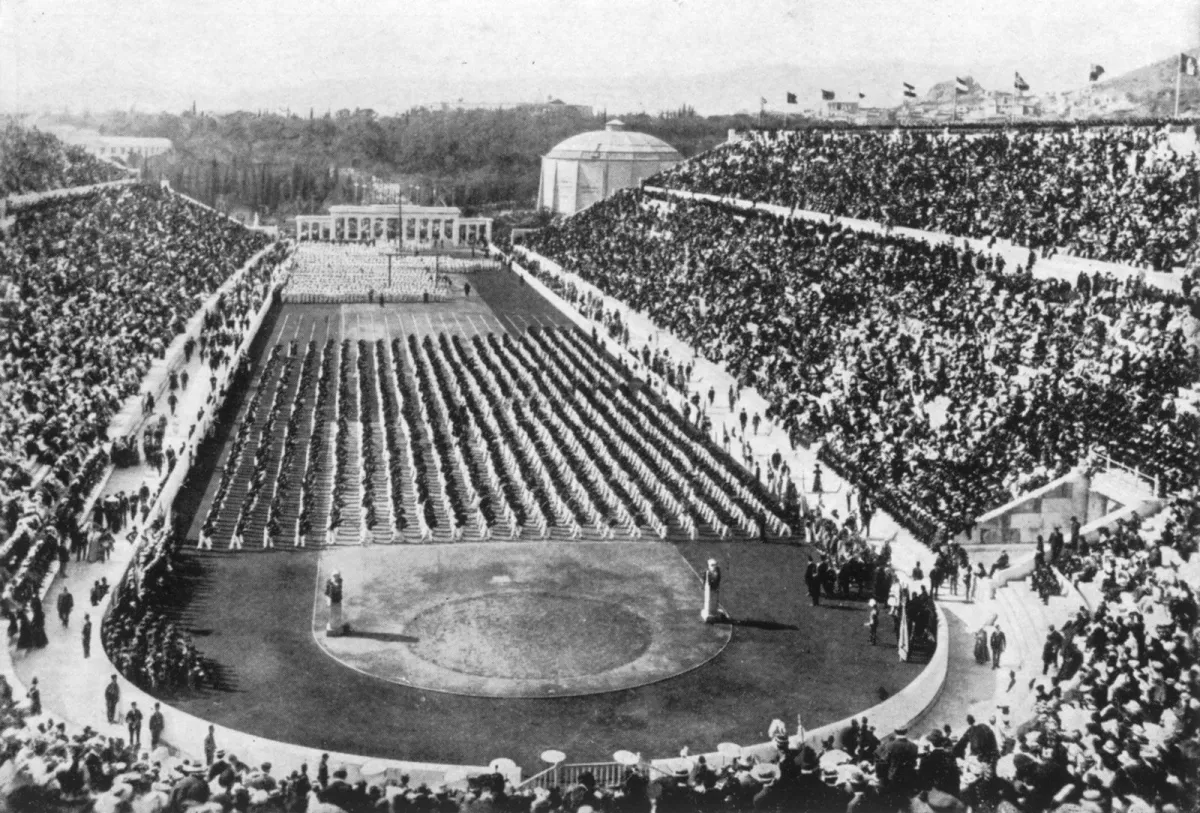 Photo: 1896 Athens Olympics, via cdn.britannica.com
What the Athens Games demonstrated, though, was that international competition demanded international standards. You couldn't have American timekeepers using one method and European officials using another. The push toward universal finish-line and timing rules accelerated after 1896, and American athletic organizations were consistently at the forefront of that effort.
The Photo Finish Changes Everything
The real revolution came from an unexpected direction: horse racing. Photo finish cameras were first used experimentally at racetracks in the 1880s and became commercially viable in the early 20th century. The technology used a camera positioned at the finish line to capture a continuous vertical strip of film, recording every animal — or athlete — as they crossed the line in precise sequence.
Track and field adopted the technology more slowly. The 1932 Los Angeles Olympics used a rudimentary photo finish system, and by 1948 in London, photo finish cameras were considered essential equipment for major competitions. The images they produced weren't just useful for close calls — they were transformative for record verification. A time that had been called by hand could now be cross-referenced against a visual record.
American track officials and equipment manufacturers were central to refining these systems throughout the mid-20th century. The obsession with getting the finish right — with eliminating any ambiguity about who crossed the line first and exactly when — drove continuous investment in faster film, better optics, and more precise synchronization between the camera and the timing clock.
From Film to Light Beams
Today's finish-line technology would be unrecognizable to those early American AAU officials, but it's built on the same core principle they were chasing: an objective, verifiable record of exactly when each athlete crossed the line.
Fully automatic timing (FAT) systems now use a transponder in the starting blocks that fires the clock the instant the gun goes off, and a camera at the finish line that captures images at up to 10,000 frames per second. The result is timing accurate to one-thousandth of a second. World records in the 100 meters are now regularly separated by margins that no human eye could ever detect.
Usain Bolt's 9.58-second world record, set in Berlin in 2009, was verified by a system that would have seemed like science fiction to the men who first stretched a piece of string across a cinder track in 1870s New York. But those men were asking the same question Bolt's timekeepers were answering: Where, exactly, does the race end?
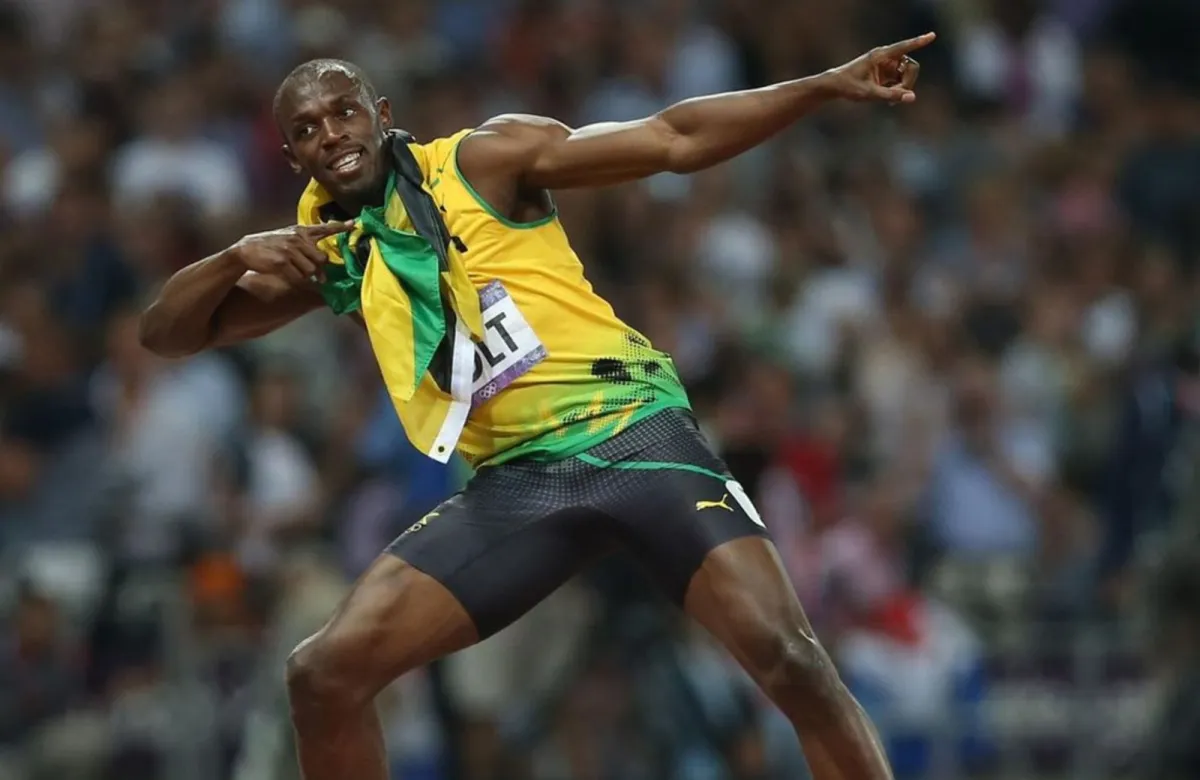 Photo: Usain Bolt, via assets.khelnow.com
The finish line looks simple. The history behind it is anything but.