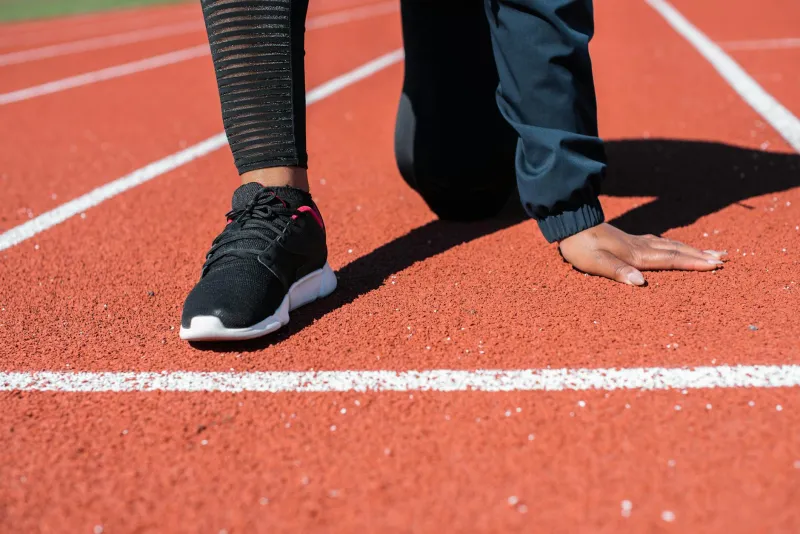
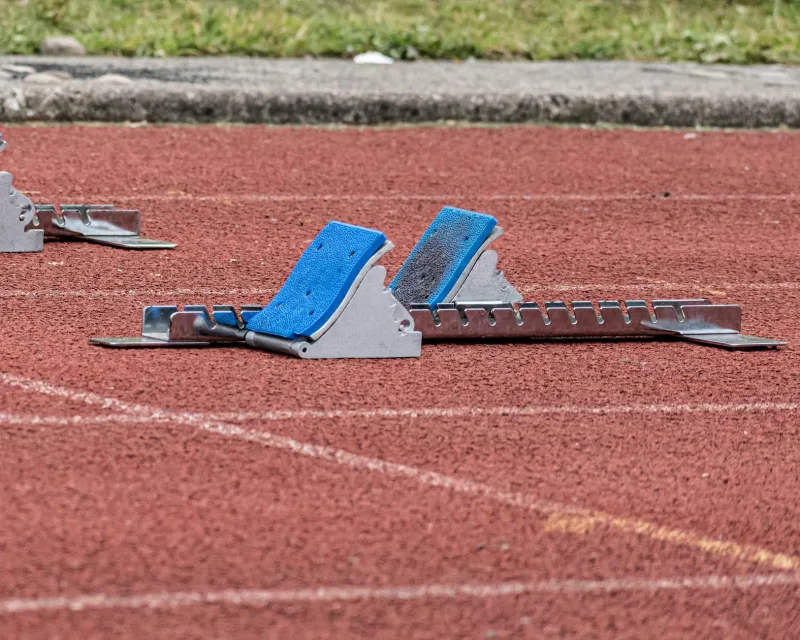
Sole Revolution: The Shoe Technology That Rewrote What the Human Body Can Do

In 490 BC, a Greek messenger named Pheidippides reportedly ran roughly 25 miles from Marathon to Athens to deliver news of a military victory. Whether he wore sandals, wrapped his feet in leather strips, or went completely barefoot is a matter of historical debate. What isn't up for debate is this: whatever was on his feet, it wasn't helping him.
Fast forward to the 2024 Paris Olympics, where marathon runners in Nike Alphafly and Adidas Adizero shoes crossed the finish line with carbon fiber plates embedded beneath their soles, foam compounds engineered to return energy with every stride, and geometry designed by biomechanical engineers. The gap between those two moments in athletic footwear history is one of the most underappreciated stories in sports.
Ancient Feet, Ancient Solutions
The earliest Olympic athletes in Olympia, Greece, competing from 776 BC onward, mostly competed barefoot. The stadion — a short sprint of roughly 200 meters — was run on packed dirt and sand, and bare feet were considered perfectly sufficient. Some athletes wore simple sandals called krepides for travel, but for competition, skin met earth.
This wasn't negligence. It was practical. Sandals of the era offered no meaningful performance benefit for short explosive efforts. The Greeks were also deeply philosophical about the unadorned human form. Competing naked was common. Shoes would have felt almost ornamental.
For longer distances, though, even ancient athletes recognized the problem. Soldiers and couriers who covered serious ground developed wrapped leather footwear — more protection than propulsion, but a start. The concept that something on your foot could actively help you rather than just protect you? That was still about 2,500 years away.
The Long Flat Middle
For centuries, athletic shoes evolved slowly. Medieval and Renaissance-era running competitions — yes, they happened — were contested in whatever everyday footwear the competitors owned. Leather soles, wooden soles, bare feet. Performance was almost entirely a function of the athlete's body.
The first real turning point came in the mid-1800s, when English runners began experimenting with spiked shoes for track events. The logic was simple: spikes grip the ground. Better grip means less slipping, less energy lost, faster times. By the time the modern Olympic Games launched in Athens in 1896, spiked leather shoes were standard issue for serious track competitors.
Those early spikes were crude by modern standards — heavy leather uppers, metal spikes more suited to a work boot than a racing shoe — but they represented the first time footwear was deliberately engineered to improve athletic output rather than simply cover the foot.
The American Rubber Revolution
The United States played a pivotal role in the next leap. By the early 20th century, American manufacturers were experimenting with rubber soles for track shoes, and the country's growing obsession with competitive athletics created a market for performance-focused footwear that Europe hadn't yet developed.
Adolph Dassler — the German founder of what would become Adidas — is often credited with producing the first purpose-built Olympic track shoes in the 1930s. Jesse Owens wore them at the 1936 Berlin Games, where he won four gold medals. Whether the shoes meaningfully contributed to those wins is impossible to isolate, but the symbolism stuck: performance footwear and elite athletic achievement were now linked in the public imagination.
Post-World War II, American brands like Converse and later Nike entered the space aggressively. Bill Bowerman, the University of Oregon track coach who co-founded Nike, famously poured rubber into a waffle iron in 1971 to create a sole with better traction and lighter weight. The waffle trainer became iconic. More importantly, it represented a new mentality: shoes weren't just gear, they were technology.
The Carbon Plate Moment
Everything accelerated after 2017, when Nike released the Vaporfly — a marathon shoe containing a carbon fiber plate sandwiched inside a thick stack of highly responsive foam. The shoe was designed to reduce the metabolic cost of running, essentially giving energy back to the athlete with each footfall.
The results were staggering. Within two years of the Vaporfly's release, marathon world records fell for both men and women. Eliud Kipchoge of Kenya ran a sub-two-hour marathon in 2019 — a barrier that had seemed impossible — wearing a prototype version of the shoe. At the Tokyo 2020 Olympics, the vast majority of marathon and distance running medalists wore carbon-plated shoes.
World Athletics, the governing body for track and field, scrambled to establish regulations. They capped sole thickness and carbon plate specifications to prevent footwear from completely overwhelming human performance. It was, in a sense, sport acknowledging that the shoes had become too powerful.
For sprinters, the evolution followed a parallel track. Modern sprint spikes are engineering marvels — sub-100-gram constructions with carbon fiber plates, anatomically contoured lasts, and spike configurations tuned for specific track surfaces and race distances. Biomechanics researchers have calculated that modern sprint footwear contributes meaningfully to times at every distance from 100 meters to 400 meters.
What Could the Ancients Have Done?
It's a fun question to sit with. If you put Eliud Kipchoge's Alphaflys on Pheidippides' feet, what changes? If ancient Greek sprinters lined up in modern carbon-plated spikes, how close to today's times could they get?
The honest answer is: probably not as close as you'd hope. Modern footwear is only one variable in a system that includes nutrition science, sports medicine, training methodology, altitude training, and decades of accumulated biomechanical research. Ancient athletes were undoubtedly gifted — selection pressure for elite competition existed then as now — but they lacked the full infrastructure of modern performance.
That said, footwear alone has been estimated to account for somewhere between one and four percent of performance improvement in endurance events. In a sport measured in seconds and fractions thereof, that's enormous.
The Floor Keeps Rising
What makes the footwear story genuinely remarkable isn't any single innovation — it's the compounding effect. Each generation of shoe technology raises the floor of what's possible. Athletes today aren't just better trained and better fed than their predecessors; they're also better equipped in ways that directly translate to the stopwatch.
The ancient Greeks competed on equal footing, literally. Everyone was barefoot, everyone faced the same dirt, and the best body won. Today, the best body wearing the best shoe wins — and those two things are increasingly inseparable. The shoe has become part of the athlete.
From Olympia's packed sand to Paris's engineered track surface, from leather wrappings to carbon fiber plates, the story of athletic footwear is really the story of human ingenuity refusing to accept that any limit is permanent. Whatever record exists right now, somewhere in a lab, someone is designing the shoe that breaks it.