Four Years, One Shot: The Ancient Training Cycle That Still Rules Every Elite Athlete's Life

Four Years, One Shot: The Ancient Training Cycle That Still Rules Every Elite Athlete's Life
Imagine committing four years of your life to a single race. No second chances, no consolation prize, no next season starting in October. Just one morning, one track, one outcome — and then another four years of waiting before you get to try again.
That was the reality for every athlete who ever competed at the ancient Olympic Games in Olympia, Greece. And somehow, that brutal, unforgiving calendar didn't break the ancient Greek sports world. It built it.
The four-year interval between Games — what the Greeks called the Olympiad — was far more than a scheduling quirk. It became the organizing principle of an entire athletic culture. And if you look closely enough at how American Olympic hopefuls train today, you'll find that same ancient rhythm beating underneath everything.
Why Four Years? The Sacred Calendar Behind the Countdown
The ancient Greeks didn't pick a four-year cycle because it was scientifically optimal. They picked it because it aligned with their religious calendar. The Olympic Games were, at their core, a festival honoring Zeus, held every four years at the sanctuary of Olympia in the western Peloponnese. The interval was sacred before it was practical.
But practical it became. City-states across Greece quickly realized that four years was actually a useful amount of time — long enough to identify promising athletes, fund their training, and prepare them properly, but short enough to maintain urgency. You couldn't afford to waste a year. Every month of the Olympiad was accounted for.
The Greeks even used the Olympiad as a unit of historical time. Major events weren't dated by the year — they were dated by which Olympiad they fell in. The Games weren't just a sports competition. They were a civilizational clock.
Elis: The World's First Olympic Training Camp
Here's where it gets interesting for anyone who's ever watched an Olympic athlete talk about their training block. Ten months before the ancient Games, competitors were required to travel to Elis — the city-state responsible for organizing the Olympics — and submit to a mandatory training camp.
This wasn't optional. Athletes who wanted to compete had to show up at Elis and train under the supervision of the Hellanodikai, the official judges of the Games, for a full month before the festival. They trained together, were evaluated together, and were eliminated if they didn't meet the standard. It was part boot camp, part qualifying trial, and part religious preparation.
The ten months before arrival at Elis were the athlete's own responsibility. Serious competitors trained continuously, working with private coaches called paidotribes who structured their preparation around the looming deadline. Diet, physical conditioning, and technique were all managed with the four-year endpoint in mind. The Greeks understood, intuitively, that peak performance required long-range planning.
The Birth of Periodization — Before Anyone Had a Name for It
Modern sports science has a term for what those ancient coaches were doing: periodization. It refers to the practice of dividing a training cycle into phases — building a base of fitness, then adding intensity, then tapering before competition — to ensure an athlete peaks at exactly the right moment.
The concept is credited in modern form to Soviet sports scientist Leo Matveyev, who formalized it in the 1960s. But the underlying logic was already embedded in the Greek athletic tradition two and a half millennia earlier. Build across the Olympiad. Intensify in the months before Elis. Peak for the Games.
Every US Olympic coach working today operates on a version of this model. The four-year cycle creates what coaches call a "macrocycle" — the longest planning unit in an athlete's career. Within that macrocycle are smaller annual cycles, monthly training blocks, and weekly sessions. But all of it points toward one moment: the Olympic final.
How American Olympic Athletes Live the Ancient Calendar
Ask any US Track and Field athlete what year it is, and there's a decent chance they'll tell you in terms of the Olympic cycle. "This is a pre-Olympic year." "We're two years out." "Next summer is the Trials." The Games don't just matter — they organize time itself.
The United States Olympic and Paralympic Committee (USOPC) structures its funding, athlete support programs, and coaching resources around four-year blocks. Grants, stipends, and training center access are all calibrated to the Olympic cycle. Athletes who make a US Olympic team get resources that simply aren't available to those who miss the cut.
The US Olympic Trials — the domestic qualifier that determines who represents America — functions as a modern echo of the Elis training camp. It's the moment when all the preparation gets tested. You can train for four years and lose everything on a single afternoon in Eugene, Oregon. The Greeks would have understood that completely.
The Psychological Weight of the Four-Year Wait
One thing sports science has confirmed, and ancient Greek literature long suggested, is that the four-year cycle creates enormous psychological pressure. Ancient victory odes — like those written by the poet Pindar — are full of references to the anguish of waiting and the terror of failure. Winning an Olympiad didn't just bring glory. It meant four years of relief.
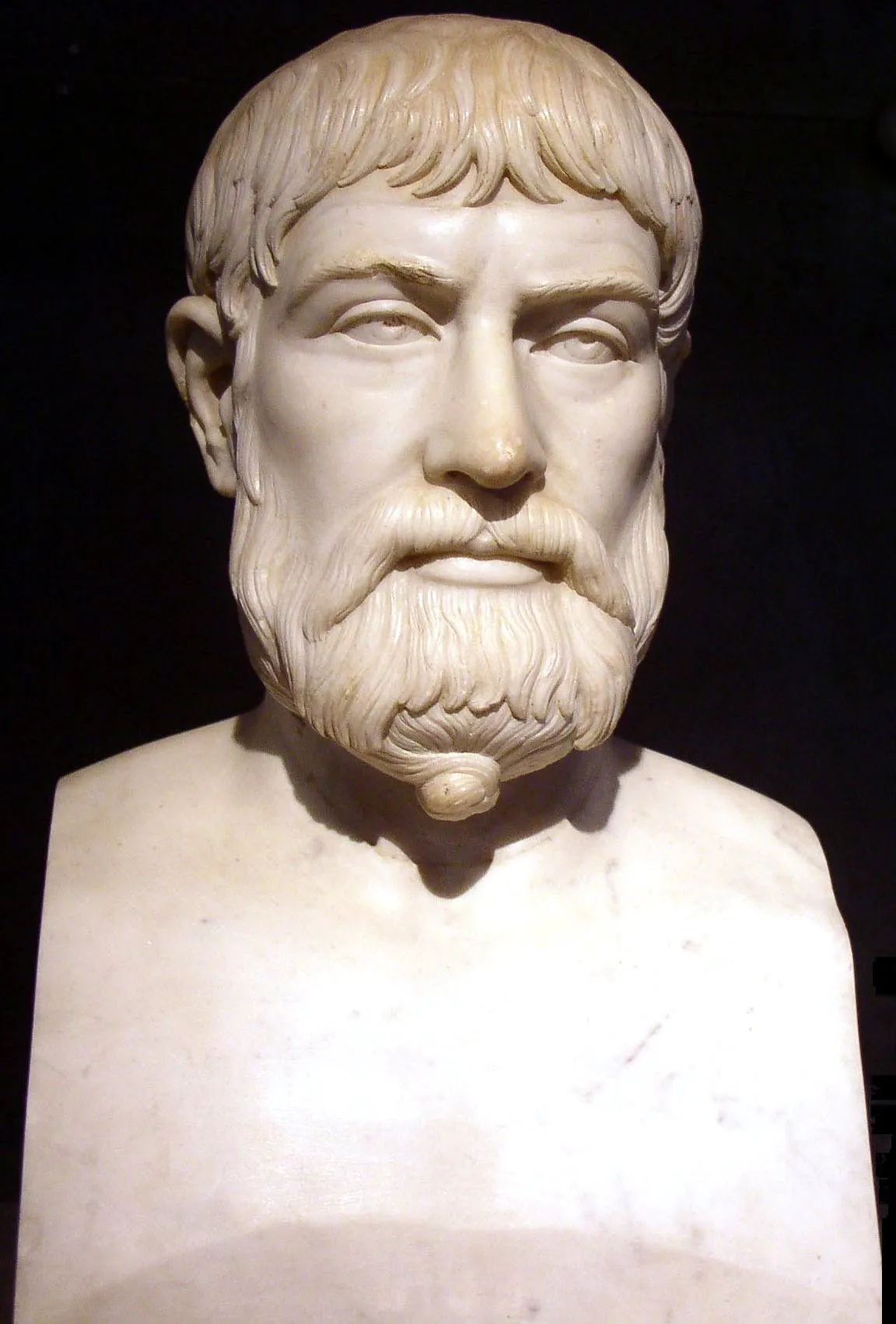 Photo: Pindar, via i.pinimg.com
Modern Olympic athletes describe the same experience. An injury in an Olympic year isn't just a setback — it can mean an entire four-year block is gone. A missed qualifying standard, a bad day at the Trials, a coaching change at the wrong moment: any of these can derail a career that was built around a single target date.
That pressure is a feature, not a bug. The rarity of the Olympic moment is precisely what makes it matter. If the Games happened every year, they'd be just another meet.
The Oldest Calendar in Sport Is Still Running
The ancient Olympic Games were abolished in 393 AD by the Roman Emperor Theodosius I, but the four-year rhythm they established never really went away. When Pierre de Coubertin revived the modern Olympics in 1896, he kept the cycle intact — not because of scientific reasoning, but because it felt right. Because it had always been that way.
Over a century later, that same ancient interval still quietly governs the lives of the most prepared athletes on the planet. The training plans are more sophisticated now. The nutrition science is better. The equipment is unrecognizable. But the fundamental structure — four years, one shot, everything on the line — is exactly what it was in Olympia.
Some clocks never need resetting.