The World's Oldest Road Trip: How Ancient Olympia Invented Sports Tourism
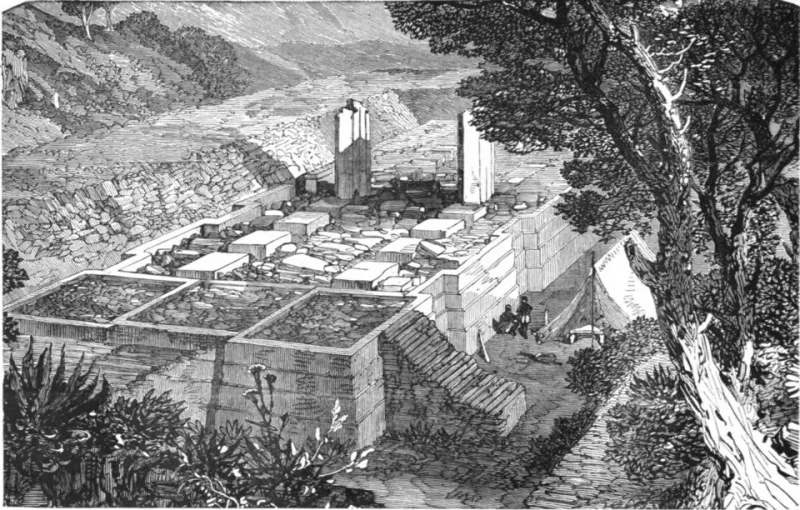
Photo: Henry M. Stanley, Public domain, via Wikimedia Commons
The World's Oldest Road Trip: How Ancient Olympia Invented Sports Tourism
Imagine walking three days through the August heat of the Greek Peloponnese, sleeping on the ground, eating whatever you can carry, just to watch a foot race that lasts less than a minute. No hotel reservation. No guaranteed seat. No app to tell you where to eat when you get there.
That was the ancient Olympic experience, and somewhere between 40,000 and 100,000 people made that journey every four years. They came from all over the Greek world — from Sicily and the coast of modern-day Turkey, from North Africa and the Greek colonies along the Black Sea. They came despite the heat, the distance, the dust, and the complete absence of modern amenities.
In doing so, they created something that nobody had a name for yet: sports tourism. And the economic and cultural machinery they set in motion is still running today.
A Valley That Had No Business Hosting Anything
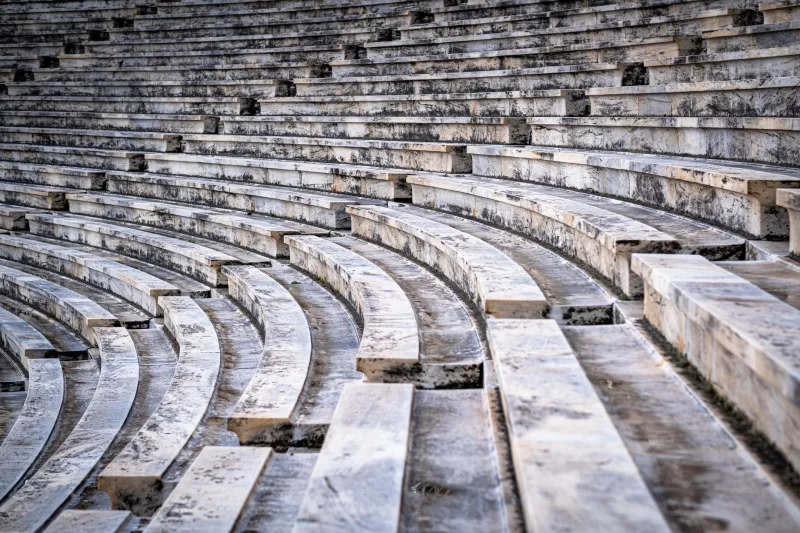
Olympia is not a city. It never really was. It's a sanctuary — a sacred precinct in the western Peloponnese where the Alpheios and Kladeos rivers meet, dedicated to Zeus and surrounded by a landscape that, for most of the year, was relatively quiet.
That's what makes its transformation during the Olympic Games so remarkable. Every four years, this essentially rural religious site became one of the most densely populated places in the ancient Greek world. The infrastructure challenge was enormous. There was no permanent housing for visitors, no established restaurant district, no organized transportation network.
What filled that gap was a spontaneous, self-organizing economy that would be immediately recognizable to anyone who's ever been to a Super Bowl city or an Olympic host town.
The Ancient Vendor Economy
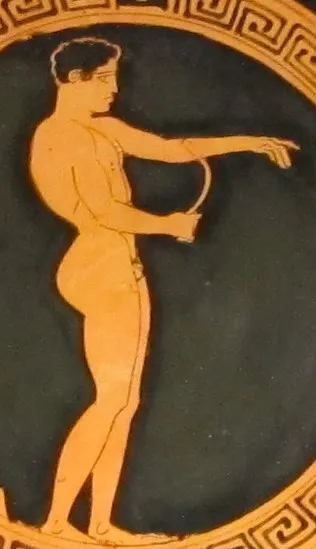
Merchants and vendors began arriving at Olympia days before the Games opened, claiming ground and setting up temporary stalls. They sold food, wine, religious offerings, and souvenirs — small figurines, painted ceramics, and other objects that a traveler could carry home as proof they'd been there. Sound familiar? The impulse to buy something at a major sporting event is apparently hardwired into the human brain.
Food vendors faced a genuinely difficult logistical challenge. Feeding tens of thousands of people in a location with limited fresh water and no permanent kitchen infrastructure required significant advance planning. Ancient sources mention that the smell of cooking fires and roasting meat was pervasive throughout the sanctuary grounds during the Games — which is honestly not that different from the parking lot of any major American stadium on a Sunday afternoon.
Philosophers and orators also set up in Olympia during the Games, using the massive captive audience as a platform to deliver lectures and spread ideas. Herodotus reportedly read portions of his Histories aloud at Olympia. The Games weren't just an athletic event — they were the ancient world's version of a multi-day convention, where business got done, political alliances were tested, and cultural exchange happened at scale.
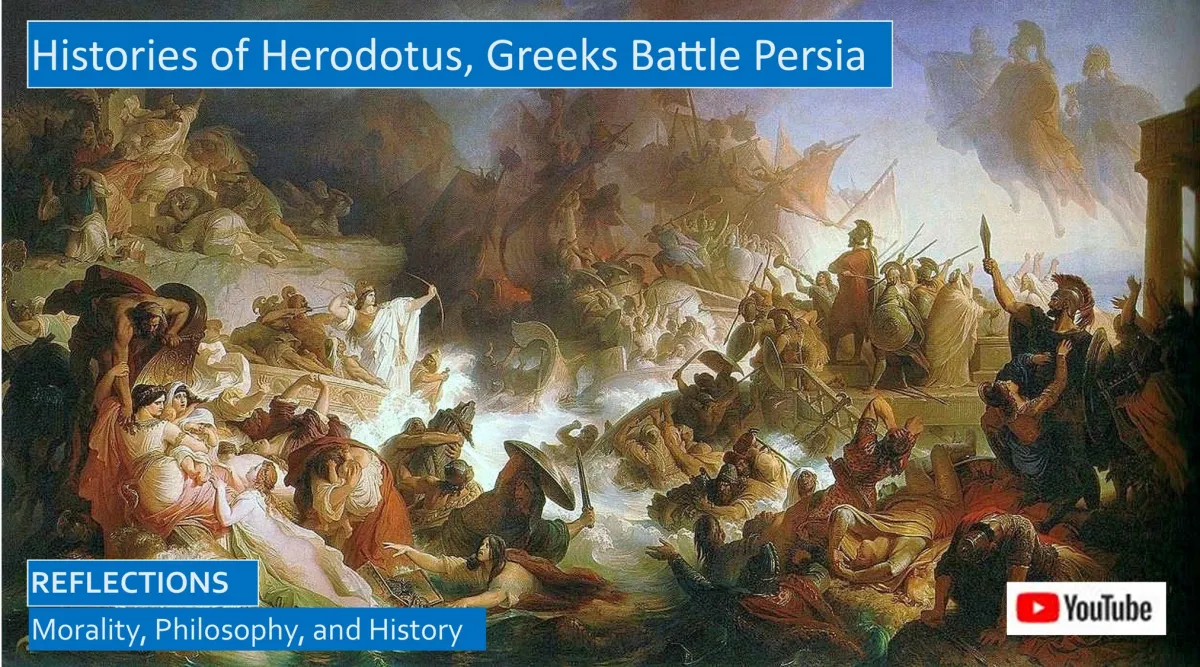 Photo: Herodotus, via seekingvirtueandwisdom.com
Sleeping Rough at the World's Biggest Party
Accommodations were, to put it gently, informal. Most visitors simply slept in the open air, on the hillside overlooking the stadium or along the riverbanks. Wealthier attendees brought elaborate tents and servants to manage them. The very wealthy — particularly official delegations from major city-states — sometimes constructed temporary pavilions designed to project political prestige as much as provide comfort.
Ancient writers didn't romanticize this. The philosopher Epictetus described the experience with striking candor: the heat, the crowds, the noise, the dust, the difficulty of sleeping, the challenge of finding clean water. He used Olympia as a philosophical metaphor precisely because everyone in his audience understood how uncomfortable it was. And yet, he argued, people went anyway — because the spectacle was worth it.
That cost-benefit calculation is the foundation of sports tourism. People will endure significant inconvenience and expense for the experience of being physically present at something historically significant. The ancient Greeks didn't just understand this — they built an entire religious and cultural calendar around it.
The Sacred Truce and the Travel Window
One of the most practical innovations of the ancient Olympic system was the ekecheiria — the Olympic Truce. In the weeks surrounding the Games, warring Greek city-states agreed to suspend hostilities and guarantee safe passage for travelers moving toward Olympia. This wasn't just idealistic peacemaking. It was economic infrastructure.
Without the truce, mass travel across a fragmented, frequently warring Greek peninsula would have been functionally impossible. By establishing a protected travel window, the ancient Greeks essentially created a seasonal corridor of safe movement — the ancient equivalent of securing federal transportation funding before a major international event.
The modern Olympic movement has tried to revive this concept through symbolic truce declarations at the UN, with mixed results. The ancient version, for all its limitations, was arguably more operationally effective.
From Olympia to Atlanta: The Lineage of the Host City
When Atlanta won the bid to host the 1996 Centennial Olympic Games, the city undertook a transformation that would have been conceptually familiar to any ancient Greek city-state preparing to send a delegation to Olympia. Infrastructure was upgraded. Hotels were built. Entire neighborhoods were repositioned around the narrative of international athletic celebration.
The parallels extend further. Salt Lake City's identity was fundamentally reshaped by the 2002 Winter Games — not just economically, but culturally, in terms of how the city understood and presented itself to the outside world. Los Angeles, which hosted in 1984 and is set to host again in 2028, has arguably built more of its international identity around Olympic hosting than any other American city.
This is the ancient Olympia model operating at modern scale. The sanctuary site became the center of the known world for a few weeks every four years. Host cities today experience the same gravitational effect — a temporary but intense global focus that can permanently alter a city's trajectory.
The Economy That Never Really Left
The vendor who sold painted figurines outside the temple of Zeus at Olympia in 500 BC and the merchandise booth outside SoFi Stadium in Inglewood are separated by 2,500 years and a few million square feet of infrastructure. But they're operating on the same fundamental logic: people travel to witness athletic greatness, and while they're there, they want something to take home.
The scale is different. The stakes are different. The athletes are faster, the stadiums are climate-controlled, and the vendors accept credit cards.
But the core transaction — the exchange between a sporting event and the community that gathers around it — hasn't changed in any meaningful way since a few thousand Greeks walked to a river valley in the western Peloponnese and decided that watching people run really fast was worth the trip.
It was then. It still is now.