Patrons, Prizes, and Power: How Ancient Greece Invented the Business of Backing Champions

Photo by Photo by yeswanth M on Unsplash on Unsplash
There's a version of sports history where the business of building champions started with television contracts, corporate endorsements, and agents negotiating shoe deals in glass-walled offices. That version is wrong.
The business of backing athletes — funding their training, covering their expenses, and expecting something in return — is at least 2,500 years old. Ancient Greece didn't just invent the Olympic Games. It invented the sports economy that surrounds them.
 Photo: Olympic Games, via artworks.thetvdb.com
And when you look at how American cities, states, and institutions compete today to produce Olympic talent through scholarships, training facilities, and public funding, you're looking at something that would have felt completely normal to an Athenian aristocrat in 450 BC.
The Myth of the Pure Amateur Greek Athlete
For most of the 20th century, the story told about ancient Greek athletics was one of noble amateurism — pure, uncorrupted athletes competing for the glory of the olive wreath, untouched by money or politics. It was a comforting story. It was also largely fiction.
The ancient Olympic Games did not award cash prizes. That much is true. The victor's crown at Olympia was made of wild olive leaves, and technically that was it. But the economic reality behind that symbolic prize was far more complicated.
Athletes who won at Olympia returned home to city-states that showered them with rewards. In Athens, Olympic champions received free meals for life at the Prytaneion — the civic dining hall — along with substantial cash payments from the public treasury. The statesman Solon reportedly set the prize for an Olympic victory at 500 drachmas in the sixth century BC, an amount equivalent to several years of average wages.
The olive wreath was the symbol. The money was real.
City-States as the Original Team Owners
Beyond the prizes, city-states invested heavily in producing champions in the first place. Athletic training in ancient Greece wasn't something most people could afford on their own. The gymnasion — the training facility that gave us the modern word "gymnasium" — was a public institution, but serious competitors needed coaches, specialized diets, and time away from other work. All of that cost money.
Wealthy patrons, known broadly as aristocratic benefactors, funded promising athletes the way modern investors back startups. They covered training costs, travel expenses, and the fees of skilled coaches. In return, they received reflected glory. An athlete who won at Olympia brought honor not just to himself but to his patron and his city-state. In a culture where public reputation was everything, that return on investment was enormous.
The chariot race was perhaps the most nakedly transactional event in the ancient Olympics. Horses were extraordinarily expensive, and the rules awarded the victory crown not to the charioteer but to the owner of the horses. This meant wealthy aristocrats — and eventually city-states themselves — could "win" an Olympic event without ever setting foot on the track. Alcibiades, the Athenian general and politician, famously entered seven chariot teams at the 416 BC Olympics, finishing first, second, and fourth. He wasn't competing. He was investing in prestige.
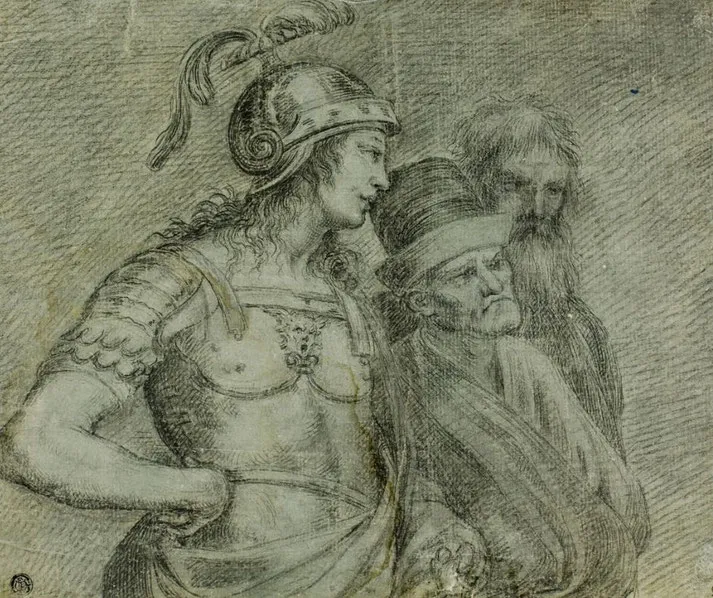 Photo: Alcibiades, via image.jimcdn.com
Odes for Hire: The Ancient Version of the Endorsement Deal
If you wanted to really maximize your Olympic victory in ancient Greece, you hired a poet. The epinician ode — a formal victory poem commissioned to celebrate an athlete's win — was the ancient world's version of a sponsored social media post, except considerably more permanent.
Pindar, the most celebrated composer of these poems, was essentially the ancient world's highest-paid sports content creator. City-states and wealthy patrons paid him handsomely to produce odes that celebrated their champions, embedded the victory in mythological context, and ensured the athlete's name survived for generations. Pindar's odes were performed publicly, often with music and dance, at festivals and civic gatherings.
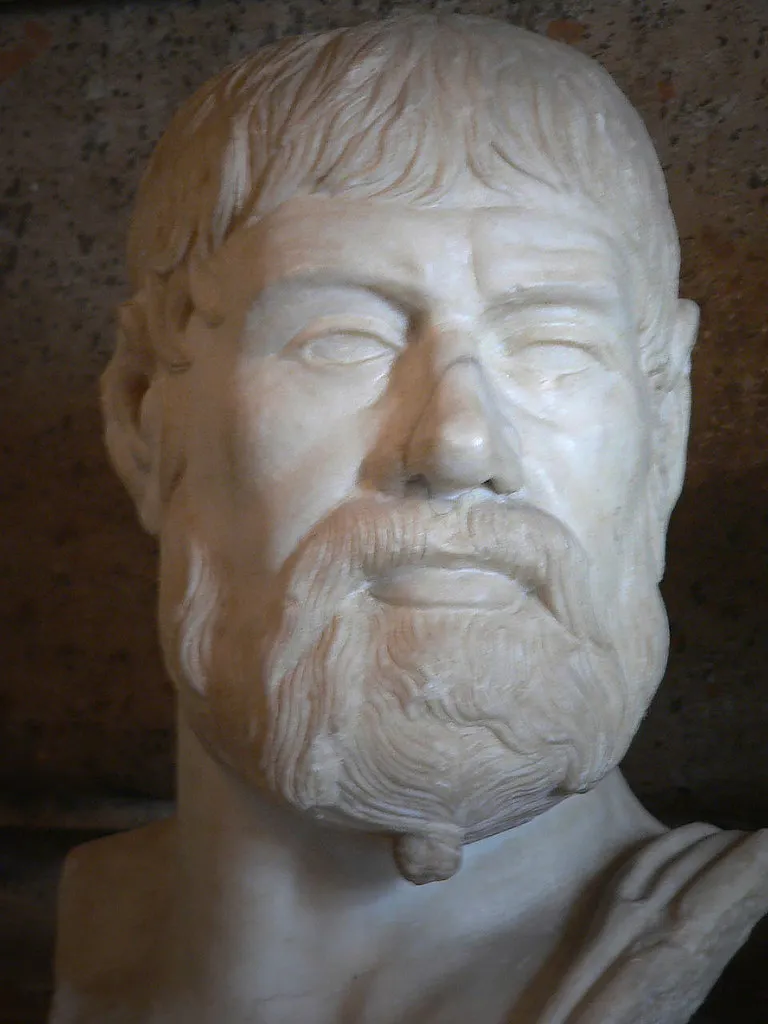 Photo: Pindar, via live.staticflickr.com
The athlete got fame. The patron got association with that fame. The poet got paid. Sound familiar?
From Athenian Benefactors to American Olympic Pipelines
Fast forward to the present day and the structure is remarkably similar, even if the scale and the institutions have changed.
American cities and states compete fiercely to host Olympic training centers, fund athletic scholarships, and build the kind of facilities that attract elite talent. The US Olympic and Paralympic Training Center in Colorado Springs functions as a modern gymnasion — a publicly supported hub where athletes receive coaching, nutrition support, sports medicine, and housing, all funded through a combination of federal support and private donation.
Universities play the patron role with particular enthusiasm. College athletic scholarships are, at their core, a system where institutions fund athletes in exchange for performance and the prestige that comes with it. A swimmer who wins Olympic gold and attended a state university brings that school a kind of publicity no advertising budget can replicate. The university invested. The university benefits.
State-level Olympic development programs take this further. Organizations like USA Track & Field and US Swimming run tiered support structures that funnel resources toward athletes who show Olympic potential, essentially functioning as the modern equivalent of city-state patronage — identifying promising talent early and investing in it systematically.
The Uncomfortable Truth About Amateur Purity
The modern Olympics were founded on the principle of amateurism — the idea that athletes should compete for love of sport, not financial reward. Pierre de Coubertin, who revived the Games in 1896, was deeply influenced by the romanticized version of ancient Greek athletics, the one where noble competitors spurned material gain.
The irony is that this ideal was never really true of the ancient world it was supposedly inspired by. Greek athletes competed within a sophisticated economy of patronage, prizes, and public reward. The myth of the pure amateur was, in part, a projection of 19th-century European aristocratic values onto a historical reality that looked quite different.
The modern Olympics eventually caught up with that reality. Professional athletes were fully admitted to the Games starting in 1992. Corporate sponsorship is now a central part of how the Olympic movement funds itself. Athletes sign endorsement deals, negotiate appearance fees, and manage personal brands.
None of that would have surprised an ancient Athenian for a single second.
The Business That Never Stopped
The specific mechanisms have changed — olive wreaths gave way to endorsement contracts, victory odes became Instagram posts, and the Prytaneion became a Nike sponsorship deal. But the underlying transaction has remained constant across 2,500 years of sports history.
Somebody with resources identifies an athlete with talent. They invest in that athlete's development. The athlete performs. Both parties benefit from the glory.
The ancient Greeks didn't just invent competitive sport. They invented the business model that still powers it.