The Ancient Measurement That Lives Inside Every Track in America
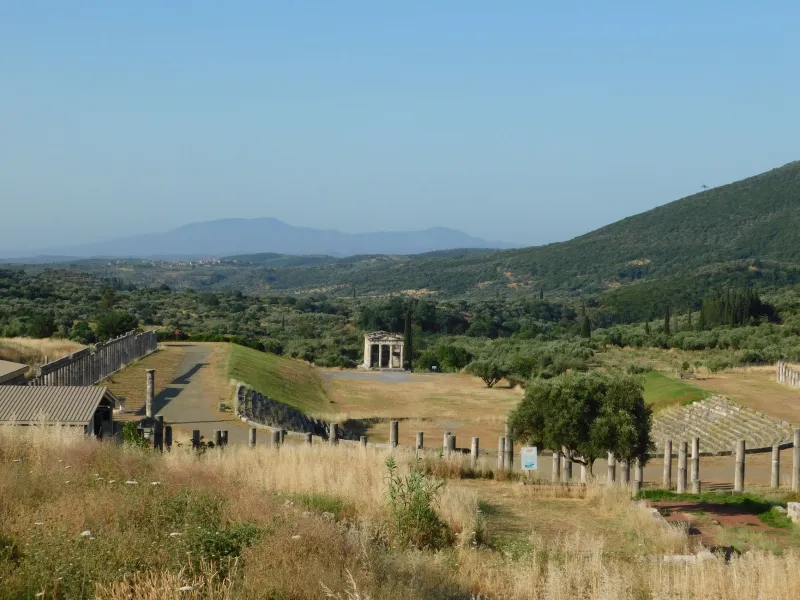
Walk into any high school in the United States and you'll find a quarter-mile oval out back. Maybe it's rubberized red track surface. Maybe it's older asphalt worn smooth by decades of cross-country kids. Either way, it follows a shape and a logic that traces back — in a direct, unbroken line — to a sun-baked stretch of packed earth in a sacred valley in ancient Greece.
Most people who run on those tracks have no idea. But the distance they're covering, the shape of the oval they're circling, and even the vocabulary we use to describe racing all carry the fingerprints of one ancient Greek unit of measurement: the stadion.
This is the story of how a number born in Olympia quietly became the foundation of every race you've ever watched.
What Was the Stadion, Exactly?
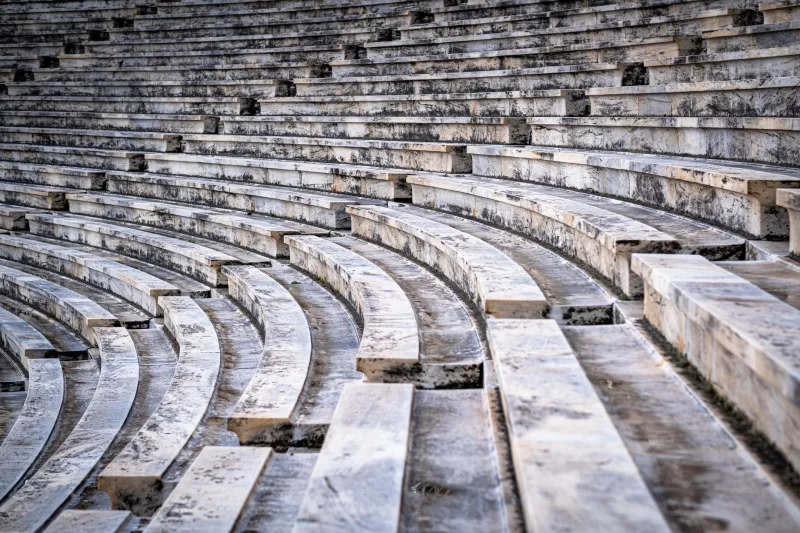
The word itself is deceptively simple. In ancient Greek, stadion referred to both a unit of distance and the race that covered it — which was also, eventually, the name for the structure built to host that race. We still use a version of it today every time we say "stadium."
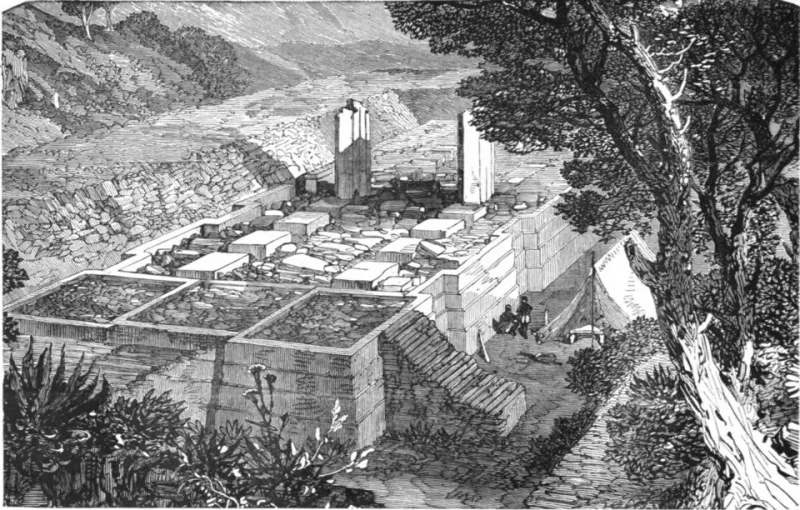
As a unit of measurement, the stadion was roughly 192 meters, though it varied slightly from city to city across the Greek world. At Olympia, where the ancient Olympic Games were held beginning in 776 BC, the stadion track measured approximately 192.28 meters — a distance determined, according to tradition, by the length of 600 human feet. Some ancient sources attributed the original measurement to Hercules himself, who supposedly paced it out personally. Whether or not you believe that particular origin story, the distance stuck.
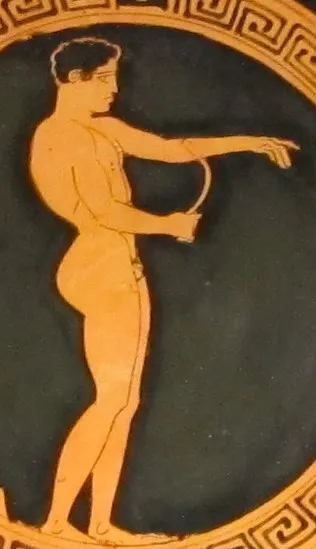
 Photo: ancient Olympic Games, via www.zahrada.sk
The footrace that covered this distance — also called the stadion — was the oldest and most prestigious event at the ancient Olympics. For the first thirteen Olympiads, it was the only event. The winner of the stadion race was considered the champion of the entire Games. The Olympiad itself was named after him.
That's how central this single distance was to the ancient world's understanding of athletic competition.
How a Greek Measurement Became a Global Standard
When Pierre de Coubertin revived the Olympic Games in 1896, the organizing committee faced a practical problem: how do you standardize distances for a global competition when different countries use different units of measurement?
 Photo: Pierre de Coubertin, via www.aufildesmineraux.fr
The answer, reached gradually over the following decades, was metrication. The modern 100-meter sprint — the marquee event of any Olympics — is almost certainly not a coincidence in relation to the ancient stadion. At roughly 192 meters, the stadion is almost exactly two lengths of 96 meters, or close enough to two laps of a 100-meter straight to make the connection worth noting. The 200-meter dash is, to within a few meters, the distance of the ancient stadion itself.
Historians debate how deliberate these connections were. But what isn't debatable is that the architects of modern track and field were deeply aware of ancient precedent. They were building a new tradition on top of an old one, and the distances they chose reflect that inheritance.
The Shape of the Track Itself
Beyond specific distances, the stadion also influenced something more fundamental: the shape of the venue.
Ancient Greek running tracks were long, straight affairs — athletes ran from one end to the other, turned around a post, and ran back. There were no banked curves, no staggered lane starts. The oval track that defines modern athletics is actually a later Roman innovation, adapted for the circus and eventually refined over centuries into the 400-meter standard oval that now exists at virtually every competitive venue on earth.
But the logic of the ancient stadion — a defined, measured, repeatable distance run in a purpose-built space — is the logic that underlies every modern track. The Greeks understood, 2,700 years ago, that fair competition requires standardization. You can't have a race if everyone is running a different distance.
That insight seems obvious now. It wasn't then. And the stadion was the tool that made it concrete.
The Number in the DNA of American Athletics
Here's where it gets personal for American sports fans.
The United States didn't fully adopt the metric system for everyday life — but it did adopt it for track and field. American high schoolers run the 100-meter dash, the 200, the 400, the 1600. College athletes compete in metric distances at the NCAA level. Olympic hopefuls train for races defined entirely in meters.
Every one of those distances connects back, through centuries of athletic tradition, to the Greek stadion and the principle it represented: that a race needs a fixed, knowable, reproducible length.
When a kid in Ohio runs the 200 meters at a Saturday morning track meet, she's running almost exactly the same distance that an ancient Greek athlete ran at Olympia before an audience of thousands, in a race that determined who would have a poem written in his honor. The surface is different. The shoes are different. The times are incomparably faster. But the distance? That's older than the Roman Empire.
Why It Still Matters
Sports history has a way of feeling abstract — dates and names from textbooks, disconnected from the games people actually watch and play. The story of the stadion is different. It's not abstract at all.
It's embedded in the physical infrastructure of American athletics. It's in the length of the lanes, the radius of the curves, the distances printed on every race entry form from Maine to California. Every time a sprinter explodes off the blocks at the US Olympic Trials, they're covering ground that was first measured — and first raced — in a sacred valley in ancient Greece more than two and a half millennia ago.
The stadion didn't just give us a number. It gave us the idea that the number matters. That standardization is what makes sport meaningful. That without a shared measure of distance, there's no such thing as a fair race.
Ancient Olympia figured that out first. The rest of the world has been running with it ever since.