Blood Sport to Bronze Medal: The Long Taming of Olympic Combat
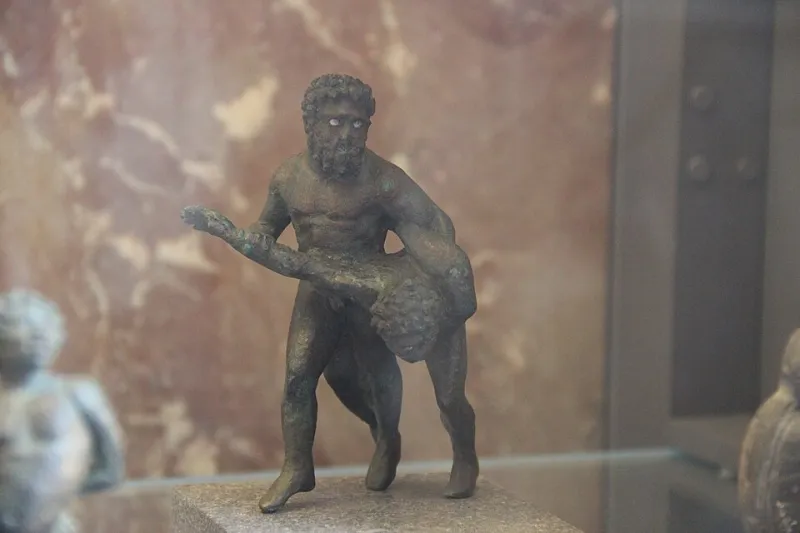
Photo: Gary Todd from Xinzheng, China, CC0, via Wikimedia Commons
When Arrhichion of Phigalia won the pankration at the ancient Olympics in 564 BC, he did it while dying. His opponent had locked him in a stranglehold that was cutting off his air supply. Rather than submit, Arrhichion twisted his body with whatever strength he had left and dislocated his opponent's ankle. The pain was enough to force a submission. Arrhichion died moments later — and was still declared the winner.
Modern Olympic officials have spent roughly 2,800 years trying to make sure nothing like that ever happens again.
What the Ancient Greeks Actually Invented
It's tempting to look at ancient Greek combat sports as primitive forerunners of today's boxing and wrestling — rough drafts that civilization eventually cleaned up. That framing misses the point entirely. The ancient Greeks didn't stumble into combat sports. They designed them deliberately, and the design reflected a specific purpose: preparing men for war.
Greece in the ancient period was a collection of city-states in near-constant military conflict. Warfare was personal, brutal, and decided at close range. A soldier who could take a punch without flinching, maintain a grip under pressure, and fight through pain and exhaustion was a soldier worth having. The gymnasium wasn't just a place to get fit — it was a military training facility, and the combat sports practiced there were essentially field exercises with competitive scoring.
Boxing, or pygmachia, was introduced to the Olympics in 688 BC. Ancient Greek boxing bore almost no resemblance to the modern sport. There were no rounds. There were no weight classes. Fighters wrapped their hands in leather straps — not padded gloves, just hardened leather that protected the knuckles while doing nothing for the face receiving the blow. Bouts continued until one fighter couldn't or wouldn't continue. Knockouts were common. Fatalities were not unheard of.
Wrestling (pale) arrived at the Olympics even earlier, in 708 BC, alongside the pentathlon. It was the more technical of the ancient combat sports, with a premium placed on throws and takedowns rather than raw punishment. But "technical" is relative — ancient Greek wrestling allowed holds that modern referees would stop immediately, and the objective was simple and unambiguous: put your opponent on the ground three times.
And then there was the pankration.
The Pankration: When Rules Were an Insult
Introduced to the Olympics in 648 BC, the pankration — literally "all power" or "all strength" — was a combination of boxing and wrestling with almost no restrictions. Competitors could punch, kick, choke, and apply joint locks. They could take the fight to the ground and continue there. The only prohibited moves were biting and eye-gouging, which tells you something about the baseline.
The pankration wasn't a sport that happened to be violent. It was a sport built around the question of what one human being could do to another with their bare hands. Competitors trained for years to develop the specific physical and psychological qualities the event demanded: pain tolerance, tactical thinking under stress, the ability to keep fighting when the rational part of your brain was screaming at you to stop.
These athletes were celebrated across the Greek world. Statues were erected in their honor. Poets wrote about their victories. City-states offered them financial rewards that would look familiar to modern professional athletes. The pankration champion wasn't just a sports hero — he was living proof that his city produced warriors.
The Long Road to Padded Gloves and Weight Classes
The ancient Olympics ended in 393 AD when Roman Emperor Theodosius I banned pagan festivals across the empire. The combat sports went with them, surviving only in scattered folk traditions and military training programs across the Mediterranean world.
When Pierre de Coubertin revived the Olympics in 1896, he had no interest in reviving the pankration. The modern Games were conceived partly as a vehicle for international goodwill, and a sport where athletes routinely dislocated each other's joints didn't fit the vision. Boxing was eventually included in the 1904 Olympics, but in a form that would have been unrecognizable to an ancient Greek spectator: padded gloves, weight classes, timed rounds, a referee empowered to stop the contest.
Wrestling returned to the modern Olympics in 1896, again in a substantially modified form. Greco-Roman wrestling — which prohibits holds below the waist — was the original Olympic style, reflecting a European sporting tradition that had drifted significantly from the ancient Greek version. Freestyle wrestling was added later, allowing leg attacks and trips, but still operating under a rulebook that ancient wrestlers would have found baffling in its restrictions.
The pankration itself never made it back to the Olympics, though it has inspired modern mixed martial arts. When the UFC launched in 1993, its founders explicitly referenced the pankration as a historical precedent. Even MMA, however, operates under rules the ancient Greeks would have considered soft — no eye strikes, no fish-hooking, mandatory stoppages when a fighter is unable to defend themselves intelligently.
What Was Lost, and What Survived
Modern combat sports are safer, more regulated, and more accessible to watch than their ancient counterparts. That's unambiguously good. Fighters today walk away from their careers with their health largely intact in ways that ancient pankratiasts almost certainly did not.
But something was also lost in the translation. Ancient combat sports were honest about what they were — controlled versions of the violence that shaped human history. The pankration didn't pretend to be a game. It was a simulation of survival, and its champions were celebrated because their skills had obvious, tangible real-world value.
Modern Olympic boxing and wrestling are still extraordinary athletic contests. The strength, timing, and tactical intelligence required to compete at that level are genuinely remarkable. But they operate inside a framework of rules specifically designed to prevent the outcome that ancient audiences sometimes witnessed: a fighter who simply didn't get up.
Arrhichion won his final pankration by choosing not to quit. That's still, in some form, what every combat sport is asking its athletes to decide: how much are you willing to endure to win? The ancient Greeks just asked the question at a much higher volume.