Gladiators to Gold Medals: How Ancient Rome's Sports Revolution Predicted America's Olympic Empire
When Rome Crashed the Greek Party
Imagine if a foreign power conquered the United States and decided our Super Bowl needed some improvements. Maybe add wild animals to the halftime show. Perhaps let spectators vote contestants off the field. Turn the whole thing into a months-long festival with gambling, celebrity appearances, and corporate sponsorships that would make today's advertisers blush.
That's essentially what Rome did to Greek athletics after conquering Greece in 146 BC. The Greeks had created sport as religious devotion — pure, sacred, and focused on honoring the gods. Rome looked at this system and thought: "This is nice, but how can we make it more... entertaining?"
The transformation was swift and total. Greek athletics emphasized individual excellence and spiritual achievement. Roman sports became mass entertainment designed to keep citizens happy and distracted. Sound familiar?
The Sacred vs. The Spectacular
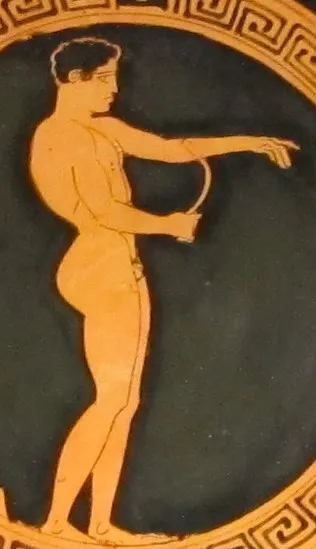
Greek Olympic competition was intensely serious business. Athletes trained for years to compete in events that honored Zeus. Winners received simple olive wreaths and the eternal glory of having their names recorded in sacred texts. The entire experience was designed to demonstrate human potential at its highest level.
Roman officials watched this and immediately saw the problems: not enough excitement for the average spectator, insufficient opportunities for betting, and far too much emphasis on athletic purity over crowd appeal.
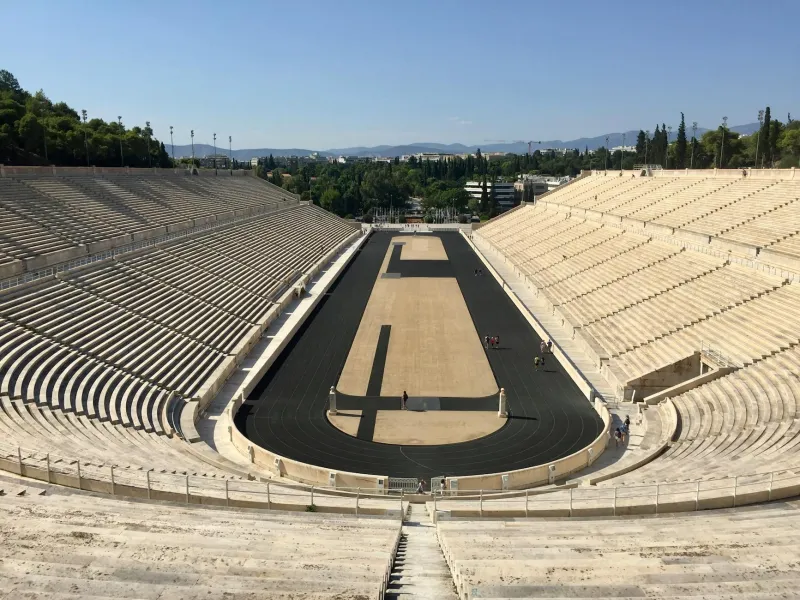
So they fixed it. Roman games featured professional gladiators instead of amateur athletes, elaborate staging instead of simple competition, and spectacular violence designed to thrill audiences rather than honor deities. The Colosseum could hold 80,000 spectators — more than most modern NFL stadiums.
The Greeks competed for glory. Romans competed for survival and prize money. The difference wasn't subtle.
The American Parallel
Fast-forward 2,000 years, and the United States has done something remarkably similar to international Olympic competition. We didn't conquer anyone militarily, but we've systematically transformed the Games from their European revival model into something that looks suspiciously Roman in scope and ambition.
Consider the numbers: NBC paid $7.75 billion for Olympic broadcasting rights through 2032. That's more than the GDP of many countries that send athletes to compete. American television coverage drives scheduling decisions, event formatting, and even rule changes across multiple sports.
When swimming finals moved to morning sessions to accommodate American prime-time viewing, the sport fundamentally changed to serve television rather than athletes. Roman emperors would have appreciated the logic: give the audience what they want, when they want it.
The Entertainment Empire
Rome understood that successful sports entertainment required three elements: star personalities, dramatic storylines, and enough spectacle to keep people talking. Modern American Olympic coverage has perfected this formula.
American broadcasters don't just show competitions — they create narrative arcs. Athletes become characters with backstories, rivalries, and redemption plots. Every race becomes a movie, complete with slow-motion replays and emotional interviews designed to maximize viewer engagement.
The Greeks would have found this approach baffling. Their Olympic coverage consisted of messengers running to various city-states to announce results. No commentary, no analysis, no human interest stories about athletes overcoming adversity. Just facts: "Leonidas of Rhodes won the stadion race. Again."
Rome, however, would recognize our approach immediately. They invented the concept of sports as mass entertainment, complete with celebrity athletes, corporate sponsorship, and carefully managed drama designed to keep audiences engaged.
The Professionalization Problem
Greek Olympic athletes were supposed to be amateurs — citizens who competed for honor rather than money. This ideal lasted roughly until Rome discovered that professional athletes put on better shows.
Roman gladiators were the world's first professional sports superstars. They had endorsement deals, fan clubs, and social media followings (okay, maybe not social media, but they had graffiti, which served the same purpose). The best gladiators became household names across the empire.
American Olympic athletes exist in a similar gray area between amateurism and professionalism. Officially, they're competing for national honor and personal achievement. Practically, top athletes sign endorsement deals worth millions, hire professional coaches, and train full-time with corporate sponsorship.
The tension between pure competition and commercial success that Rome first introduced has never been resolved. We just got better at managing the contradictions.
The Nationalism Engine
Rome used athletic spectacles to demonstrate imperial power and cultural superiority. Successful games proved Roman civilization's dominance over conquered peoples. The bigger and more impressive the spectacle, the more effectively it reinforced Rome's position as the center of the civilized world.
American Olympic success serves a similar function in modern geopolitics. Medal counts become proxy measurements for national strength and cultural vitality. When American athletes dominate, it reinforces perceptions of American excellence across multiple domains.
The Greeks competed as individuals representing their city-states. Romans competed to glorify the empire. Americans compete to demonstrate national superiority while wrapped in corporate sponsorships and television coverage that turns every event into a referendum on American values.
The Technology Factor
Rome revolutionized sports through engineering and logistics. The Colosseum featured sophisticated crowd control, elaborate staging mechanisms, and infrastructure that made massive spectacles possible. Roman innovation focused on enhancing the spectator experience rather than improving athletic performance.
American Olympic influence works similarly. We've driven technological innovations in broadcasting, training methods, and sports science, but always with an eye toward creating better entertainment products. Slow-motion cameras, instant replay, and biometric tracking serve television audiences as much as they serve athletic analysis.
The Greeks cared about human potential. Rome cared about crowd reaction. America has figured out how to optimize both simultaneously.
What History Teaches Us
The Roman transformation of Greek athletics wasn't inherently good or bad — it was inevitable once sport became popular enough to attract significant economic and political interest. Mass audiences demand entertainment value, not just athletic excellence.
America's relationship with the Olympics follows the same pattern. We've taken an international competition founded on European ideals of amateur sportsmanship and transformed it into a global entertainment franchise that serves American commercial and cultural interests.
The difference is that Rome was honest about prioritizing spectacle over purity. We still pretend the Olympics are primarily about international friendship and athletic achievement, while simultaneously turning them into the world's most expensive television programming.
The Empire's Inheritance
Rome's sports legacy lasted long after the empire collapsed. Their model of professional athletics, mass entertainment, and commercial sponsorship became the template for virtually every major sporting event that followed.
American Olympic dominance represents the latest evolution of this Roman approach. We've perfected the art of turning athletic competition into cultural export, complete with the technological innovation, narrative sophistication, and commercial scale that would make ancient Roman event organizers deeply envious.
The Greeks gave us the idea that sport could reveal human excellence. Rome taught us that sport could build empires. America proved that both things could happen simultaneously, as long as you had enough television cameras and corporate sponsors.
Whether this represents progress or corruption might depend on whether you're trying to honor the gods or entertain the masses. Rome figured out long ago that the masses usually win.