Ten Sports That Built the Olympics — From Ancient Arenas to Today's Biggest Stages
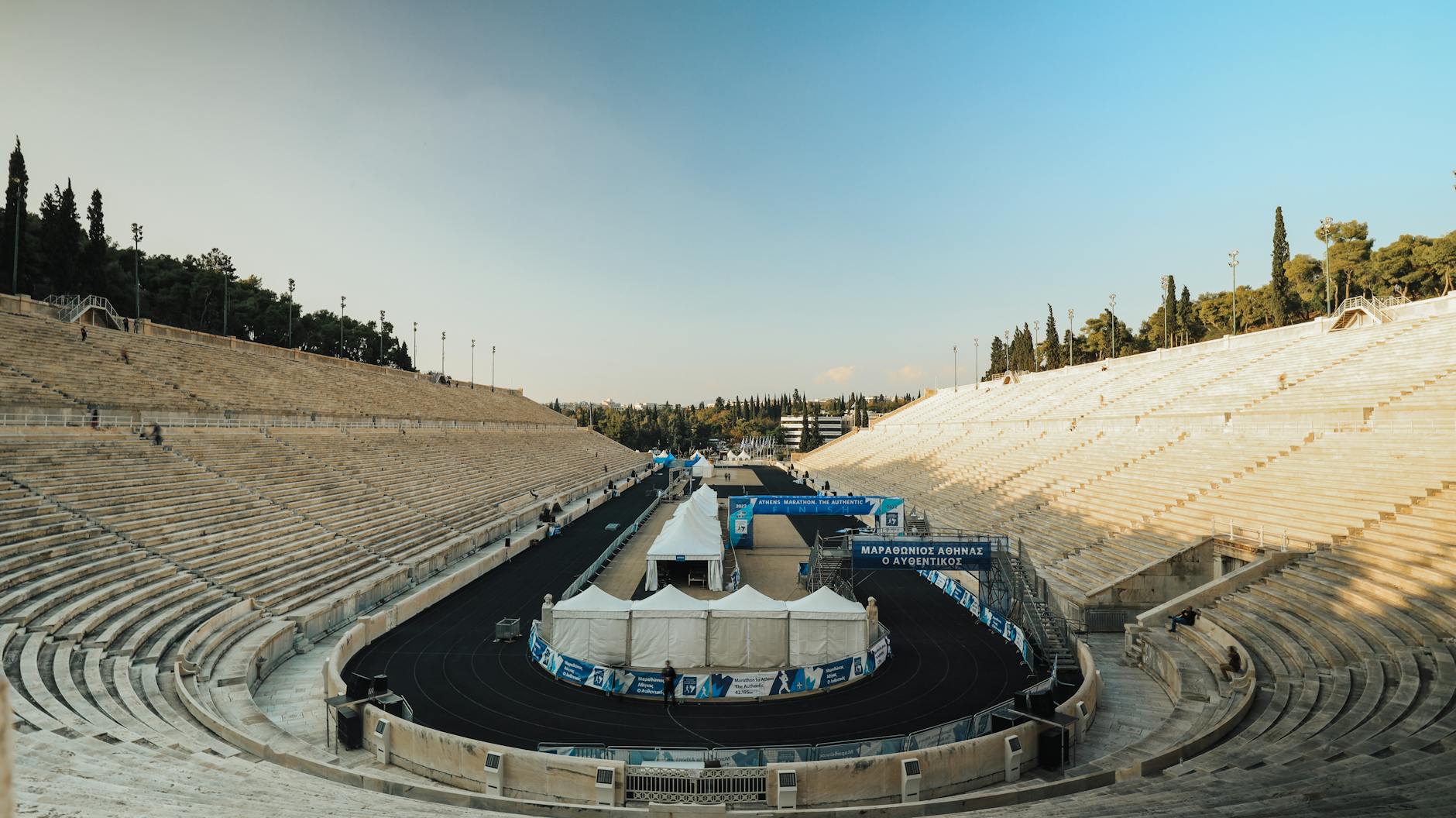
Ten Sports That Built the Olympics — From Ancient Arenas to Today's Biggest Stages
The Olympic Games are a lot of things: a global spectacle, a geopolitical stage, a celebration of peak human performance. But at their core, they're a direct line back to ancient Greece — a thread connecting a bare-dirt stadium in Olympia to billion-viewer broadcasts in the 21st century.
Some of the sports on today's Olympic program have been around in recognizable form for nearly three millennia. Others were dropped, forgotten, and controversially revived. A few are so new they still feel like they're auditioning for their place on the schedule.
Here are ten sports that shaped the Olympics — and where they stand right now.
1. The Stadion (Sprint Racing) → Track and Field
Then: The very first Olympic event, run in 776 BC on a packed-earth track in Olympia. The stadion was a straight sprint of roughly 192 meters — one length of the stadium floor. It was the only event at the early Games for decades.
Now: Track and field is the backbone of the modern Summer Olympics, featuring 48 events across sprints, distance running, hurdles, relays, and field disciplines. The 100m final consistently draws the Games' largest global TV audience.
Defining moment: Usain Bolt's 9.58-second world record at the 2009 World Championships in Berlin. On a track built near the same city where Jesse Owens made history 73 years earlier, Bolt reset the outer limit of human speed.
2. Wrestling
Then: One of the oldest competitive sports in human history, wrestling appeared at the ancient Olympics in 708 BC. Greek-style wrestling — pale — focused on throwing opponents to the ground. It was a prestige event, and winning it was considered one of the highest athletic honors in the ancient world.
Now: Wrestling nearly vanished from the modern Olympics entirely. In 2013, the International Olympic Committee voted to drop it from the 2020 program — a decision that triggered massive backlash from wrestling communities worldwide, particularly in the US, where collegiate wrestling has deep roots. The IOC reversed course, and wrestling remains on the program today in both freestyle and Greco-Roman formats.
Defining moment: The 2013 reinstatement campaign, which included a viral social media push and a formal lobbying effort by wrestling federations across dozens of countries. It was one of the most successful grassroots campaigns to save an Olympic sport in modern history.
3. Boxing
Then: Pygmachia — ancient Greek boxing — entered the Olympics in 688 BC. There were no rounds, no ring, and no weight classes. Fighters wore leather straps on their hands and kept going until one man couldn't continue. It was brutal by any standard.
Now: Olympic boxing uses a three-round amateur format with headgear (for most categories) and point-based judging. The sport has been controversial at recent Games due to judging disputes and eligibility debates, particularly around professional fighters competing at the amateur level.
Defining moment: Cassius Clay — soon to become Muhammad Ali — won light heavyweight gold at the 1960 Rome Olympics. It was the beginning of the most significant boxing career in American history.
4. The Pentathlon
Then: Introduced at the ancient Olympics in 708 BC, the pentathlon combined five disciplines: running, jumping, discus, javelin, and wrestling. It was designed to identify the most complete athlete — not the fastest or strongest, but the most well-rounded.
Now: The modern pentathlon, introduced at the 1912 Stockholm Olympics, features a completely different set of events: fencing, freestyle swimming, equestrian show jumping, and a combined laser-run event (shooting and running). The connection to the ancient version is more philosophical than literal.
Defining moment: The 2021 Tokyo Olympics produced a controversy that led to a sport-wide overhaul. A horse-related incident during the equestrian phase drew international attention and accelerated the IOC's push to replace show jumping with obstacle racing — a change now underway for 2028.
5. The Marathon
Then: The marathon has no ancient Olympic precedent — it's a modern invention built on legend. The story of Pheidippides running from the battlefield of Marathon to Athens to announce a Greek military victory (then dying on the spot) inspired the creation of a long-distance road race at the 1896 Athens Olympics. The distance wasn't standardized at 26.2 miles until the 1908 London Games.
Now: The marathon is one of the most widely participated events in global athletics, with major city races drawing tens of thousands of runners annually. At the elite level, Eliud Kipchoge's 2:01:09 world record (set in 2022) represents a pace that would have been considered physically impossible by 19th-century physiologists.
Defining moment: The 1908 London Olympics finish, where Italian runner Dorando Pietri entered the stadium first but collapsed multiple times and was helped across the line — leading to his disqualification. The image of Pietri being supported by officials became one of the most iconic in Olympic history and cemented the marathon's dramatic identity.
6. Discus
Then: The discus throw was a central event in the ancient Olympic pentathlon and one of the most artistically celebrated sports of antiquity. The Discobolus — a famous Greek sculpture depicting a discus thrower mid-motion — remains one of the most recognizable images from the ancient world.
Now: The discus throw has been a continuous fixture of the modern Olympic program since 1896. Men's discus debuted that year; women's was added in 1928. Today's athletes use a precisely engineered implement and compete on a synthetic surface with biomechanically optimized technique.
Defining moment: Al Oerter of the United States won four consecutive Olympic gold medals in discus from 1956 to 1968 — setting an Olympic record each time. It remains one of the most sustained individual performances in track and field history.
7. Equestrian Sports
Then: Chariot racing was among the most prestigious events at the ancient Olympics, introduced in 680 BC. It was a wealthy person's sport — owning and training a team of horses required serious resources. Notably, the owner of the winning chariot received the olive wreath, not the driver.
Now: Modern Olympic equestrian sport covers dressage, show jumping, and eventing. It's one of the few Olympic disciplines with no gender division — men and women compete directly against each other. The sport's high cost of entry remains a point of ongoing criticism.
Defining moment: Charlotte Dujardin of Great Britain set a world record in dressage at the 2012 London Olympics, scoring 90.089% — the highest score ever recorded in the sport at the time. She went on to become the most decorated equestrian athlete in Olympic history.
8. Swimming
Then: There was no swimming competition in the ancient Olympics — the Greeks didn't include it, despite being a maritime civilization. The sport entered the modern Olympics at the very first Games in 1896, held in the open waters of the Bay of Zea near Athens.
Now: Swimming is one of the most medal-rich sports at the Summer Olympics, with 35 events across multiple strokes and distances. The introduction of polyurethane full-body suits in the late 2000s produced a wave of world records before the suits were banned in 2010.
Defining moment: Michael Phelps' eight gold medals at the 2008 Beijing Olympics — the most by any athlete at a single Games in history. His career total of 23 Olympic gold medals is unlikely to be matched in any sport.
9. Weightlifting
Then: Strength competitions existed in ancient Greek culture, but formal weightlifting as a standardized sport entered the modern Olympics in 1896. Early competitions were informal — one event involved lifting a weight with one hand, another with two.
Now: Olympic weightlifting features the snatch and the clean-and-jerk across multiple bodyweight categories. The sport has faced significant doping-related controversies, with multiple nations receiving bans or restrictions in recent decades.
Defining moment: Naim Süleymanoğlu of Turkey — nicknamed "Pocket Hercules" for his 4'11" frame — lifted three times his bodyweight at the 1988 Seoul Olympics, winning gold and setting three world records in a single session.
10. Archery
Then: Archery has roots in virtually every ancient civilization on earth, but it wasn't part of the ancient Olympic program. It appeared at the modern Olympics in 1900, was dropped after 1920, sat out for over five decades, and was brought back in 1972 — where it has remained ever since.
Now: Olympic archery uses recurve bows in individual and team formats for both men and women. The sport has a passionate following in South Korea, which has dominated Olympic archery competition for decades.
Defining moment: South Korea's women's archery team has won every Olympic gold medal in the team event since the category was introduced in 1988 — a streak of nine consecutive titles through Paris 2024 that stands as one of the most dominant national performances in Olympic history.
From a single footrace in ancient Greece to a 32-sport global program, the Olympics have always been a reflection of what a given era values in athletic competition. Some sports have been there almost from the beginning. Others had to fight their way back in. All of them carry a history worth knowing.