The Run That Launched a Legend: Tracing the Marathon from a Greek Battlefield to Boston's Finish Line
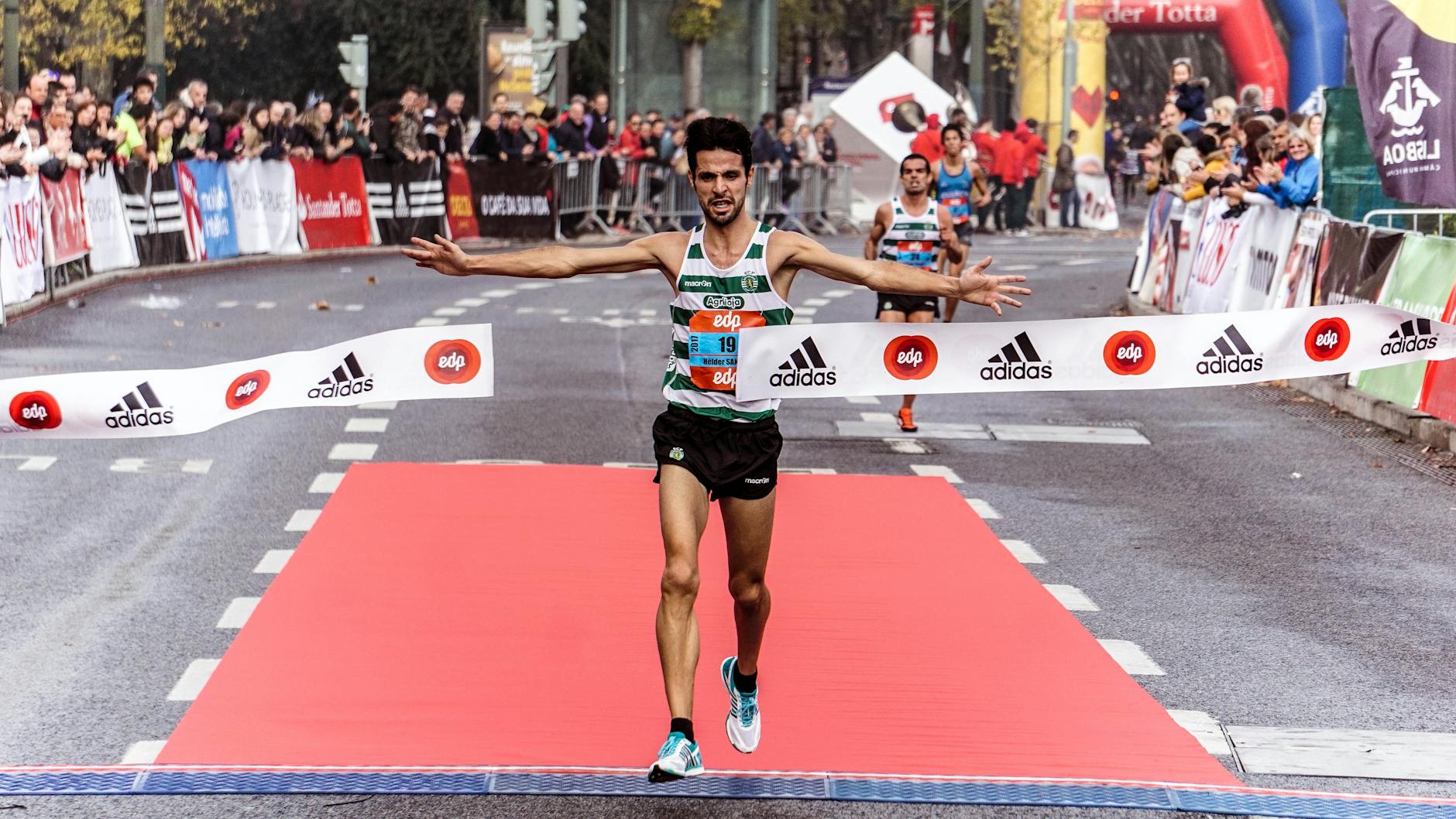
The Run That Launched a Legend: Tracing the Marathon from a Greek Battlefield to Boston's Finish Line
In 490 BC, according to legend, a Greek soldier named Pheidippides ran approximately 25 miles from the plain of Marathon to Athens carrying news of a stunning military victory over the Persian army. He arrived, delivered his message — "We have won" — and promptly collapsed and died.
It's a story that's been told so many times it has the smooth, worn feel of mythology. Historians debate how much of it is literally true. The ancient writer Herodotus, our most detailed source on the Battle of Marathon, doesn't mention Pheidippides dying after a run to Athens at all — his version has the messenger running to Sparta and back before the battle, a distance of about 150 miles each way. The death-run narrative came later, from other sources, and may have been embellished over centuries of retelling.
None of that has mattered even slightly. The story took hold, and it never let go.
From Myth to Medal Event
When French linguist and historian Michel Bréal proposed to Pierre de Coubertin — the father of the modern Olympics — that the 1896 Athens Games should include a long-distance race commemorating the legendary run from Marathon, Coubertin loved the idea. It was exactly the kind of mythic resonance the new Olympic movement was looking for: a direct thread connecting ancient Greek glory to the modern world.
The course was set from the town of Marathon to the Olympic stadium in Athens, covering roughly 40 kilometers (about 24.8 miles). On April 10, 1896, seventeen athletes lined up for the inaugural Olympic marathon. Spiridon Louis, a Greek water carrier and shepherd, won in 2 hours, 58 minutes, and 50 seconds. The crowd inside the stadium — including the Greek royal family — reportedly erupted in one of the most emotional scenes of the entire Games. Two Greek princes ran alongside Louis for the final stretch. Greece, which had struggled to produce champions in the track and field events, had found its hero in the most poetic possible way.
Louis's time would be considered extremely slow by modern standards, but context matters enormously here. The course was run on unpaved roads in intense April heat. Athletes had minimal understanding of pacing strategy. There was no concept of carbohydrate loading, no gels, no electrolyte drinks. One runner reportedly stopped at a taverna partway through the course for a glass of wine. Another was disqualified after completing the race when it emerged he'd covered part of the course by carriage.
The marathon, from its very first running, was chaotic, human, and irresistible.
Boston Gets There First
The Boston Athletic Association watched the 1896 Olympics with great interest and moved quickly. The Boston Marathon launched on April 19, 1897 — just one year after Athens — making it the oldest annual marathon in the world and the race that would define the event's identity in America for over a century.
Early editions of Boston were small, informal affairs. The first winner, John J. McDermott of New York, finished in 2:55:10 over a course that was slightly shorter than today's standard distance. Crowds lined the streets of the course from Ashland to Boston, and the race quickly became a fixture of Patriots' Day in Massachusetts — a regional tradition that slowly grew into a national institution.
The marathon distance itself wasn't standardized at 26.2 miles until the 1908 London Olympics, where the course was extended so that the race could start on the grounds of Windsor Castle and finish in front of the royal box at the Olympic stadium. That extra 385 yards — added essentially as a royal courtesy — became the permanent global standard. It's one of sport's more delightful quirks: the most iconic distance in endurance running was fixed by the seating preferences of the British monarchy.
The Science That Rewrote the Possible
For much of the marathon's early history, finishing times improved gradually, driven largely by better pacing knowledge and expanded participation. But the transformation that's happened in the last 30 years is something different in kind, not just degree.
The winning time at the 1896 Athens Olympics was just under three hours. Today, the men's world record — set by Kenyan runner Kelvin Kiptum in Chicago in 2023 — stands at 2:00:35. That's nearly a full hour faster over the same distance. Think about that for a moment: modern elite marathoners are running at a pace that would have been unimaginable to Spiridon Louis, sustained for over two hours without breaking.
What changed? Almost everything, simultaneously.
Nutrition science transformed marathon preparation. Runners today follow periodized training plans built around glycogen management — the strategic fueling of the body's carbohydrate stores to delay the dreaded "wall" that occurs when those stores run out around mile 20. On-course fueling with energy gels and sports drinks, now standard in every major race, simply didn't exist for most of the marathon's history. Early Boston runners sometimes relied on spectators handing them oranges.
Training methodology evolved just as dramatically. The introduction of interval training, altitude camps, and periodized mileage plans — pioneered by coaches like Arthur Lydiard in New Zealand and adopted globally — gave runners a scientific framework for building endurance without destroying their bodies. American marathon legends like Frank Shorter, who won Olympic gold in Munich in 1972 and is widely credited with sparking the US running boom of the 1970s, benefited from these advances. Bill Rodgers, who won Boston four times between 1975 and 1980, became the face of a generation of American runners who treated the marathon as a serious athletic pursuit rather than an eccentric endurance stunt.
And then came the shoes.
The debate over advanced footwear technology has dominated marathon conversation since Nike introduced its Vaporfly series around 2016. These shoes incorporate a carbon-fiber plate embedded in thick foam cushioning that returns energy to the runner with each stride — essentially giving back a portion of the effort that would otherwise be lost. Studies suggest they improve running economy by roughly four percent. In a sport where world records fall by seconds, not minutes, four percent is seismic. The shoes are now standard among elite competitors, and their trickle-down versions have found their way onto the feet of everyday runners chasing personal bests at races across the country.
26.2 Miles and a Nation of Runners
What makes the marathon uniquely compelling in the American sporting landscape is the democratization of it. The Super Bowl has participants and spectators. The marathon has participants who are also, in a meaningful sense, the spectators — lining the same course as the elites, running the same distance, finishing in the same stadium.
The New York City Marathon draws over 50,000 finishers annually. Chicago and Boston aren't far behind. Millions of Americans have a marathon finish on their personal timeline — a specific date, a specific city, a specific memory of the last mile when the legs stopped working but somehow the body kept moving.
Pheidippides, real or mythologized, ran because he had to. He carried news that couldn't wait. Modern marathoners run for reasons that are harder to articulate — personal challenge, community, grief, celebration, the simple stubborn desire to know what 26.2 miles feels like from the inside.
The soldier's run became a race. The race became a ritual. And somewhere along the way, the ritual became one of the most enduring stories in American sport.