Keeping Score Without Scoreboards: The Ingenious Ways Ancient Athletes Tracked Victory
Keeping Score Without Scoreboards: The Ingenious Ways Ancient Athletes Tracked Victory
Imagine watching the Super Bowl without a scoreboard. No real-time stats flashing across your screen, no instant replays with precise measurements, no digital displays counting down the clock. For modern sports fans, it sounds impossible. Yet for thousands of years, ancient civilizations managed to organize massive athletic competitions, crown champions, and maintain detailed records of who won what—all without a single piece of electronic equipment.
The methods they developed weren't just clever workarounds. They were sophisticated systems that, in many ways, mirror the data-driven sports world we know today.
The Original Sports Broadcasters
At the ancient Olympic Games in Greece, keeping track of results was a full-time job that required an army of officials. The Greeks appointed special judges called Hellanodikai, who served as referees, scorekeepers, and announcers all rolled into one. These weren't just casual observers—they underwent months of training in Olympic law and protocol.
When a race finished, the Hellanodikai would immediately announce the winner's name, hometown, and father's name to the crowd. But here's where it gets interesting: they didn't just shout it once and move on. The announcement became part of an elaborate ceremony where herald would repeat the victor's information multiple times, ensuring everyone in the stadium—sometimes 40,000 people—knew exactly who had won.
This wasn't just about crowd control. It was the ancient world's version of live sports broadcasting, complete with color commentary about the athlete's background and previous victories.
Stone Tablets: The First Sports Database
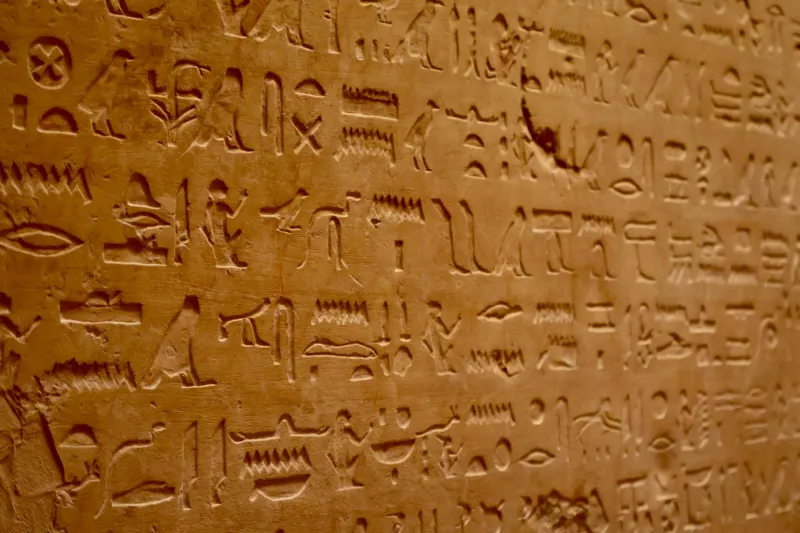
While the Greeks handled immediate results through live announcements, they needed a permanent system to track champions across multiple Olympics. Their solution? Carved stone records that functioned like an ancient sports database.
Archaeologists have discovered stone inscriptions listing Olympic victors dating back to 776 BC. These weren't simple winner's lists—they included detailed information about each champion's event, hometown, and sometimes even their training methods. The most famous of these records, found at Olympia itself, lists nearly 1,000 years of Olympic champions.
Think of these stones as the ancient equivalent of ESPN's record books. They served the same purpose: preserving athletic achievements for future generations and settling disputes about who really held which records.
The Roman Innovation: Multi-Event Tracking
The Romans took ancient sports record-keeping to the next level. Their gladiatorial games and chariot races were far more complex than Greek athletics, often featuring dozens of competitors across multiple events over several days. They needed systems that could handle what we'd now call "tournament brackets."
Roman organizers used wooden boards covered in wax where they could write and erase results in real time. These portable scoreboards were carried throughout the arena, allowing spectators in different sections to stay updated on ongoing competitions. For major events, they employed teams of scribes who maintained master records on papyrus scrolls.
But here's the really clever part: Romans created a ranking system for gladiators that tracked not just wins and losses, but also the quality of opponents defeated. This "strength of schedule" concept wouldn't look out of place in modern sports analytics.
When Memory Was the MVP
Not every ancient civilization relied on written records. Many cultures developed sophisticated oral traditions for preserving athletic achievements. In ancient Ireland, professional storytellers called shanachies memorized the results of athletic competitions going back generations. These weren't casual tales—they were precise accounts that included specific details about performances, weather conditions, and notable incidents.
Similarly, Native American tribes across North America used oral histories to track the results of lacrosse games, foot races, and other competitions. Elders would recite the names of champions during ceremonies, ensuring that athletic achievements became part of the community's collective memory.
This system worked remarkably well. Archaeological evidence has confirmed the accuracy of many oral sports traditions that were later written down by European settlers.
The Economics of Ancient Sports Data
Just like today's sports industry, ancient athletics generated serious money—and accurate record-keeping was essential for the business side of competition. Greek city-states paid substantial prize money to Olympic champions, but only if they could prove their victories were legitimate. This created an early version of official sports records, complete with verification procedures and appeals processes.
Roman betting on gladiatorial games was massive business, requiring detailed information about each fighter's record and recent performances. Bookmakers maintained their own databases, tracking everything from injury reports to training updates. Sound familiar? It's essentially the same information that drives modern sports betting markets worth hundreds of billions of dollars.
From Stone Tablets to Satellites
The jump from ancient record-keeping to modern sports data might seem enormous, but the core principles remain surprisingly similar. Whether it's a Greek judge announcing an Olympic champion or ESPN updating real-time stats, the goal is the same: capture athletic performance accurately and share it with an audience hungry for information.
Today's sports data industry, worth an estimated $4 billion annually, still relies on the same basic functions that ancient civilizations perfected: real-time scoring, permanent record-keeping, historical comparisons, and public distribution of results.
The main difference? Instead of stone tablets and oral traditions, we now use satellites, fiber optic cables, and cloud computing to track everything from a pitcher's spin rate to a runner's split times. But strip away the technology, and you'll find the same human desire to measure, compare, and remember athletic achievement that drove those first Olympic judges in ancient Greece.
The scoreboard may have changed, but the score—and our obsession with keeping it—remains eternal.