The Letter That Changed Everything
When James Brendan Connolly walked into Harvard's administrative offices in March 1896, he carried a letter that would either make him famous or ruin his academic career. The 27-year-old Boston native had just received word about something extraordinary happening across the Atlantic: the Olympic Games were returning after lying dormant for fifteen centuries.
The Harvard officials weren't impressed. "If you leave now," they told Connolly, "don't expect to return." But the young athlete had already made up his mind. He'd rather chase history than chase a degree.
Connolly's decision would prove prophetic. Within two months, he'd become the first Olympic champion of the modern era, launching a gold medal that would travel from ancient Greece all the way to South Boston.
From South Boston to Ancient Athens
Connolly's path to Olympic glory began in the working-class neighborhoods of Boston, where Irish immigrants like his family carved out new lives in America. Unlike today's athletes who train from childhood in specialized facilities, Connolly was essentially self-taught, honing his jumping skills on local tracks and in pickup competitions.
The 1896 Athens Olympics weren't the slick, globally televised spectacle we know today. Only 241 athletes from 14 nations showed up, and many events were decided by just a handful of competitors. For Connolly, getting to Athens meant scraping together his own travel funds and hoping his natural talent would be enough against international competition he'd never faced.
When he arrived in Greece, Connolly found himself competing in the same stadium where ancient Olympic champions had once claimed victory crowns of olive branches. The symmetry wasn't lost on him—or on the 80,000 Greek spectators who packed the marble stands.
The Jump That Made History
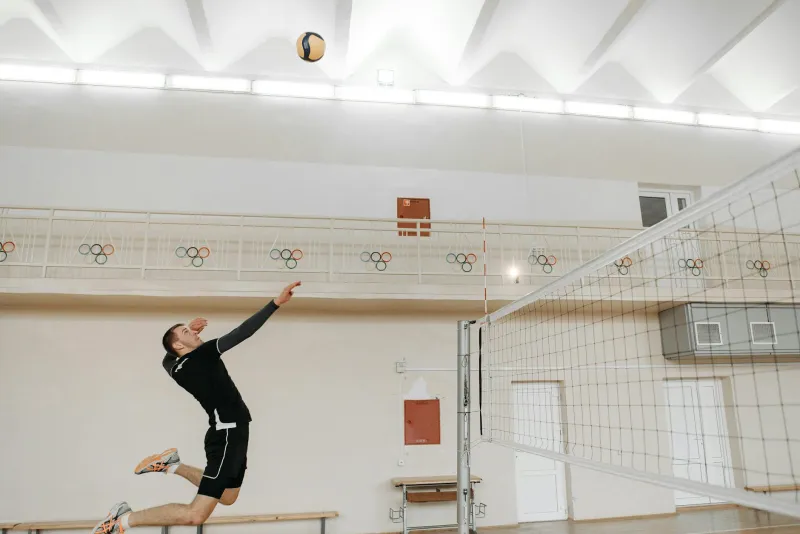
On April 6, 1896, Connolly stepped into the triple jump pit carrying the hopes of American athletics on his shoulders. The event itself—then called the "hop, step, and jump"—required a combination of speed, technique, and raw power that few athletes had mastered.
Connolly's winning distance of 13.71 meters might seem modest by today's standards. Modern triple jumpers routinely soar past 17 meters, with the world record currently standing at 18.29 meters. But context matters. Connolly was competing on a cinder track with minimal equipment, using techniques that were still being developed as the sport evolved.
More importantly, his victory represented something bigger than athletic achievement. When Connolly's name was announced as the winner, the American flag was raised for the first time at an Olympic Games. The Star-Spangled Banner played across ancient Olympia, marking America's arrival as a force in international sport.
The Ripple Effects of One Leap
Connolly's gold medal victory sent shockwaves through American athletics. Newspapers back home trumpeted the achievement, and suddenly Olympic competition became a matter of national pride. His success helped establish the United States as a dominant force in track and field—a legacy that continues today.
But the personal cost was real. Harvard kept their word and refused to readmit Connolly when he returned from Athens. The young champion found himself famous but without the degree he'd been pursuing. It would take decades before the university acknowledged their mistake, finally awarding him an honorary degree in 1948.
Connolly's story also highlights how dramatically athletic preparation has evolved. While modern Olympic triple jumpers train year-round with teams of coaches, nutritionists, and sports scientists, Connolly prepared largely on his own, fitting training around work and other responsibilities.
Beyond the Pit: A Life of Achievement
The Harvard dropout didn't let his Olympic success define his entire life. Connolly went on to become a successful writer and war correspondent, covering conflicts from the Spanish-American War to World War I. His novels and short stories earned him literary recognition that eventually overshadowed his athletic achievements.
This dual success speaks to something unique about early Olympic athletes. Unlike today's specialists who dedicate their entire lives to perfecting one event, Connolly and his contemporaries were renaissance athletes who pursued multiple interests and careers.
Measuring Progress Across the Centuries
When we compare Connolly's 13.71-meter victory to today's performances, the numbers tell a story of incredible human advancement. Modern triple jumpers don't just jump farther—they do it with better technique, superior training methods, and equipment that would have seemed like science fiction in 1896.
Yet Connolly's achievement remains remarkable precisely because of these limitations. He proved that raw talent and determination could overcome inadequate preparation and primitive conditions. His victory established a template for American Olympic success that continues to inspire athletes more than 125 years later.
The Legacy of Taking the Leap
James Connolly's decision to drop out of Harvard and chase Olympic glory reminds us that some opportunities only come once. His willingness to risk everything for a chance at history paid off in ways he never could have imagined.
Today, as American athletes continue to dominate Olympic triple jump competition, they're following a path first blazed by a young man from South Boston who believed dreams were worth more than degrees. Connolly didn't just win the first modern Olympic gold medal—he proved that sometimes the biggest victories come from the biggest risks.