No Stopwatch, No Problem: How Ancient Cultures Remembered Who Won Before Numbers Took Over Sports
No Stopwatch, No Problem: How Ancient Cultures Remembered Who Won Before Numbers Took Over Sports
Every four years, we watch Olympic sprinters cross the finish line and immediately look up at a screen. The numbers appear in fractions of a second. We compare them to world records, personal bests, national records, historical averages. Within minutes, a performance that lasted less than ten seconds has been measured, ranked, contextualized, and filed away into a database that will outlast everyone in the stadium.
We are, to put it plainly, obsessed with measurement.
But for most of human history, sport didn't work that way. Athletic competition existed — fiercely, passionately, with enormous social stakes — long before anyone invented the tools to quantify it. So how did ancient cultures decide who won? How did they remember greatness? And what did they think mattered most about athletic achievement?
The answers are more interesting than you might expect.
The Greek System: Witnesses, Judges, and the Weight of Public Memory
The ancient Olympic Games, which began in 776 BC in Olympia, Greece, had no timers, no measuring tapes for most events, and no written scorecards. Victory was determined by human eyes — a panel of judges called the Hellanodikai, or "Judges of the Greeks," who oversaw competition and declared winners based on direct observation.
For foot races, the winner was simply whoever crossed the finish line first — no time recorded, no margin noted. For jumping events, distances were marked in the sand and compared visually. For combat sports like wrestling and pankration (a brutal mix of wrestling and striking), judges watched until one athlete submitted or was incapacitated.
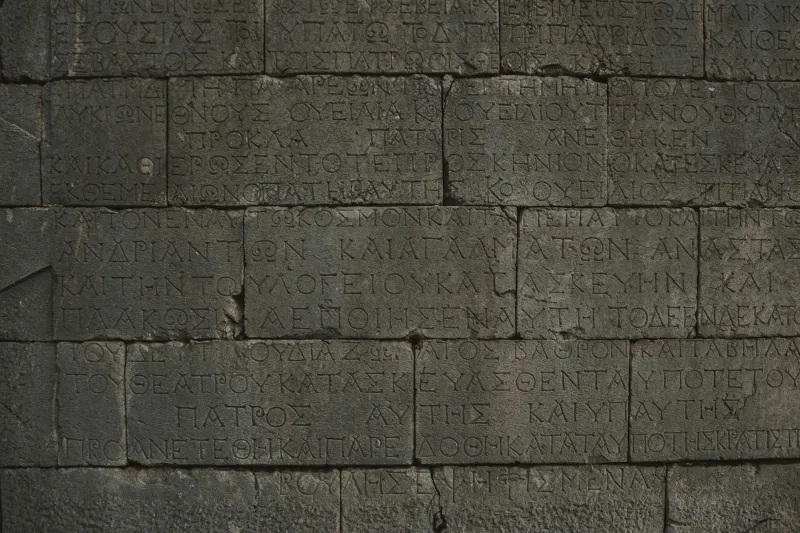
What the Greeks did record, obsessively, was the name of the winner. Ancient Olympia was covered in inscriptions — on stone pillars, on statues, on the walls of temples — listing the names of champions alongside their home city-states and the events they'd won. These weren't just administrative records. They were declarations of glory, meant to last forever.
The poet Pindar built an entire literary career writing victory odes for Olympic champions. His Epinician Odes didn't describe performances in numerical terms — they described them in mythological ones, comparing athletes to gods and heroes. A champion wasn't someone who ran 200 meters in a fast time. A champion was someone whose excellence (arete) had been revealed through competition and confirmed by the gods.
The number didn't matter. The name did.
Rome: Spectacle Over Statistics
Roman athletic culture, particularly in the arena, operated on an even more crowd-driven model. Gladiatorial combat — perhaps the most famous Roman sport — was judged entirely by audience reaction. Whether a defeated fighter lived or died was often determined by the crowd's response, sometimes formalized through the emperor's decision but always shaped by public sentiment.
Chariot racing in the Circus Maximus was an exception: races had clear winners determined by who crossed the finish line first, and records of successful charioteers were kept. Drivers like Gaius Appuleius Diocles, who raced in the second century AD, are documented as having won hundreds of races — numbers that survive in inscriptions because Romans valued the accumulation of victories as proof of excellence.
But even Roman record-keeping was about frequency of glory, not the measurement of individual performances. No one recorded how fast Diocles completed a lap. They recorded how many times he won.
Mesoamerica: The Game Where the Stakes Were Everything
Far from the Mediterranean, the ballgame cultures of Mesoamerica — the Olmec, Maya, and Aztec civilizations — developed athletic competition with an entirely different logic. The Mesoamerican ballgame, played with a heavy rubber ball on a stone court, had rules that varied by region and era, but the concept of "winning" was tied to something far beyond performance metrics.
In many versions of the game, outcomes carried ritual and religious significance. The game wasn't just sport — it was a reenactment of cosmic struggle, a way of communicating with gods, sometimes a method of settling disputes between rival groups. Victory was remembered not through statistics but through ceremony, sacrifice, and oral tradition passed down through generations.
There were no scoreboards at these courts. There was something more powerful: collective memory, reinforced by ritual, that made certain contests part of a culture's living story.
Oral Tradition: The Original Highlight Reel
Across cultures and centuries, oral tradition was the most common way athletic achievement was preserved. Storytellers, poets, and community elders kept the records — not in numbers, but in narratives. Who beat whom. Under what conditions. What it meant.
This wasn't imprecise by accident. It was imprecise by design. Ancient cultures weren't measuring performance against an abstract standard. They were measuring one person against another, in a specific moment, witnessed by a specific community. The story of that contest was the record.
In many Indigenous North American cultures, athletic competition — foot races, ball games, tests of strength — was embedded in community life and remembered through oral tradition and ceremony. The "record" wasn't a number. It was a story that carried social meaning.
What We Gain — and Lose — by Counting Everything
Modern sports metrics are genuinely extraordinary. The ability to compare a sprinter's performance today against one from 1968 or 1896 is a kind of time travel. Data has made sports analysis richer, fairer, and more nuanced than ever before.
But something got left behind.
When we reduce athletic achievement to numbers, we sometimes lose the texture of what made a performance meaningful. Ancient Greeks weren't wrong to care more about the name of the champion than the margin of victory. The story of James Connolly leaving Harvard to compete in Athens in 1896 matters more to most people than his triple jump distance. The legend of Jesse Owens in Berlin carries weight that no measurement can fully capture.
The scoreboard tells you who won. The story tells you why it mattered.
Ancient cultures understood that distinction intuitively. We're still figuring out how to hold both at the same time.