Imagine this: The 1919 World Series between the Chicago White Sox and Cincinnati Reds has just ended in scandal, with eight Chicago players accused of throwing the championship. But if you lived in rural Montana or small-town Alabama, you might not find out about it for three weeks.
That was reality for most Americans throughout the 19th and early 20th centuries. In our age of instant notifications and 24-hour sports coverage, it's almost impossible to comprehend a world where major sporting events happened in virtual silence, their results trickling across the country at the speed of horseback or railroad.
But that slow-motion sports world didn't just disappear—it was killed by America's insatiable hunger for faster news, and the people who figured out how to feed that hunger built the media empire we know today.
When Waiting Was Normal
In 1845, when Alexander Cartwright's Knickerbocker Base Ball Club played what many consider the first organized baseball game under modern rules, the only people who knew the score were the few dozen spectators who showed up in Hoboken, New Jersey. If you lived anywhere else in America, you were out of luck.
This wasn't unusual—it was how all news traveled. Presidential election results took weeks to reach the West Coast. Military battles were fought and won before most of the country knew they had started. Sports were no different. They were local entertainment for local people, with no expectation that anyone beyond the immediate community would care about the outcome.
But as sports grew more popular and organized, this began to change. The first professional baseball league, the National Association, was founded in 1871, and suddenly games had implications beyond their immediate communities. Teams represented entire cities, and people who couldn't attend games still wanted to know how their hometown heroes were doing.
The problem was infrastructure. America in the 1870s was a vast country connected by a patchwork of telegraph lines, railroad networks, and postal routes. Information moved only as fast as the physical systems that carried it, and those systems weren't built with sports fans in mind.
The Telegraph Revolution
The breakthrough came with the expansion of telegraph networks in the 1870s and 1880s. Suddenly, information could travel at the speed of electricity rather than the speed of horses. For the first time in human history, you could know what happened in New York while you were sitting in San Francisco, and you could know it the same day it happened.
Newspaper publishers were among the first to recognize the commercial potential of this technology. The Associated Press, founded in 1846, began transmitting sports scores along with political news and stock prices. By the 1880s, major newspapers in cities across the country were receiving telegraph updates on important baseball games, often posting the results on bulletin boards outside their offices for crowds of eager fans.
This created something unprecedented: a shared national sports experience. For the first time, baseball fans in Boston and Chicago could follow the same games, know the same statistics, and argue about the same players. Sports were becoming truly national entertainment.
The telegraph also enabled the first real-time sports coverage. Operators would send updates inning by inning, allowing newspapers to post running scores throughout the afternoon. Crowds would gather outside newspaper offices, watching clerks update handwritten scoreboards based on incoming telegraph messages.
Radio Changes Everything
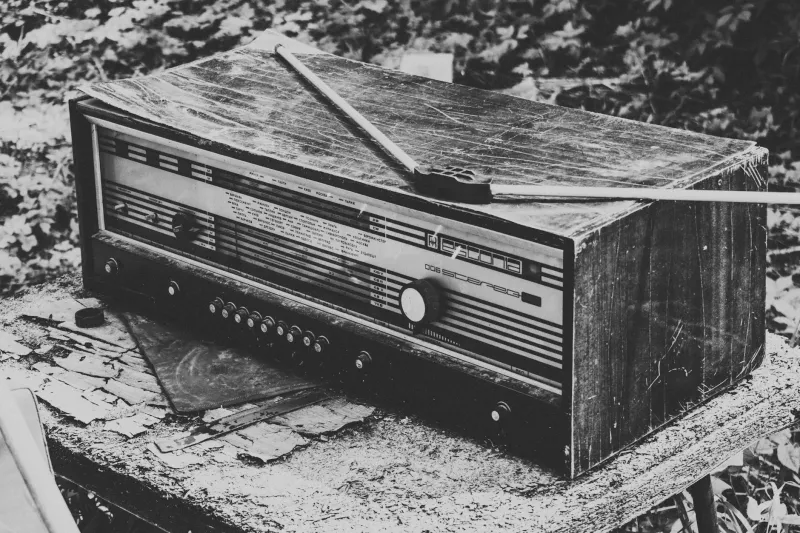
If the telegraph made sports news national, radio made it intimate. The first sports broadcast is generally credited to KDKA in Pittsburgh, which covered a boxing match in 1921. But it was baseball that really demonstrated radio's power to transform sports consumption.
When Harold Arlin called the first baseball game on radio—a Pirates-Phillies matchup on August 5, 1921—he wasn't just describing the action. He was creating a new form of entertainment. Suddenly, you didn't need to be at the ballpark to experience the game. You could sit in your living room, close your eyes, and feel like you were in the stands.
Radio solved the geography problem that had limited sports fandom for decades. A farmer in rural Iowa could follow the Chicago Cubs as closely as someone living three blocks from Wrigley Field. Regional teams developed national followings. The New York Yankees became America's team not just because they won a lot, but because their games were broadcast to millions of people who had never set foot in Yankee Stadium.
The speed of radio also changed expectations around sports news. By the 1930s, Americans expected to know game results within hours, not days. Radio networks began broadcasting regular sports updates, creating the first version of what we now recognize as the sports news cycle.
The Newspaper Wars
Radio's success forced newspapers to adapt or die. They couldn't compete on speed—radio would always be faster for breaking news. Instead, newspapers doubled down on analysis, statistics, and behind-the-scenes coverage.
This competition drove innovation in sports journalism. Newspapers began sending dedicated sports reporters to cover teams on the road, providing detailed coverage that radio couldn't match. They developed new ways to present statistics and game information, creating the dense, data-rich sports pages that became a staple of American newspapers.
The most successful newspapers also learned to work with radio rather than against it. They would promote their radio coverage in print, while using their radio broadcasts to drive newspaper sales. This cross-promotion model became the template for modern multimedia sports coverage.
Television's Visual Revolution
When television arrived in the late 1940s and early 1950s, it seemed like the ultimate solution to sports coverage. Finally, you could see the game, not just hear it described. The first televised sporting event was a Columbia-Princeton baseball game in 1939, but World War II delayed television's mass adoption until the late 1940s.
Television didn't just change how people consumed sports—it changed the sports themselves. Games were scheduled around television broadcasts. Timeouts were extended to accommodate commercial breaks. Even the rules were modified to make games more television-friendly.
But television also created new problems. Early broadcasts were limited to local markets, and national coverage was expensive and technically challenging. If you lived outside a team's broadcast area, you were back to relying on radio and newspapers for coverage.
The Cable Solution
The launch of ESPN in 1979 solved the national coverage problem once and for all. Suddenly, there was a television network dedicated entirely to sports, broadcasting 24 hours a day to a national audience. SportsCenter, which premiered on ESPN's first day, created the modern template for sports news: regular updates, highlights, and analysis, delivered with personality and entertainment value.
ESPN's success spawned dozens of imitators and competitors, creating the sports media landscape we know today. Cable television made it possible to follow any team, any sport, from anywhere in the country. The geographic limitations that had defined sports fandom for over a century were finally gone.
The Internet Acceleration
The internet didn't just speed up sports news—it made it instantaneous and interactive. Websites like ESPN.com launched in the mid-1990s, providing real-time scores, statistics, and news updates. Fantasy sports, which had existed in primitive forms since the 1960s, exploded in popularity as the internet made it easy to track players and statistics across multiple leagues and teams.
Social media took this trend even further. Twitter, launched in 2006, became the fastest way to break sports news. Journalists, athletes, and fans could share information instantly, creating a constant stream of sports content that never stops.
Today, sports news moves so fast that major stories can break, develop, and be analyzed within minutes. A trade rumor can circulate on Twitter, be confirmed by multiple sources, and generate dozens of reaction articles before most people finish their morning coffee.
The Never-Ending Cycle
This evolution from weeks-old newspaper reports to instant Twitter updates didn't happen in isolation—it drove the growth of American media as an industry. The companies that figured out how to deliver sports information faster and better became media giants. The Associated Press, ESPN, and countless newspapers and radio stations built their businesses on America's appetite for sports news.
The hunger for sports information also pushed technological innovation. Telegraph networks expanded partly to serve sports fans. Radio stations proliferated because sports programming drew large, loyal audiences. Cable television grew because people wanted more sports coverage than broadcast networks could provide.
Today, we take instant sports information for granted. We expect to know the score of any game, anywhere in the world, within seconds of it happening. We get frustrated when a video takes more than a few seconds to load, or when our fantasy sports app doesn't update fast enough.
But this expectation of instant sports gratification is less than 30 years old. For most of American sports history, patience wasn't just a virtue—it was a requirement. The transformation from that patient world to our instant-gratification present didn't just change how we follow sports. It changed how we consume all information, creating the always-on, always-connected media environment that defines modern American life.
In the end, our need to know who won the game as quickly as possible didn't just satisfy sports fans—it built the modern world.