When a Crown of Leaves Was Worth Everything
Picture this: You've just won the most prestigious athletic competition in the ancient world. Thousands of spectators are cheering your name. What's your prize? A simple wreath made from olive branches cut from a sacred tree in Olympia.
To modern eyes, it seems almost insulting. But for ancient Greek athletes, that kotinos — the olive crown — represented something far more valuable than gold. It was a direct connection to the gods, a symbol of divine favor, and a guarantee of immortal fame that would echo through the ages.
"The olive wreath was considered so sacred that winning one could change not just an athlete's life, but their entire family's social status," explains Dr. Sarah Mitchell, a classics professor at UCLA who studies ancient Greek athletics. "We're talking about a prize that was literally priceless because you couldn't buy the honor it represented."
The First Crack in Amateur Purity
While the ancient Olympics officially awarded only olive wreaths, the reality was more complex. Winning athletes returned home to find their cities showering them with rewards: free meals for life, front-row seats at theaters, cash bonuses, and even statues erected in their honor.
Sound familiar? The tension between amateur ideals and material rewards has been brewing for over 2,000 years.
When Baron Pierre de Coubertin revived the Olympics in 1896, he was obsessed with maintaining what he saw as the pure, amateur spirit of the ancient games. The modern Olympics would award medals — gold, silver, and bronze — but athletes couldn't receive any money for their performances without being banned from competition.
The Great Amateur Charade
For decades, Olympic officials maintained the fiction that their athletes were pure amateurs competing for the love of sport. Meanwhile, behind the scenes, nations were finding creative ways to support their athletes.
East Germany famously gave their athletes fake military ranks and government jobs that required no actual work. American track stars got "jobs" at companies that paid them to train. Soviet athletes were technically soldiers or students, but spent all their time in state-sponsored training facilities.
The charade reached its breaking point in the 1980s. How could you maintain amateur purity when the Soviet hockey team was essentially a professional squad, or when American basketball was getting crushed by teams of players who trained full-time?
The Million-Dollar Moment
Everything changed in 1992 when the "Dream Team" — featuring Michael Jordan, Magic Johnson, and Larry Bird — dominated Olympic basketball in Barcelona. Professional athletes were finally welcomed into the Olympics, and the floodgates opened.
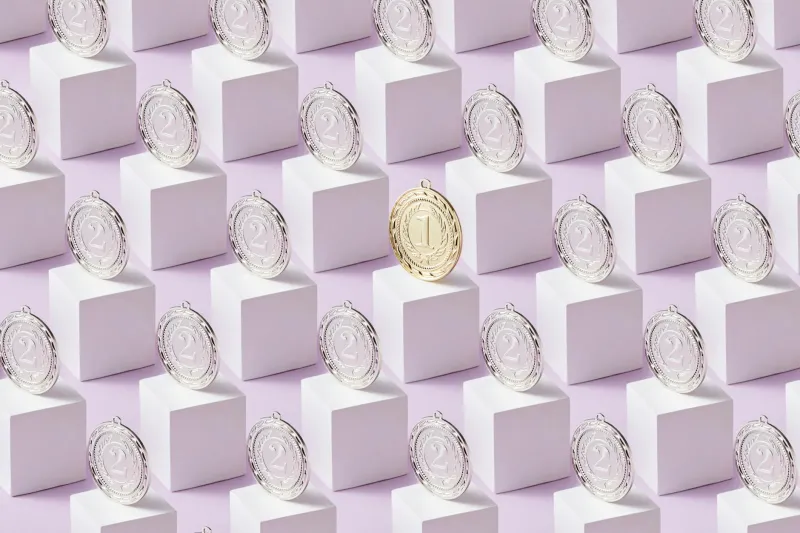
Today's Olympic champions don't just win medals; they win the lottery. The U.S. Olympic Committee pays $37,500 for each gold medal, $22,500 for silver, and $15,000 for bronze. But that's pocket change compared to what awaits successful athletes in the endorsement market.
Consider Simone Biles, whose gymnastics dominance has translated into deals with Nike, Athleta, and dozens of other brands worth an estimated $10 million annually. Or Katie Ledecky, whose swimming records have made her one of the highest-paid female athletes in the world despite competing in a sport with limited television appeal.
When Nations Pay to Play
Some countries have turned Olympic success into a national investment strategy. Singapore offers $737,000 for a gold medal. Kazakhstan pays $250,000. Even relatively small nations like Azerbaijan ($510,000) and Malaysia ($236,000) offer life-changing sums for Olympic glory.
The strategy works. Singapore's Joseph Schooling upset Michael Phelps to win gold in swimming in 2016, earning not just his massive bonus but also exemption from the country's mandatory military service. That's the kind of motivation that would have made ancient Greek athletes jealous.
The Price of Glory
But here's the fascinating paradox: despite all the money involved, many Olympic champions still describe their medals in terms that would have made ancient Greeks proud. They talk about representing their country, achieving lifelong dreams, and earning their place in history.
Maybe that's because, at its core, Olympic competition still offers something money can't buy: the chance to be the fastest, strongest, or most skilled human on the planet at a given moment in time.
The ancient Greeks understood this. Their olive wreaths weren't valuable because of their material worth — olive branches were common as dirt in Greece. They were valuable because of what they represented: excellence, divine favor, and immortal glory.
Full Circle
Today's Olympic medals are worth about $800 in raw materials (gold medals are actually mostly silver with gold plating). But like those ancient olive wreaths, their real value comes from what they represent.
The difference is that modern Olympic champions get to have it both ways: the eternal glory that ancient athletes sought, plus the financial rewards that can set them up for life.
Not bad for a few weeks of competition that started with nothing more than a crown of leaves and the promise of remembrance. The Greeks might not have invented the million-dollar athlete, but they definitely understood the value of being the best in the world.