From Boulder Lifting to Barbell Glory: The Ancient Roots of Modern Weightlifting
When Stones Were the Ultimate Test
In the dusty training grounds of ancient Olympia, there were no chrome barbells or rubber bumper plates. Instead, aspiring athletes grabbed whatever heavy objects they could find—massive stones, iron blocks, and crude weights that would make today's gym equipment look like precision instruments. Yet these primitive strength tests laid the foundation for what would become one of the most technically demanding sports in the modern Olympics.
The ancient Greeks didn't just stumble into strength training by accident. Archaeological evidence shows they used halteres—stone or metal weights resembling dumbbells—as early as the 7th century BC. But unlike today's standardized equipment, these weights varied wildly in shape and mass, forcing athletes to adapt their technique to whatever implement they could get their hands on.
The Original Strongmen Had No Rules
Picture this: a young Greek warrior approaches a boulder the size of a small car. No weight classes, no three-attempt limits, no judges checking for proper form. Success was binary—either you lifted it or you didn't. These early strength competitions were as much about proving manhood as athletic ability, with entire communities gathering to witness feats that seemed to defy human limitation.
The famous "Stone of Strength" on the Greek island of Santorini weighs over 1,000 pounds and bears an inscription boasting that a young man named Eumastas lifted it "from the ground with one hand." Whether that claim is accurate or ancient exaggeration, it shows how seriously these cultures took displays of raw power.
Compare that to today's super heavyweight Olympic lifters, who train for years to perfect the technical precision needed to snatch and clean & jerk weights approaching 600 pounds. The ancient Greeks were moving comparable loads, but with zero understanding of biomechanics, periodization, or sports science.
When Strength Sports Got Scientific
The transformation from stone-lifting spectacle to Olympic sport didn't happen overnight. During the 19th century, European strongmen began standardizing their equipment and techniques. The first official weightlifting competition was held in London in 1891, featuring athletes who looked more like circus performers than the lean, explosive lifters we see today.
Early competitive weightlifting included bizarre events that would be unrecognizable to modern fans. Competitors performed one-handed lifts, pressed weights while lying on their backs, and even lifted with their teeth. The sport was as much about entertainment as athletic achievement, drawing crowds who came to see human spectacle rather than technical mastery.
The Olympic Evolution
Weightlifting made its Olympic debut at the first modern Games in Athens in 1896, though it looked nothing like today's competition. Athletes competed in just two events—a one-handed lift and a two-handed lift—with no weight categories. The winner was determined by the highest total across both lifts, regardless of body weight.
Launceston Elliot, a Scottish athlete, won the one-handed event by lifting 156 pounds overhead. To put that in perspective, today's lightest Olympic weight class (61kg/134lbs) features athletes who can snatch nearly 300 pounds and clean & jerk over 350 pounds. The improvement isn't just about better athletes—it's about centuries of technical refinement.
Modern Marvels vs Ancient Power
Today's Olympic weightlifters are products of sophisticated training systems that would seem like magic to ancient strongmen. Georgian super heavyweight Lasha Talakhadze holds the current world record with a 484-pound snatch and 588-pound clean & jerk—lifts that require split-second timing, perfect mobility, and years of technical drilling.
But here's what's remarkable: pound for pound, those ancient Greeks might have been just as strong. They just didn't know how to express that strength efficiently. Modern lifting techniques—the hook grip, the split jerk, the precise bar path of the snatch—allow athletes to move maximum weight with minimum wasted energy.
The ancient approach was pure brute force. Grab something heavy and muscle it overhead however possible. Today's approach is applied physics, with every angle and movement pattern optimized for maximum mechanical advantage.
The Technology Revolution
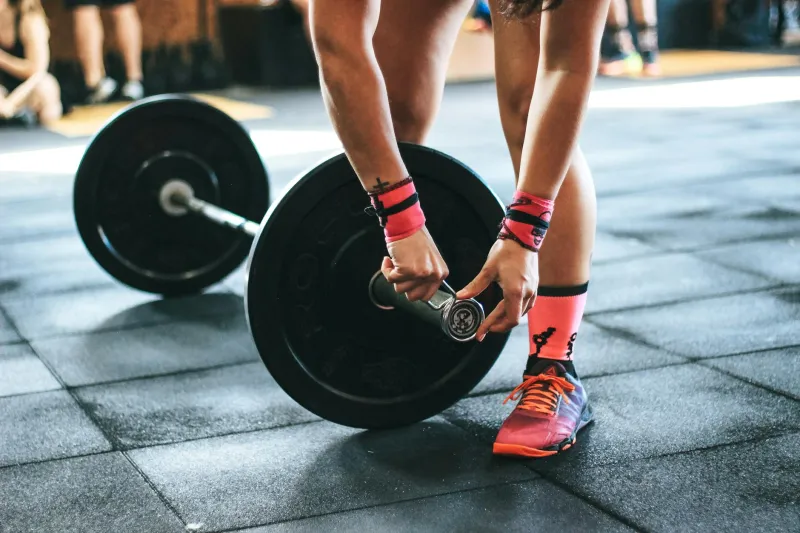
While ancient lifters trained with whatever rocks they could find, modern weightlifters benefit from equipment that would seem impossibly advanced to their predecessors. Olympic barbells are manufactured to precise specifications, with exactly 28mm diameter and perfectly calibrated whip characteristics. Bumper plates allow athletes to drop weights safely from overhead, enabling the explosive lifting styles that define the sport today.
Even more important is the revolution in training methodology. Ancient strongmen likely trained sporadically, lifting heavy objects when the mood struck or when they needed to prove their strength. Modern Olympic lifters follow periodized programs designed by sports scientists, with every workout calculated to peak performance at exactly the right moment.
Why Ancient Strength Still Matters
The progression from boulder-lifting to Olympic weightlifting tells a larger story about human ambition. Whether it's a Greek warrior hoisting a massive stone or Lasha Talakhadze setting a world record in Tokyo, the fundamental drive remains the same—the desire to discover the absolute limits of human strength.
Those ancient strongmen didn't have coaching manuals or sports science, but they had something equally valuable: the unshakeable belief that humans could lift impossibly heavy objects if they just tried hard enough. That mindset, refined through centuries of technical innovation, is what produces the jaw-dropping performances we see in Olympic weightlifting today.
The next time you watch an Olympic lifter snatch three times their body weight overhead in one fluid motion, remember the ancient Greeks hoisting massive stones with nothing but raw determination. They may have lacked the technique, but they had the same dream—to move mountains with nothing but human strength.