Lost and Found: The Strange Olympic Events America Dominated — Then Watched Disappear Forever
Photo: David E. Funderburk Co. (likely deceased), Public domain, via Wikimedia Commons
Ray Ewry won ten Olympic gold medals. Ten. That's more than Carl Lewis, more than Jesse Owens, more than almost anyone else in American track and field history. He won them between 1900 and 1908, across three Olympic Games, and he was almost certainly the greatest athlete of his era.
You've probably never heard of him.
The reason is simple: the events Ewry dominated no longer exist. He won the standing high jump, the standing long jump, and the standing triple jump — disciplines that required explosive, full-body power with no running start allowed. They were contested at the Olympics for a brief window in the early 20th century, then quietly removed from the program, taking Ewry's legendary status with them.
Ewry's story is one of the most striking examples of a broader phenomenon in early Olympic history: a cluster of events contested between 1896 and 1920 that drew serious competition, significant American participation, and genuine athletic excellence — before vanishing from the program as if they'd never existed.
The Early Olympics Were Gloriously Weird
The modern Olympics didn't arrive fully formed. The 1896 Games in Athens were an improvised affair — 241 athletes, 43 events, and a program assembled largely on the fly by a committee trying to figure out what an international athletic competition was even supposed to look like.
The events that followed over the next two decades reflected that experimental spirit. Organizers were genuinely uncertain which physical disciplines deserved Olympic status. The result was a program that included some activities that seem, by modern standards, almost surreal.
The 1900 Paris Games featured an obstacle swimming race, in which competitors swam 200 meters in the Seine River while climbing over a pole, scrambling over a row of boats, and swimming under another row of boats. Frederick Lane of Australia won. It was contested exactly once.
 Photo: Frederick Lane, via www.alamy.com
Rope climbing appeared in the 1896, 1904, and 1932 Games — athletes competed to climb a vertical rope as fast as possible, either for time or for style points depending on the edition. It rewarded a very specific kind of upper-body strength that had genuine practical value in 1896 and essentially none by 1932.
The 1904 St. Louis Games — which were, it must be said, a chaotic spectacle even by early Olympic standards — included a plunge for distance event, in which competitors dove into the water and then floated motionless for 60 seconds, with the winner being whoever traveled the farthest on momentum alone. William Dickey of the United States won with a distance of 62 feet, 6 inches. The event was never held again.
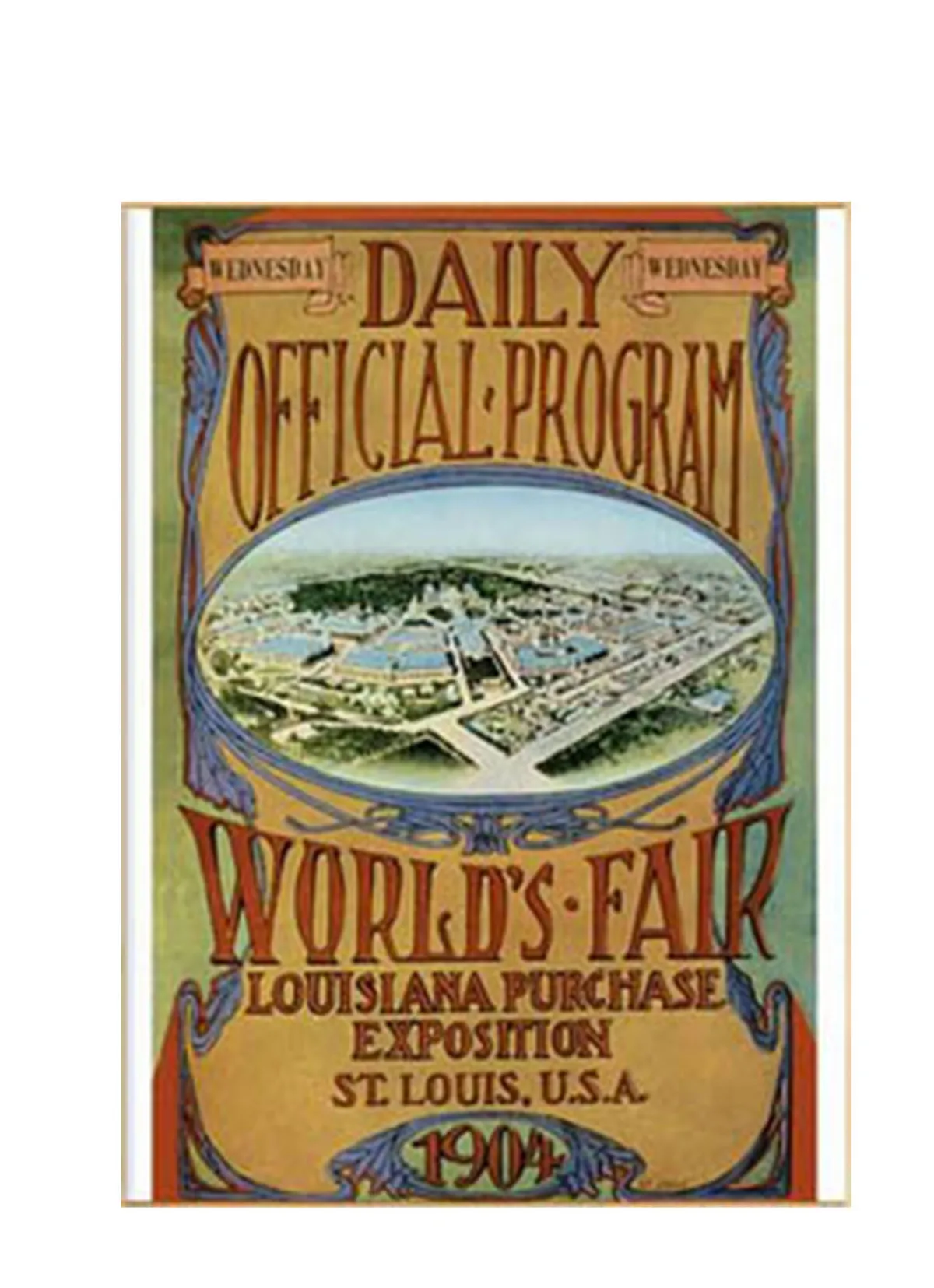 Photo: 1904 St. Louis Games, via 1896.gr
America's Forgotten Medal Factory
Here's what makes these vanished events historically significant for American sports fans: the United States absolutely cleaned up in them.
At the 1904 St. Louis Games — which the US essentially hosted as a home competition — American athletes dominated the rope climbing, the standing jumps, and a variety of gymnastic events that no longer exist in their original form. The US medal count from those Games looks extraordinary on paper, but a substantial portion of it came from disciplines that disappeared within a generation.
Ewry's ten golds are the most dramatic example, but he wasn't alone. Charles Daniels won gold in the obstacle swimming race's spiritual successors. American gymnasts won events in formats — like the long horse vault with different apparatus configurations — that have since been standardized out of recognition.
The 1906 Intercalated Games in Athens — an unofficial Olympic edition that the IOC now largely excludes from the record books — also featured American dominance in standing jump events, with Ewry winning again. If those Games were counted, his total would be even higher.
Why Did These Events Disappear?
The removal of these disciplines from the Olympic program wasn't the result of a single dramatic decision. It happened gradually, through a series of program reviews as the IOC tried to rationalize and standardize what the Games were supposed to be.
Several forces drove the process. First, many of these events simply didn't translate well across cultures. Rope climbing was a staple of European gymnastic traditions but had little presence in athletics programs outside that tradition. The standing jumps were genuinely difficult to judge and required specialized facilities. Events tied to specific 1900 Paris venues — like the obstacle swimming race in the Seine — were obviously unrepeatable.
Second, the IOC began to favor events that could be universally adopted, clearly measured, and meaningfully compared across editions. A timed sprint is the same in 1896 and 2024. A rope climb judged partly on style is not.
Third — and this is the uncomfortable part — the early Olympics included events that were frankly less about universal athletic excellence and more about the specific physical traditions of Western European and American gymnastics culture. As the Games became more genuinely global, events with narrow cultural appeal became harder to justify.
What These Events Tell Us About Changing Ideas of Athleticism
The rise and fall of these disciplines isn't just a scheduling footnote. It reflects a genuine shift in how the world defines athletic excellence.
The standing jumps tested something real and rare: the ability to generate explosive power from a dead stop, using nothing but the body's own stored energy. That's a legitimate physical skill. Ray Ewry, who reportedly overcame childhood polio to become the greatest jumper of his era, demonstrated something genuinely remarkable. The fact that his events no longer exist doesn't make his achievements less impressive — it just makes them harder to contextualize for modern audiences.
Rope climbing, similarly, tested grip strength, upper-body power, and technique in ways that have no direct modern equivalent in the Olympic program. The athletes who excelled at it were not performing party tricks. They were competing seriously in a discipline their era considered legitimate.
What changed wasn't the athletes. What changed was the definition of what an Olympic body is supposed to do.
Should Any of These Events Come Back?
Every few years, someone makes a serious case for reinstating a forgotten discipline, and the IOC's ongoing program reviews occasionally give those arguments a hearing. Obstacle course racing — in the form of competitions like Ninja Warrior-style events — has attracted genuine discussion as a potential Olympic discipline, which would represent a kind of spiritual return to the 1900 obstacle swim.
The standing long jump is a harder sell, but the physical quality it tests — explosive power without a running start — is genuinely distinct from the running long jump and arguably deserves its own measurement.
The strongest case might simply be this: the early Olympics were more willing to experiment with what athletic excellence could look like. Some of those experiments failed. But some of them produced athletes like Ray Ewry — ten gold medals, a story almost no one knows — who deserved better than to be erased from the record of human achievement simply because the events they dominated went out of fashion.
The Games Timeline is long. Not every chapter gets the attention it deserves.