From Bare Feet in Olympia to 9.58 Seconds: The Long Sprint to the World's Fastest Race
From Bare Feet in Olympia to 9.58 Seconds: The Long Sprint to the World's Fastest Race
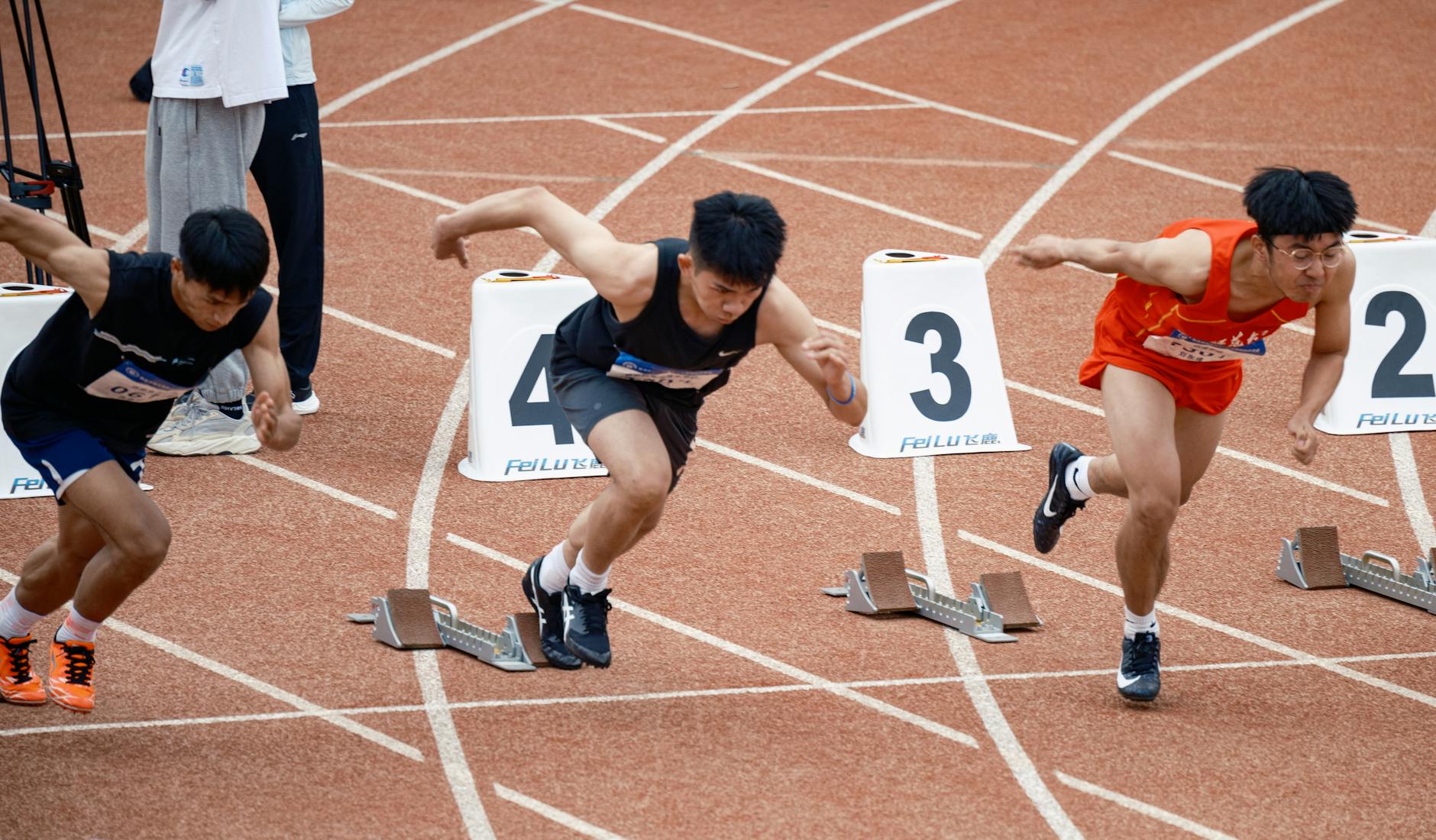
Every four years, the world stops for roughly ten seconds. The starting gun fires, eight of the fastest humans alive explode from their blocks, and by the time most people have exhaled, it's over. The 100-meter final at the Olympics is the closest thing sport has to a shared global heartbeat.
But here's the thing: that race didn't start in a stadium with a roaring crowd and a high-tech track. It started in the dust of ancient Greece, with a single runner, a single straight, and a crowd that had walked for days just to watch.
The Original Sprint: Olympia's Stadion Race
The earliest recorded Olympic competition — held in 776 BC in Olympia, Greece — featured exactly one event: the stadion. Named after the length of the track itself, the stadion was a straight-line foot race of roughly 192 meters, run on a packed dirt surface. Athletes competed barefoot and, for much of the ancient period, without any clothing at all.
The race was considered sacred. The Games were a religious festival honoring Zeus, and the winner wasn't just a champion — he was a man blessed by the gods. His name would be recorded for posterity. Statues were built. Cities threw parades.
We don't have stopwatch data from ancient Olympia, obviously. But historians and sports scientists have made educated estimates. Given the surface conditions, the lack of starting blocks, and what we know about untrained human biomechanics, ancient stadion runners likely covered their distance at a pace that would translate to somewhere in the range of 11 to 13 seconds for 100 meters. Fast for their era. Unrecognizable by today's standards.
The Long Gap Between Then and Now
For over a thousand years after the ancient Games were shut down by Roman Emperor Theodosius I in 393 AD, organized sprint competition essentially went quiet. When Pierre de Coubertin revived the Olympics in Athens in 1896, sprinting came roaring back — but the performances reflected the era. Thomas Burke of the United States won the 100-meter final in 12.0 seconds, running in a crouched start he'd developed himself. No blocks. No synthetic track. Just a man and a cinder surface.
That time would be considered slow by any modern youth track standard. But it was the beginning of something.
Jesse Owens and the Race That Shook the World
If there's a single moment that transformed the sprint from athletic event into cultural lightning rod, it's Berlin, 1936. Jesse Owens, a Black American athlete from Alabama, walked into Adolf Hitler's showcase Olympics and dismantled the Nazi myth of Aryan supremacy one gold medal at a time.
Owens won four golds in Berlin, including the 100 meters in 10.3 seconds — a world record at the time. What made it remarkable wasn't just the time. It was the context. Owens ran with a composure and power that the world hadn't quite seen before, and he did it on the biggest political stage imaginable. The 100 meters was no longer just a race. It was a statement.
His record stood for 20 years.
Carl Lewis and the Professional Era
By the 1980s, the sprint had entered a new dimension. Training had become scientific. Nutrition was structured. And Carl Lewis — a long, elegant sprinter from New Jersey — was rewriting what human speed looked like.
Lewis won the 100-meter gold at the 1984 Los Angeles Olympics and became the dominant sprinter of his generation. His mechanics were a revelation: a slow start, a long acceleration phase, and a top-end speed that he seemed to hold longer than anyone else alive. In 1988 in Seoul, Lewis crossed the finish line second — and then watched as Ben Johnson, who'd beaten him, was stripped of his gold medal for doping. Lewis was elevated to champion with a time of 9.92 seconds.
The 9-second barrier was closing in. The sport was accelerating faster than the athletes themselves.
Usain Bolt and the End of What We Thought Was Possible
And then came Bolt.
Usain Bolt of Jamaica didn't just break the 100-meter world record — he shattered expectations about what the human body could theoretically do. At the 2008 Beijing Olympics, he ran 9.69 seconds while visibly celebrating before the finish line. Coaches and scientists were stunned. How fast could he have gone if he'd kept his form?
They found out in 2009 in Berlin. Bolt ran 9.58 seconds at the World Championships — a record that still stands today. To put that in perspective, he covered 100 meters at an average speed of about 23.4 miles per hour, with a peak speed somewhere around 27.8 mph.
Compared to Thomas Burke's 12.0 in 1896, that's a 20 percent improvement in just over a century. Compared to a likely ancient Greek stadion runner, it's a different sport entirely.
What Actually Changed?
The gap between an ancient Greek runner and Usain Bolt isn't just about natural talent. Several forces combined to push human sprint performance to its current ceiling.
Track surfaces made a massive difference. Cinder gave way to all-weather synthetic tracks in the 1960s, reducing energy loss with every foot strike. Starting blocks, introduced in the 1930s, gave sprinters a mechanical advantage at the gun that barefoot dirt-starts simply couldn't replicate.
Sports science transformed training. Modern sprinters work with biomechanics coaches who analyze stride length, ground contact time, and arm drive in granular detail. Nutrition and recovery protocols mean athletes can train harder and bounce back faster than any previous generation.
And perhaps most importantly: global competition. The ancient Olympics drew athletes from Greek city-states. Today's sprint finals pull the fastest humans from 195 countries. The talent pool isn't just bigger — it's incomparably deeper.
Why It Still Matters
The 100-meter dash is, at its core, the same thing it always was: one human, running as fast as possible, in a straight line. No equipment. No teammates. No strategy. Just speed.
That simplicity is why it connects us across thousands of years of athletic history. Jesse Owens and the ancient Greek stadion runners would have understood each other immediately. And somewhere in that shared pursuit — the raw, uncomplicated desire to be the fastest — is the beating heart of sport itself.
The records will keep falling. The science will keep improving. But the race remains what it always was: the purest test we've ever invented.