Breaking Barriers: The Science Behind Humanity's Quest for the Perfect Sprint
In 1896, American Thomas Burke crossed the finish line of the first modern Olympic 100-meter dash in 12.0 seconds flat. The crowd in Athens erupted, witnessing what they believed was the pinnacle of human speed. Burke's time was considered so extraordinary that many wondered if it could ever be improved.
 Photo: Thomas Burke, via lycanthiabooks.com
Fast-forward 127 years, and Usain Bolt's world record of 9.58 seconds makes Burke's performance look leisurely. But here's the fascinating question that keeps sports scientists awake at night: How much faster can humans actually go?
 Photo: Usain Bolt, via marathonhandbook.com
The Early Days: When 12 Seconds Was Lightning
Those first Olympic sprinters weren't just running against each other — they were running against human expectations. In Burke's era, the idea that a human could cover 100 meters in under 10 seconds seemed as fantastical as flying to the moon.
The early sprinters ran on cinder tracks with basic leather shoes, crouched into starting positions they'd improvised themselves, and trained with methods that would make modern coaches cringe. Yet they were pushing the boundaries of what anyone thought possible.
By the 1930s, Jesse Owens had shattered the 10.2-second barrier, running times that stood as world records for decades. Owens accomplished this feat while dealing with racial segregation, limited training facilities, and equipment that was primitive by today's standards. His 10.3-second performance at the 1936 Berlin Olympics wasn't just fast — it was a statement about human potential that transcended sports.
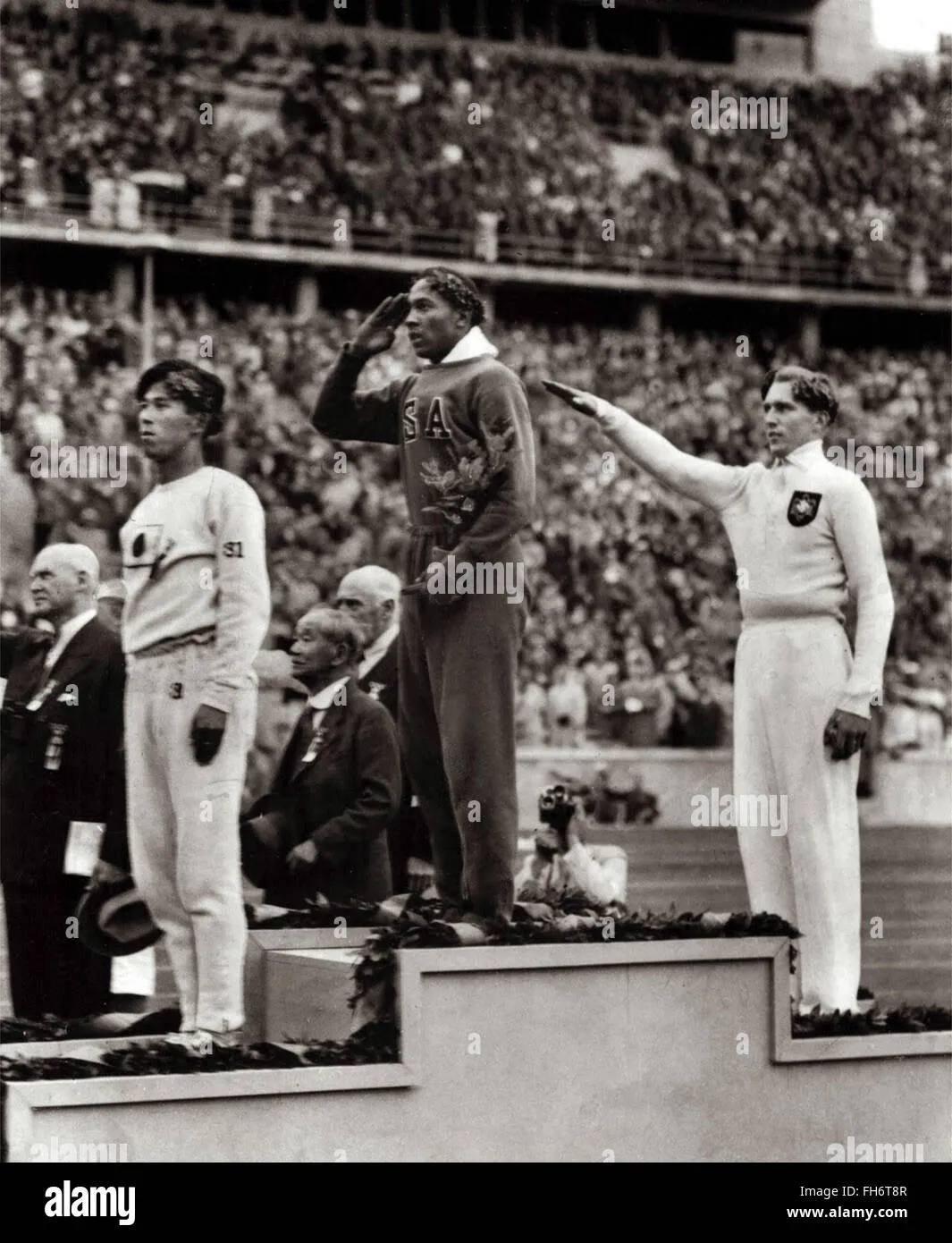 Photo: Jesse Owens, via c8.alamy.com
The Sub-10 Revolution
The 10-second barrier loomed over sprinting like a four-minute mile over distance running. When Jim Hines finally broke through with a 9.95 in 1968, it felt like witnessing magic. Suddenly, sub-10 times became the new standard of excellence.
But Hines had advantages Burke couldn't have imagined. He ran on a synthetic track designed for speed, wore spikes engineered for maximum traction, and benefited from training methods based on emerging sports science. The 1968 Mexico City Olympics, held at high altitude where thin air reduces wind resistance, provided the perfect laboratory for speed.
Carl Lewis dominated the 1980s and early 1990s with a combination of raw talent and scientific training that set new standards for sprint preparation. Lewis understood that sprinting wasn't just about running fast — it was about optimizing every variable from nutrition to biomechanics.
Enter the Lightning Bolt
Then came Usain Bolt, a 6'5" Jamaican who shouldn't have been fast according to traditional sprinting wisdom. Tall sprinters were supposed to be disadvantaged by longer levers and slower acceleration. Bolt rewrote those rules.
His 9.58-second world record, set in Berlin in 2009, represents the current pinnacle of human speed. But what's remarkable isn't just the time — it's how he achieved it. Bolt's stride length of over 9 feet allowed him to cover 100 meters in just 41 steps, while most elite sprinters need 44-45 steps.
Modern biomechanical analysis reveals that Bolt hit a peak speed of nearly 28 mph during that record run. To put that in perspective, that's faster than most people drive through a school zone.
The Science of Speed
Sports scientists have identified several key factors that determine sprinting speed: reaction time, acceleration, maximum velocity, and speed endurance. Each component has been systematically improved through decades of research and training innovation.
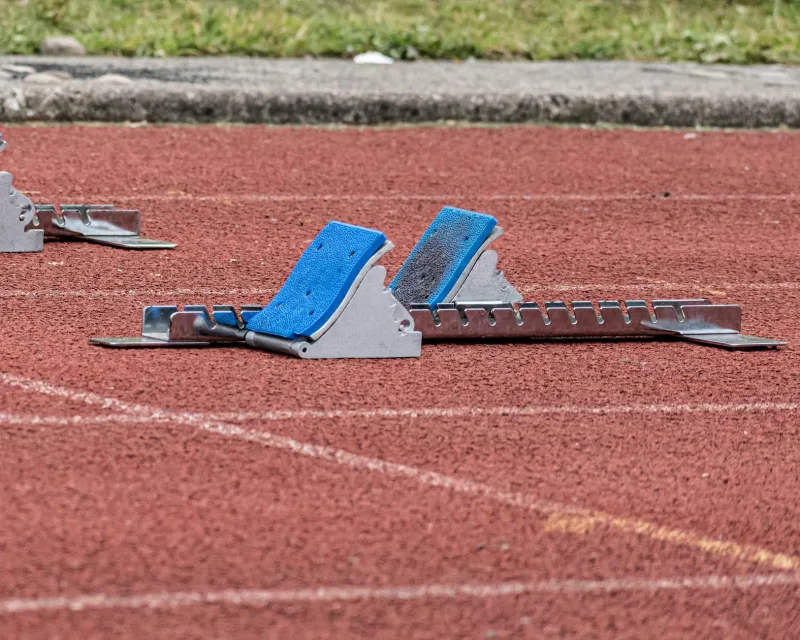
Reaction Time: Elite sprinters now react to the starting gun in as little as 0.12 seconds, approaching the theoretical minimum of human neural response. Modern starting blocks and track surfaces have been engineered to maximize the explosive power of that first step.
Acceleration: The first 30 meters of a sprint are all about generating force against the ground. Today's sprinters train with weighted sleds, resistance bands, and plyometric exercises that would have been unknown to earlier generations.
Maximum Velocity: This is where technique becomes crucial. Modern sprinters work with biomechanics experts to optimize their stride frequency and length, finding the perfect balance between turnover rate and ground coverage.
Speed Endurance: Even in a 10-second race, the ability to maintain top speed separates good sprinters from great ones. Elite athletes now train their energy systems with precision that borders on the molecular level.
Technology's Hidden Hand
While human performance has improved dramatically, technology has played an equally important role. Modern tracks are designed to return energy to the runner with each footstrike. Spikes are crafted from materials that didn't exist when Burke was racing. Wind gauges ensure fair conditions, while photo finish technology can measure differences of 0.001 seconds.
Nutrition science has transformed how sprinters fuel their bodies. Recovery techniques using everything from ice baths to compression therapy allow athletes to train harder and more frequently than ever before. Even the understanding of biomechanics has reached levels where coaches can analyze every millisecond of a sprint in slow motion.
The Mathematical Limit
So what's the ultimate human limit for the 100 meters? Sports scientists have run complex models considering everything from muscle fiber composition to energy system efficiency. The consensus points to somewhere around 9.40 seconds as the theoretical human limit.
But these calculations assume current training methods and human physiology. They don't account for potential breakthroughs in sports science, nutrition, or even human genetic variation. Some researchers believe we could see times as low as 9.30 seconds if the right combination of factors aligns.
The Diminishing Returns
Here's what's fascinating about the progression of sprint times: the improvements are getting smaller and smaller. Burke's 12.0 seconds was improved by 2.42 seconds over the next century. But shaving another full second off Bolt's record would require improvements that seem to defy physics.
Each hundredth of a second becomes exponentially harder to achieve as we approach human limits. The difference between a 9.58 and a 9.48 might require training innovations we can't yet imagine.
Beyond the Stopwatch
What's remarkable about humanity's quest for speed isn't just the times themselves — it's what they represent. Each improvement in the 100-meter record reflects advances in human knowledge, training methods, and our understanding of what's possible.
When Burke ran his 12.0 seconds in Athens, he was exploring the outer boundaries of human capability with the tools available to him. Today's sprinters are doing exactly the same thing, just with better tools and deeper knowledge.
The 9-second barrier may be within reach, but getting there will require the same combination of human determination and scientific innovation that has driven every improvement since that first Olympic sprint. Whether we ever reach the theoretical limit matters less than the journey to get there — a journey that continues to redefine what it means to be human.