When Countries Disappear Overnight
Picture this: you've trained your entire life to represent your homeland at the Olympics. You've worn the flag on your chest, sung the national anthem, and dreamed of bringing glory to your country. Then, literally overnight, your country ceases to exist.
This wasn't a hypothetical scenario for hundreds of Olympic athletes throughout the 20th and 21st centuries. Wars redrew maps, empires collapsed, and new nations emerged from the ashes of old ones—leaving athletes to navigate an identity crisis that went far beyond sport.
The story of athletes competing for multiple countries isn't just about changing jerseys. It's about survival, opportunity, and the messy reality that national identity in sports has always been more fluid than we'd like to admit.
The Great Reshuffling After World War I
The first major wave of multi-country Olympians emerged after World War I, when the map of Europe was redrawn with surgical precision. The Austro-Hungarian Empire vanished, creating Czechoslovakia, Hungary, and Yugoslavia. The Russian Empire became the Soviet Union. Poland reappeared after more than a century of partition.
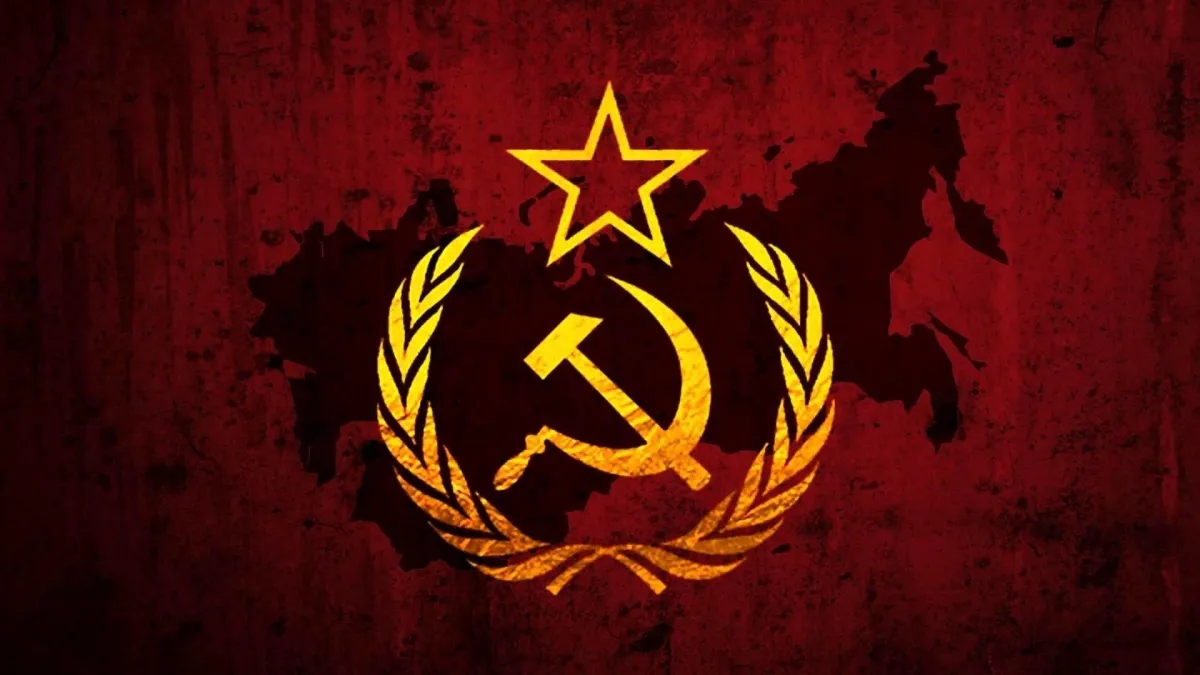 Photo: Soviet Union, via wallpaperaccess.com
Athletes who had competed for Austria-Hungary in 1912 suddenly found themselves citizens of entirely different nations by 1920. Some embraced their new identities; others felt displaced. The lucky ones got to choose which flag they'd compete under—a luxury that wouldn't always be available to future generations.
Take the case of tennis players who had represented Austria-Hungary before the war. When the 1920 Olympics rolled around, they had to decide: compete for the new Austrian Republic, try to make the Hungarian team, or attempt to represent one of the newly formed nations. Their choice would define not just their Olympic legacy, but their place in sporting history.
The Soviet Shuffle and Beyond
The collapse of the Soviet Union in 1991 created the most dramatic example of athletic nationality confusion in Olympic history. Suddenly, athletes from 15 different republics needed new flags to compete under. Some joined the "Unified Team" for the 1992 Olympics—a diplomatic compromise that let former Soviet athletes compete while their new nations figured out their Olympic committees.
But the real stories emerged in the years that followed. Swimmers who had trained in Moscow found themselves representing Kazakhstan. Gymnasts from Ukraine had to rebuild their entire support system from scratch. Basketball players discovered they were now Lithuanians, not Soviets, and had to prove their worth all over again.
The American sports media largely missed these human stories, focusing instead on medal counts and geopolitical implications. But for the athletes involved, it meant starting over at the highest level of competition—often in their thirties, when most athletes are considering retirement.
Modern Complications: The Citizenship Game
Today's multi-country athletes face different challenges. With global training programs and international coaching, elite athletes often find themselves with connections to multiple nations. The International Olympic Committee's rules allow athletes to compete for different countries, but only after waiting periods and with proper documentation.
Consider American-born athletes who've represented other countries in recent Olympics. Some moved abroad for better training opportunities and eventually gained citizenship. Others discovered dual nationality through parents or grandparents. A few made pragmatic decisions—if you can't make Team USA in track and field, maybe you can make the team for your mother's homeland.
This modern reality has sparked debates about sporting nationalism that would have been unthinkable in 1936. When American-trained athletes compete against Team USA, wearing different flags, it challenges our assumptions about what Olympic competition really means.
The Politics of the Podium
The most controversial cases involve athletes who switched countries for political reasons. During the Cold War, defections made headlines—Eastern European athletes who refused to return home after competitions, choosing to represent Western nations instead. Their decisions carried life-altering consequences that went far beyond sports.
More recently, athletes have navigated different kinds of political pressure. Some have competed as "Olympic Athletes from Russia" due to doping sanctions. Others have represented refugee teams when their home countries became too dangerous. Each case forces us to confront uncomfortable questions about what it means to compete for a nation.
The American Perspective
For American sports fans, these stories can be difficult to understand. The United States has remained politically stable throughout the modern Olympic era, so American athletes rarely face the choice between countries. When they do—like tennis players who could represent both the US and another nation through dual citizenship—it often becomes a media curiosity rather than a survival necessity.
But these stories matter because they reveal the artificial nature of sporting nationalism. The athlete who represents three different countries in their career isn't lacking patriotism—they're adapting to circumstances beyond their control while pursuing excellence in their sport.
Legacy of the Multi-Flag Athletes
These athletes' careers remind us that Olympic competition has always been shaped by forces larger than individual talent or national pride. Wars, political upheaval, and changing borders have created some of the most compelling human stories in Olympic history—even if they don't fit neatly into our preferred narratives about sporting nationalism.
Their experiences also highlight how the Olympics have evolved from a purely amateur competition between stable nation-states to a complex global event that must constantly adapt to political realities. In many ways, the athletes who competed for multiple countries were ahead of their time, embodying the international spirit that the Olympic movement claims to represent.
Today, as debates continue about athlete eligibility, neutral flags, and sporting citizenship, these forgotten stories offer valuable perspective. They remind us that behind every flag ceremony and national anthem, there are human beings who've often sacrificed more than we realize to reach the world's biggest sporting stage—regardless of which country's jersey they're wearing.