The Eyes Have It: How Ancient Olympic Judges Called Winners When There Were No Cameras
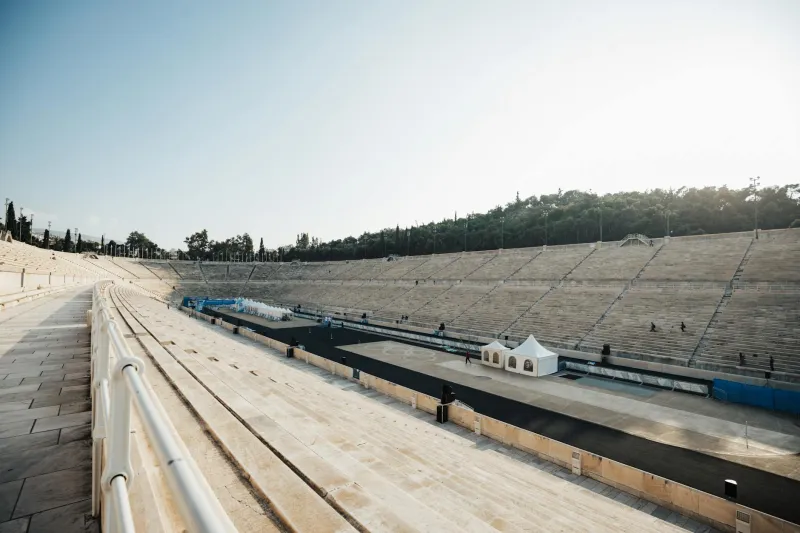
When Human Eyes Were the Ultimate Technology
Picture this: It's 164 AD at the Olympic Games in ancient Greece. Two runners cross the finish line in what looks like a dead heat. There's no slow-motion replay, no electronic timer reading to the thousandth of a second, no photo finish camera. Just a group of ten judges called the Hellanodikai — literally "judges of the Greeks" — squinting in the Mediterranean sun, trying to figure out who won.
Welcome to ancient Olympic officiating, where human judgment was the only technology available, and controversy was just part of the game.
The Hellanodikai: Ancient Greece's Supreme Court of Sport
The Hellanodikai weren't just casual observers with good seats. These ten judges were elected officials from the city of Elis, chosen a year before each Olympic Games and trained for ten months specifically for their role. Think of them as a combination of today's Olympic officials, anti-doping authorities, and supreme court justices all rolled into one.
These judges had absolute authority. Their word was final — no appeals, no video review, no second opinions. They wore distinctive purple robes that marked their status and carried rods as symbols of their power to punish rule-breakers. If an athlete false-started, competed unfairly, or tried to bribe an opponent, the Hellanodikai could impose fines, public humiliation, or outright disqualification.
But here's the thing that would blow the minds of modern sports fans: these judges didn't just officiate during competition. They also served as trainers, inspectors, and moral guardians. They examined athletes beforehand to ensure they met citizenship requirements and had trained properly for ten months. They even judged the horses in equestrian events, checking bloodlines and breeding records.
The Art of Eyeball Officiating
So how did they actually determine winners when races were close? The ancient Greeks developed several ingenious methods that worked surprisingly well for over a thousand years.
For the stadion race — the premier 200-meter sprint — judges positioned themselves at the finish line with a clear view of the entire track. The finish line itself was marked by a stone sill with grooves, and judges watched for which runner's torso crossed first. No lean-ins or photo finishes here — it was all about what the human eye could definitively see.
In longer races, judges were stationed at various points around the track to monitor for fouls and ensure proper lane discipline. For the diaulos (400 meters) and dolichos (distance race), they watched for athletes cutting corners or interfering with competitors.
The most interesting challenge came with field events. In the long jump, judges measured distances using a wooden rod called a kanon. For discus and javelin, they marked landing spots with pegs and measured from the throwing line. No laser measurements or GPS coordinates — just good old-fashioned geometry and careful observation.
When Judges Got It Wrong (And Everyone Knew It)
Of course, human judgment isn't perfect, and ancient sources record several controversial decisions that sparked outrage. The historian Pausanias wrote about disputes where spectators clearly disagreed with official results, and some athletes were so convinced they'd been robbed that they commissioned victory statues anyway — the ancient equivalent of claiming you were the real winner on social media.
One famous controversy involved the boxer Apollodorus, who was declared the winner in a match where spectators thought his opponent had clearly dominated. The decision was so unpopular that it sparked riots, and the judges had to be escorted out under guard.
But here's what's fascinating: these controversies were relatively rare. The Hellanodikai's authority was so respected that most decisions went unquestioned, even when they were close calls. The judges' ten-month training period and their religious oath to Zeus gave them a legitimacy that transcended simple human observation.
The Technology That Changed Everything
Compare this to modern Olympic officiating, where photo finish cameras can detect differences of 0.0001 seconds, and electronic timing is accurate to the millisecond. Today's 100-meter races are sometimes decided by margins so small that ancient judges wouldn't have been able to see the difference.
Take the 1988 Seoul Olympics men's 100 meters, where Carl Lewis and Linford Christie were separated by just 0.04 seconds — a margin that would have been invisible to the naked eye. Or consider swimming, where races are now decided by fingertip touches measured by electronic sensors. Ancient Greeks would have needed underwater judges with superhuman vision to make such calls.
The shift from human judgment to technological precision has fundamentally changed how we think about winning and losing. Ancient athletes knew that victory sometimes came down to the judge's perspective and the angle of observation. Modern athletes know that technology will catch every microscopic advantage or mistake.
What We Lost (And Gained) in Translation
There's something almost romantic about the ancient system — the idea that human judgment, trained and refined, could serve as the ultimate arbiter of athletic excellence. The Hellanodikai represented a time when sport was as much about honor and character as it was about measurable performance.
But let's be honest: modern technology has made sports fairer, more accurate, and more exciting. Today's photo finishes create drama that ancient spectators could never experience, and electronic timing has pushed athletes to achievements that would have seemed impossible to ancient Greeks.
The ancient Olympics lasted over 1,100 years using nothing but human observation and judgment. That's a pretty impressive track record for any officiating system. But when you're watching tonight's track meet decided by a photo finish, remember those ten judges in purple robes, squinting in the Greek sun, making calls that would stand for eternity — no replay required.