When Bruce Jenner crossed the finish line of the 1500 meters at the 1976 Montreal Olympics, he didn't just win gold—he completed one of the most dominant performances in Olympic history. His decathlon world record of 8,618 points seemed almost supernatural, but it was really the culmination of American athletic culture perfectly matching an event designed to find the ultimate competitor.
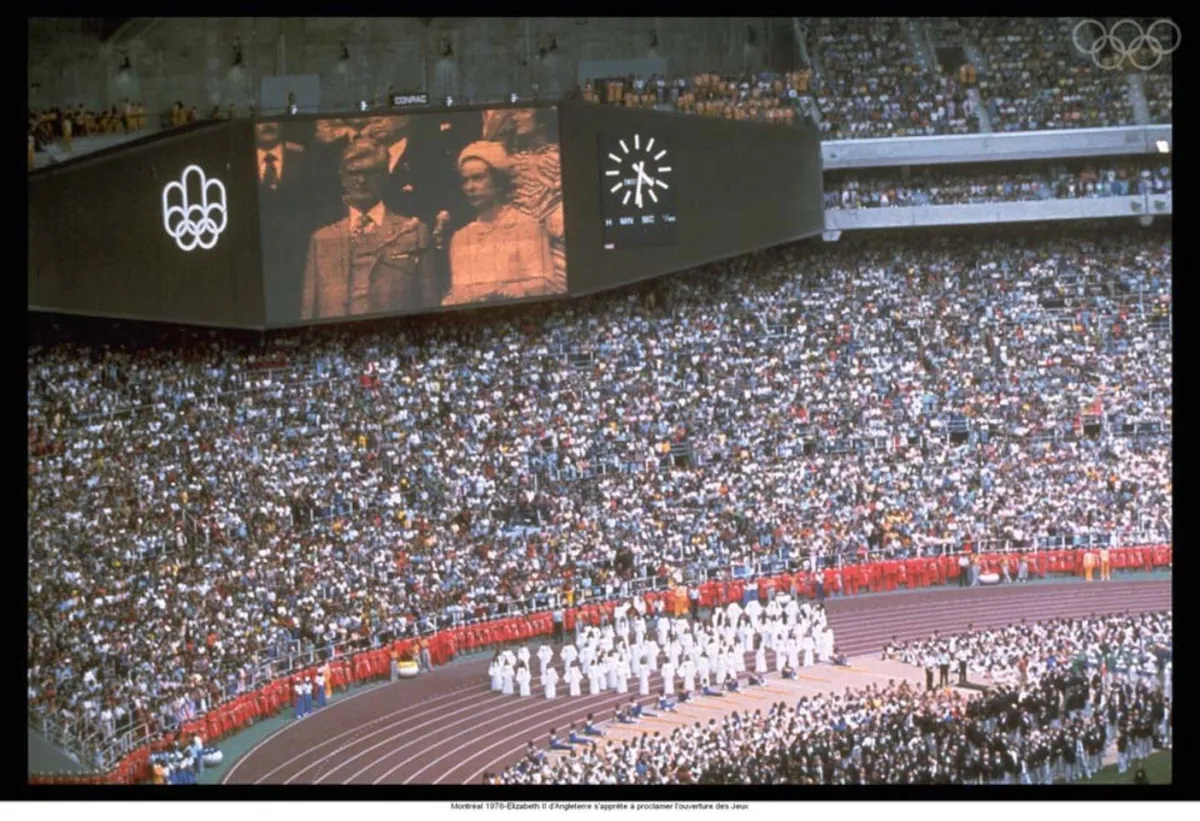 Photo: 1976 Montreal Olympics, via i.pinimg.com
The question isn't why Jenner was so good. The question is why America has produced so many decathlon champions that "World's Greatest Athlete" became practically an American trademark.
From Ancient Greece to American Dominance
The decathlon's roots trace back to ancient Greece's pentathlon—five events that tested different aspects of athletic ability. Greek athletes competed in running, jumping, discus, javelin, and wrestling, seeking to prove themselves as complete warriors and athletes.
But the modern decathlon, created in 1912, expanded this concept to ten events over two days: 100 meters, long jump, shot put, high jump, and 400 meters on day one; 110-meter hurdles, discus, pole vault, javelin, and 1500 meters on day two. The scoring system awards points based on performance in each event, with the highest total winning.
From the beginning, American athletes excelled at this format in ways that seemed almost unfair to international competition.
The American Athletic Advantage
Why did Americans dominate an event invented by Europeans? The answer lies in American high school and college athletics. While most countries specialized athletes early, American schools encouraged multi-sport participation through graduation.
A typical American decathlete might have played football in fall, run track in spring, and competed in basketball during winter. This multi-sport background created athletes with diverse skill sets perfectly suited to decathlon's varied demands.
Bob Mathias exemplified this American approach. When he won Olympic gold in 1948 at age 17, he was still a high school student who played football, basketball, and baseball. His athletic versatility—considered normal in American schools—was revolutionary in international competition.
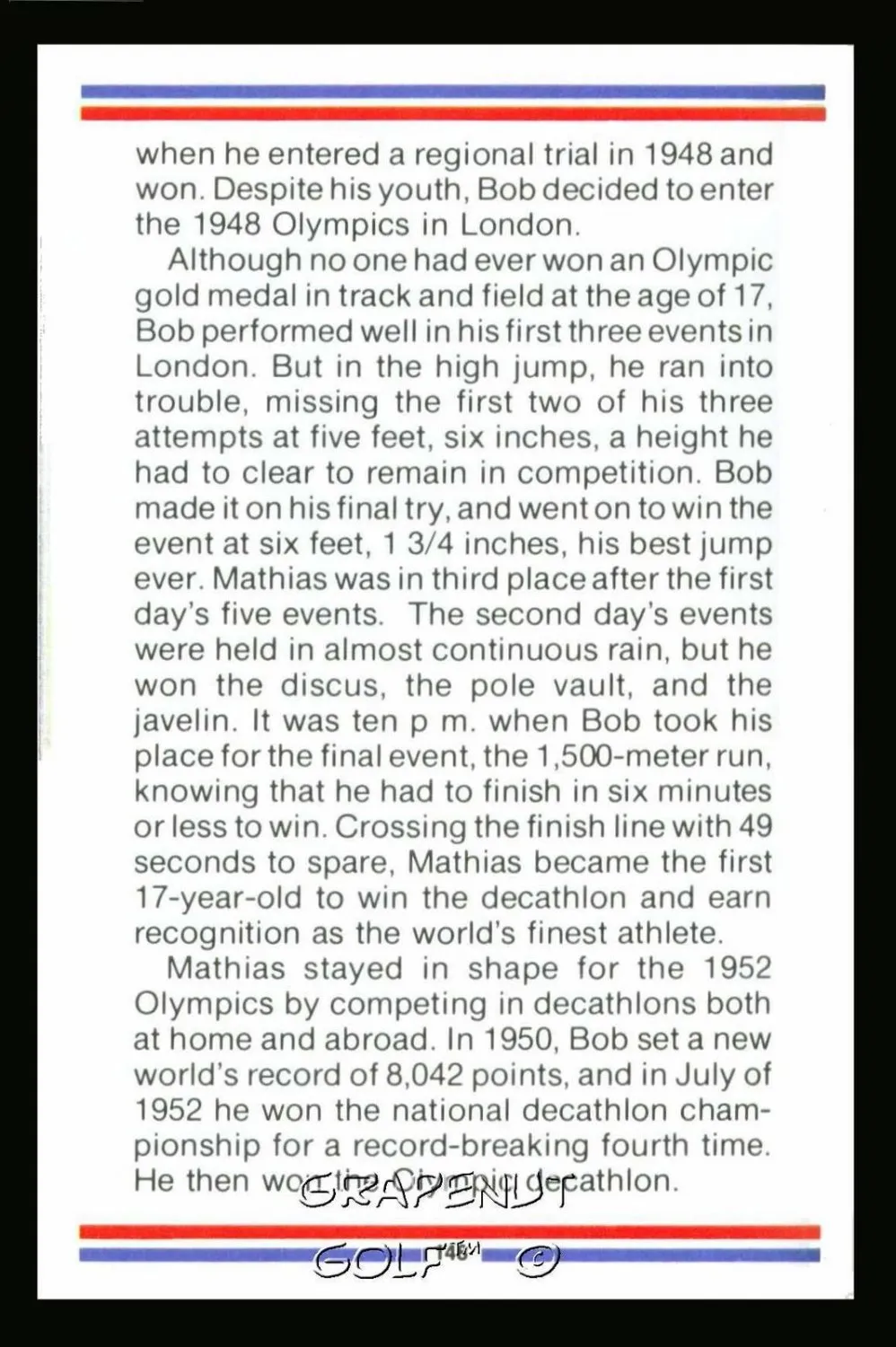 Photo: Bob Mathias, via s.ecrater.com
The Mathias Phenomenon
Mathias didn't just win—he dominated in a way that redefined American expectations for the decathlon. His 1952 Olympic performance in Helsinki was so superior that he finished more than 900 points ahead of the silver medalist. In decathlon terms, that's like winning a marathon by 10 minutes.
What made Mathias special wasn't just his athletic ability, but how he embodied American sports culture. He trained at Stanford University, where coaches emphasized technique refinement across all ten events rather than specializing in a few. This systematic approach to multi-event training became the American template.
Mathias also understood something that European athletes missed: the decathlon wasn't really ten separate events—it was one event with ten components. Success required strategic point accumulation rather than trying to win individual disciplines.
The Science of Scoring
American coaches and athletes pioneered the analytical approach to decathlon scoring. While others focused on personal bests in individual events, Americans studied the point tables to identify where improvements would yield maximum scoring benefits.
The revelation was counterintuitive: sometimes a small improvement in a weak event scored more points than a large improvement in a strong event. American decathletes learned to train for points, not personal records.
This scientific approach extended to event sequencing. Americans realized that day one's 400 meters and day two's 1500 meters were often decisive, not because they scored the most points, but because fatigue made them the hardest to predict. Training specifically for these "closing" events became an American specialty.
Rafer Johnson and the Cold War
By the 1960 Olympics, American decathlon dominance had become a matter of national pride. Rafer Johnson's rivalry with Taiwan's C.K. Yang (who trained at UCLA under American coaches) turned the decathlon into Cold War theater.
Johnson's victory in Rome was more than athletic achievement—it was validation of American training methods and sports philosophy. His preparation involved working with specialists in each event, another American innovation that treated the decathlon as a technical challenge requiring expert guidance.
The American media embraced Johnson as the "World's Greatest Athlete," a title that stuck to subsequent American decathlon champions. This wasn't just marketing—it reflected genuine belief that the decathlon represented the purest test of athletic ability.
Bruce Jenner and Peak Performance
Jenner's 1976 performance represented the culmination of American decathlon evolution. His training was scientific to an unprecedented degree, with performance analysts, specialized coaches for each event, and systematic peaking for the Olympics.
Jenner's world record wasn't just about individual excellence—it was about American sports science reaching maturity. His preparation involved biomechanical analysis, nutritional optimization, and psychological conditioning that would have seemed like science fiction to earlier champions.
More importantly, Jenner understood the entertainment value of the decathlon. His celebratory flag-carrying lap after setting the world record turned him into a household name, proving that American athletes could make even obscure events compelling to mainstream audiences.
The Dan O'Brien Era and Professional Evolution
By the 1990s, American decathlon dominance had become so expected that Dan O'Brien's failure to qualify for the 1992 Olympics was treated as a national sports tragedy. His comeback to win the 1996 Olympic gold demonstrated how deeply the event had become embedded in American athletic identity.
O'Brien's era also marked the professionalization of the decathlon. American athletes could now make living wages competing in the event, supported by sponsorships and appearance fees that recognized their status as complete athletes.
This professional structure, largely developed in America, attracted international athletes to train in American programs, further cementing American dominance of decathlon coaching and methodology.
Why America Owned Ten Events
American success in the decathlon wasn't accidental—it was the inevitable result of cultural and structural advantages that perfectly matched the event's demands.
First, American high school athletics encouraged multi-sport participation longer than any other system. While European athletes specialized by age 16, Americans often competed in multiple sports through college, developing the diverse skill sets essential for decathlon success.
Second, American universities provided the infrastructure for decathlon development. College track programs had the facilities, coaching expertise, and competition schedules necessary to develop complete decathletes.
Third, American sports culture celebrated versatility in ways that other cultures didn't. The "student-athlete" ideal aligned perfectly with decathlon's demands for excellence across multiple disciplines.
The Modern Challenge
Today, American decathlon dominance faces new challenges. International athletes now train in American-style programs, and countries like Germany and France have developed systematic approaches to multi-event training.
But American influence on the decathlon extends beyond just winning medals. The event's global popularity, scoring systems, training methodologies, and even its nickname as the search for the "World's Greatest Athlete" all bear the stamp of American innovation.
The Timeline's Verdict
Looking back through sports history, American dominance of the decathlon represents a unique case study in how cultural values can shape athletic success. The decathlon wasn't designed for Americans, but American athletics was perfectly designed for the decathlon.
From Mathias to Jenner to O'Brien, American decathletes didn't just win—they redefined what it meant to be a complete athlete. They proved that versatility could triumph over specialization, that scientific training could overcome natural talent, and that one nation could own an event designed to test universal athletic qualities.
The ancient Greeks created the pentathlon to honor their gods. Americans took that concept, expanded it to ten events, and turned it into a celebration of human potential. In doing so, they created something the Greeks would have recognized and respected: a true test of athletic excellence that transcends any single skill or talent.
The decathlon remains the ultimate measure of athletic completeness. That Americans made it their own for so long says something profound about how this nation approaches the eternal quest to run faster, jump higher, and throw farther than ever before.